


Reduction in behavior problems with omega-3 supplementation in children aged 8-16 years: a randomized, double-blind, placebo-controlled, stratified, parallel-group trial
- PMID: 25146492
- PMCID: PMC4336833
- DOI: 10.1111/jcpp.12314
Reduction in behavior problems with omega-3 supplementation in children aged 8-16 years: a randomized, double-blind, placebo-controlled, stratified, parallel-group trial
Abstract
Background: While limited evidence suggests that omega-3 supplementation may reduce antisocial behavior in children, studies have not reported on posttreatment follow-up and most treatment periods have been of short duration. This study tests the hypothesis that omega-3 supplementation over 6 months will reduce behavior problems in children both at the end of treatment and at 6 months post treatment.
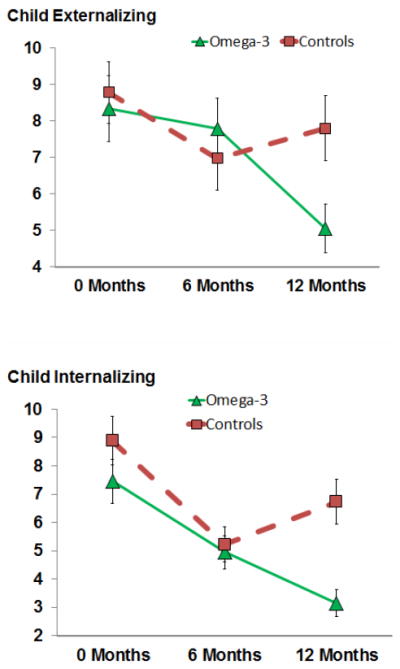
Methods: In this randomized, double-blind, placebo-controlled, stratified, parallel-group trial, a community sample of 8-16 year old children were randomized into a treatment group (N = 100) and a placebo-control group (N = 100). The supplementation consisted of a fruit drink containing 1 g/day of omega-3 or a placebo consisting of the same fruit drink without omega-3. Participants, caregivers, and research assistants were blinded to group assignment. The primary outcome measures of externalizing and internalizing behavior problems were reported by both caregivers and their children in a laboratory setting at 0 months (baseline), 6 months (end of treatment) and 12 months (6 months post treatment), together with the secondary outcome measures of parental antisocial behavior. Data were analyzed on an intention-to-treat basis including all participants.
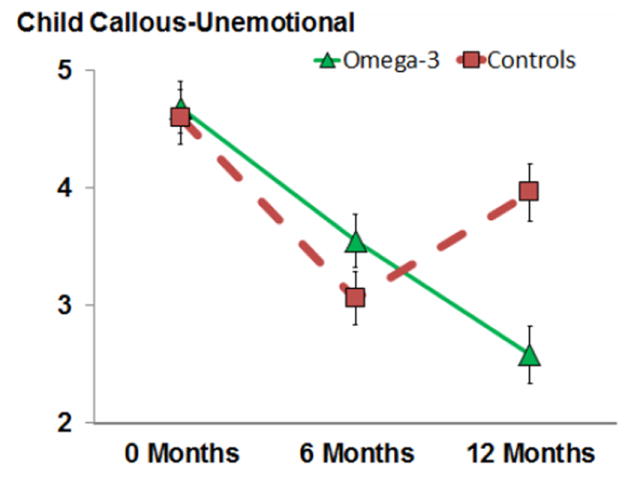
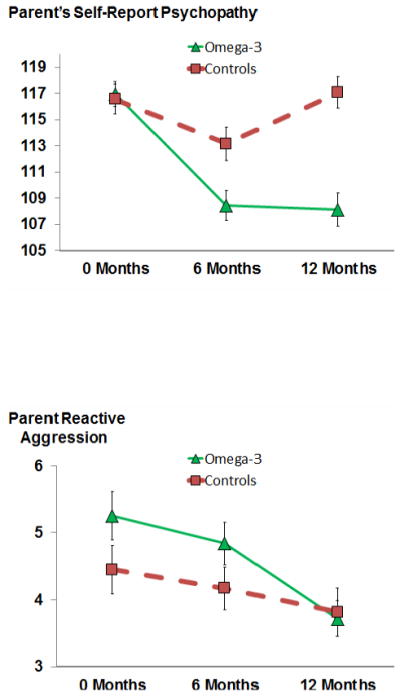
Trial registration: ClinicalTrials.gov: http://clinicaltrials.gov/ct2/show/NCT02016079?term=mauritius&rank=2 RESULTS: Significant group × time interactions were observed with the treatment group showing long-term improvements in child behavior problems. The average posttreatment effect size was d = -.59. Effects were documented for parent reports, but with the exception of proactive and reactive aggression, child-report data were nonsignificant. Parents whose children took omega-3 showed significant posttreatment reductions in their own antisocial and aggressive behavior. This improvement in caregiver behavior partly mediated the improvements observed in child behavior.
Conclusions: Findings provide initial evidence that omega-3 supplementation can produce sustained reductions in externalizing and internalizing behavior problems. Results are the first to report improvements in caregiver behavior, and to establish this improvement as a part-mechanism for the efficacy of omega-3.
Keywords: Omega-3; aggression; externalizing; internalizing; randomized trial.
© 2014 Association for Child and Adolescent Mental Health.
Conflict of interest statement
Figures
Comment in
-
Diet and behaviour: hard evidence at last?Arch Dis Child. 2015 Nov;100(11):1075. doi: 10.1136/archdischild-2015-309748. Epub 2015 Sep 18. Arch Dis Child. 2015. PMID: 26384508 No abstract available.
References
-
- Achenbach TM, Rescorla L. Manual for the ASEBA School-age forms & profiles. Burlington: University of Vermont, Research Center for Children, Youth, and Families; 2001.
-
- American Psychiatry Association. Diagnostic and statistical manual of mental disorders. 5. Wshington, D.C.: American Psychiatric Association; 2013.
-
- Benton D. The impact of diet on anti-social, violent and criminal behaviour. Neuroscience and Biobehavioral Reviews. 2007;31:752–774. - PubMed
Publication types
MeSH terms
Substances
Associated data
Grants and funding
LinkOut - more resources
Full Text Sources
Other Literature Sources
Medical
