


Melatonin promotes ripening and improves quality of tomato fruit during postharvest life
- PMID: 25147270
- PMCID: PMC4321535
- DOI: 10.1093/jxb/eru332
Melatonin promotes ripening and improves quality of tomato fruit during postharvest life
Abstract
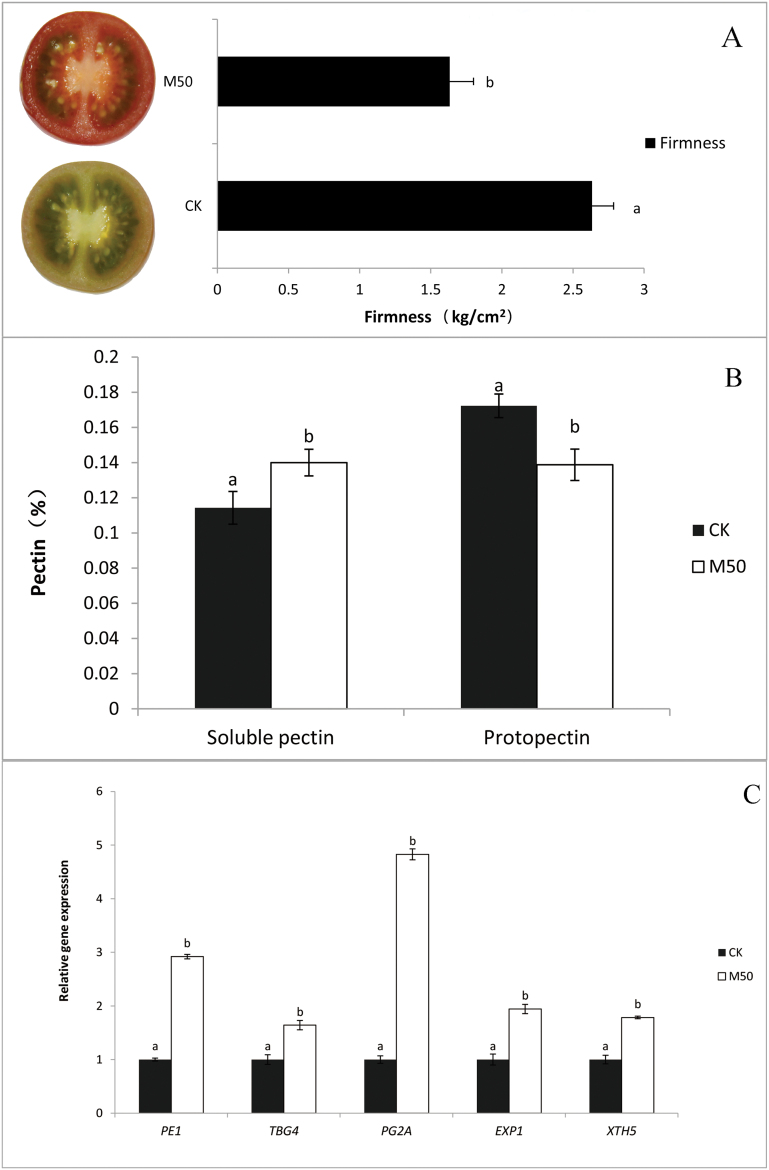
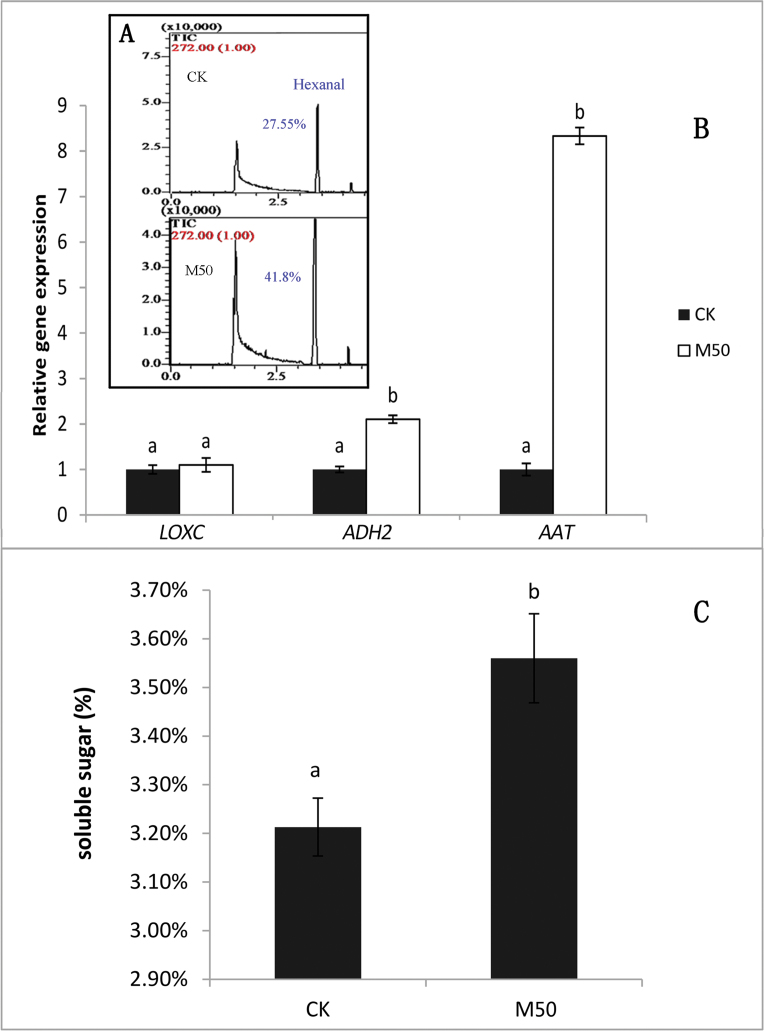
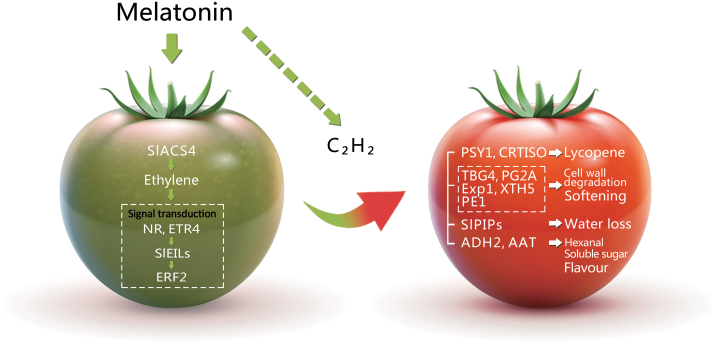
In this study, the effect of melatonin on the postharvest ripening and quality improvement of tomato fruit was carried out. The tomatoes were immersed in exogenous melatonin for 2h, and then the related physiological indicators and the expression of genes during post-harvest life were evaluated. Compared with control check (CK), the 50 µM melatonin treatment significantly increased lycopene levels by 5.8-fold. Meanwhile, the key genes involved in fruit colour development, including phytoene synthase1 (PSY1) and carotenoid isomerase (CRTISO), showed a 2-fold increase in expression levels. The rate of water loss from tomato fruit also increased 8.3%, and the expression of aquaporin genes, such as SlPIP12Q, SlPIPQ, SlPIP21Q, and SlPIP22, was up-regulated 2- to 3-fold under 50 µM melatonin treatment. In addition, 50 µM melatonin treatment enhanced fruit softening, increased water-soluble pectin by 22.5%, and decreased protopectin by 19.5%. The expression of the cell wall modifying proteins polygalacturonase (PG), pectin esterase1 (PE1), β-galactosidase (TBG4), and expansin1 (Exp1) was up-regulated under 50 µM melatonin treatment. Melatonin increased ethylene production by 27.1%, accelerated the climacteric phase, and influenced the ethylene signalling pathway. Alteration of ethylene production correlated with altered 1-aminocyclopropane-1-carboxylic acid (ACC) synthase (ACS4) expression. The expression of ethylene signal transduction-related genes such as NR, SlETR4, SlEIL1, SlEIL3, and SlERF2, was enhanced by 50 µM melatonin. The effect of melatonin on ethylene biosynthesis, ethylene perception, and ethylene signalling may contribute to fruit ripening and quality improvement in tomato. This research may promote the application of melatonin on postharvest ripening and quality improvement of tomato fruit as well as other horticultural productions in the future.
Keywords: Ethylene; gene expression; melatonin; postharvest; ripening; tomato..
© The Author 2014. Published by Oxford University Press on behalf of the Society for Experimental Biology.
Figures



References
-
- Alexander L, Grierson D. 2002. Ethylene biosynthesis and action in tomato: a model for climacteric fruit ripening. Journal of Experimental Botany 53, 2039–2055. - PubMed
-
- Baldwin EA, Scott JW, Einstein MA, Malundo TMM, Carr BT, Shewfelt RL, Tandon KS. 1998. Relationship between sensory and instrumental analysis for tomato flavor. Journal of the American Society for Horticultural Science 123, 906–915.
-
- Bapat VA, Trivedi PK, Ghosh A, Sane VA, Ganapathi TR, Nath P. 2010. Ripening of fleshy fruit: Molecular insight and the role of ethylene. Biotechnology Advances 28, 94–107. - PubMed
Publication types
MeSH terms
Substances
LinkOut - more resources
Full Text Sources
Other Literature Sources
Research Materials
