


The weight-inclusive versus weight-normative approach to health: evaluating the evidence for prioritizing well-being over weight loss
- PMID: 25147734
- PMCID: PMC4132299
- DOI: 10.1155/2014/983495
The weight-inclusive versus weight-normative approach to health: evaluating the evidence for prioritizing well-being over weight loss
Abstract
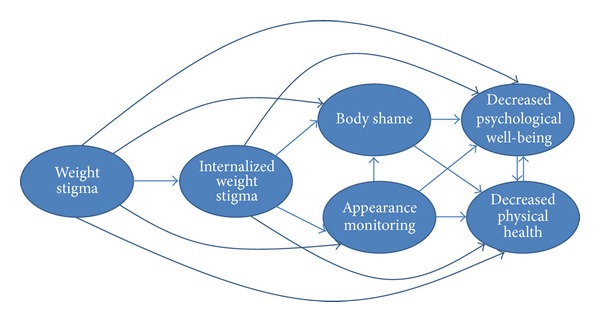
Using an ethical lens, this review evaluates two methods of working within patient care and public health: the weight-normative approach (emphasis on weight and weight loss when defining health and well-being) and the weight-inclusive approach (emphasis on viewing health and well-being as multifaceted while directing efforts toward improving health access and reducing weight stigma). Data reveal that the weight-normative approach is not effective for most people because of high rates of weight regain and cycling from weight loss interventions, which are linked to adverse health and well-being. Its predominant focus on weight may also foster stigma in health care and society, and data show that weight stigma is also linked to adverse health and well-being. In contrast, data support a weight-inclusive approach, which is included in models such as Health at Every Size for improving physical (e.g., blood pressure), behavioral (e.g., binge eating), and psychological (e.g., depression) indices, as well as acceptability of public health messages. Therefore, the weight-inclusive approach upholds nonmaleficience and beneficience, whereas the weight-normative approach does not. We offer a theoretical framework that organizes the research included in this review and discuss how it can guide research efforts and help health professionals intervene with their patients and community.
Figures

References
-
- Bacon L. Health at Every Size. Dallas, Tex, USA: Benbella Books; 2010.
-
- National Association to Advance Fat Acceptance. Guidelines for Healthcare Providers Who Treat fat Patients. 2012. http://issuu.com/naafa/docs/naafa_healthcarep_guidelines_2011_v06_screencut.
-
- National Obesity Forum. Guidelines on Management of Adult Obesity and Overweight in Primary Care. 2006. http://www.nationalobesityforum.org.uk/images/stories/W_M_guidelines/NOF....
-
- Mann T, Tomiyama AJ, Westling E, Lew A, Samuels B, Chatman J. Medicare’s search for effective obesity treatments: diets are not the answer. American Psychologist. 2007;62(3):220–233. - PubMed
Publication types
MeSH terms
LinkOut - more resources
Full Text Sources
Other Literature Sources
Medical
