. 2014 Aug 21;41(2):181-90.
doi: 10.1016/j.immuni.2014.07.007.

Revisiting thymic positive selection and the mature T cell repertoire for antigen

Affiliations

Revisiting thymic positive selection and the mature T cell repertoire for antigen

Nienke Vrisekoop et al. Immunity. .

Abstract

To support effective host defense, the T cell repertoire must balance breadth of recognition with sensitivity for antigen. The concept that T lymphocytes are positively selected in the thymus is well established, but how this selection achieves such a repertoire has not been resolved. Here we suggest that it is direct linkage between self and foreign antigen recognition that produces the necessary blend of TCR diversity and specificity in the mature peripheral repertoire, enabling responses to a broad universe of unpredictable antigens while maintaining an adequate number of highly sensitive T cells in a population of limited size. Our analysis also helps to explain how diversity and frequency of antigen-reactive cells in a T cell repertoire are adjusted in animals of vastly different size scale to enable effective antipathogen responses and suggests a possible binary architecture in the TCR repertoire that is divided between germline-related optimal binding and diverse recognition.


Figures

Figure 1
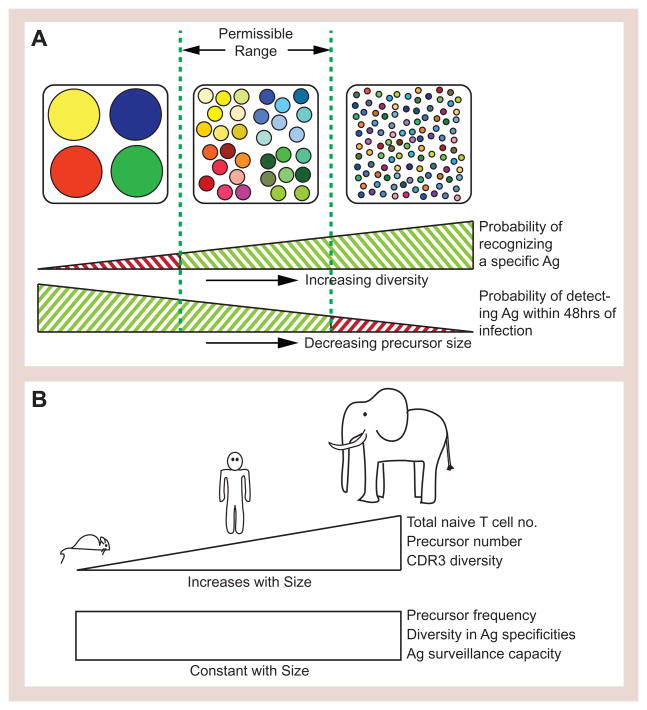
Figure 1. Features of an effective T cell repertoire
(A) Due to the fixed size of an individual’s naive T cell pool, a tradeoff between T cell diversity and the number of cells present of a given specificity (precursor number) arises. If the TCR repertoire is too diverse, the precursor frequency for a given specificity becomes so low that the response time to a replicating pathogen would be too slow. But if the repertoire is not diverse enough then foreign antigens may be missed entirely. The minimum unit repertoire that achieves an optimal balance of these two parameters is termed the Protecton. (B) To maintain an equal probability of successfully detecting a foreign antigen across species with vastly different body sizes, the absolute number of naïve T cells with a given TCR specificity has to be greater in larger animals to maintain the Protecton, but the precursor frequency for a given antigen stays constant as body size increases.
Figure 2
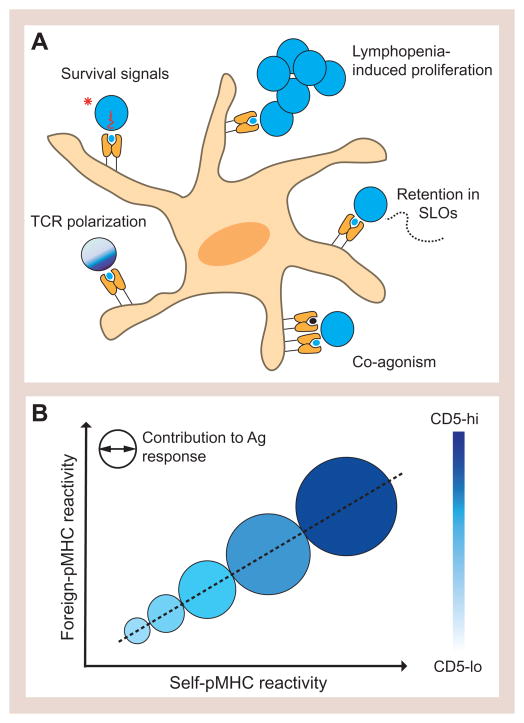
Figure 2. MHC restriction and the impact of self-recognition on peripheral T cell function
(A) Schematic of the role of self-pMHC interactions in the function of peripheral naïve CD4+ T cells that have been described. Clockwise from top left: T cells obtain trophic signals from interacting with self-pMHC that are required for their survival and, in lymphopenic conditions, lead to cell division; CD4+ T cells, but not CD8+ T cells, are retained in secondary lymphoid organs (SLOs) by contact with self-pMHCII-bearing dendritic cells; self-pMHC can act as co-agonists during activation with rare agonist pMHC; recognition of self-pMHC increases T cell sensitivity to foreign antigens by polarizing the TCR distribution in the cell membrane. (C) Graph depicting the direct relationship between self and foreign pMHC reactivity and the dominance of T cells with greater self-pMHC reactivity in a response to foreign antigen. Shades of blue are used to indicate surface CD5 expression levels prior to antigen recognition.
Figure 3
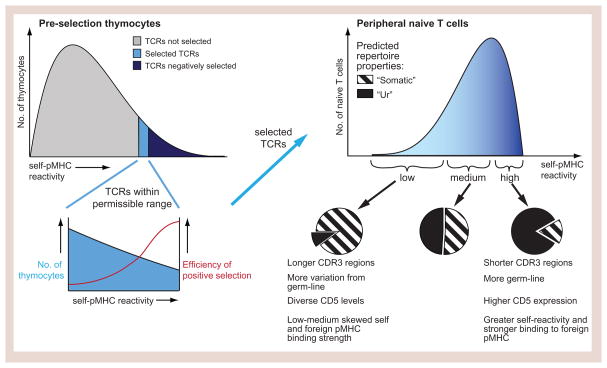
Figure 3. Trimming of the repertoire and TCR representation in the periphery
Only a small fraction of TCRs are selected in the thymus from the TCRs that are generated (3–5%). The distribution shape of the self-spectrum prior to selection in the thymus is unknown, but it is likely positively skewed given that the majority of T cells die by neglect with most TCRs having at least some reactivity for pMHC. Data suggests that thymic selection favors greater self-pMHC reactivity (inset), with negative selection providing an upper threshold for self-pMHC binding strength of the TCRs that are selected. The self-pMHC reactivity distribution of selected TCRs that constitute the peripheral naïve T cell pool therefore has a negative skew. A prediction from current data is that TCRs from the high end of the self-spectrum in the periphery is enriched for germline TCRs which we term the “ur”-repertoire (these are the only type of TCRs produced in absence of TdT), while TCRs from the low end of the self-spectrum are enriched for CDR3s that have a variable number of nucleotide additions and constitute the “somatic” repertoire.

References

    1. Allison JP, McIntyre BW, Bloch D. Tumor-specific antigen of murine T-lymphoma defined with monoclonal antibody. J Immunol. 1982;129:2293–2300. - PubMed
    1. Azzam HS, Grinberg A, Lui K, Shen H, Shores EW, Love PE. CD5 expression is developmentally regulated by T cell receptor (TCR) signals and TCR avidity. J Exp Med. 1998;188:2301–2311. - PMC - PubMed
    1. Babbitt BP, Allen PM, Matsueda G, Haber E, Unanue ER. Binding of immunogenic peptides to Ia histocompatibility molecules. Nature. 1985;317:359–361. - PubMed
    1. Banchereau J, Pascual V. Type I interferon in systemic lupus erythematosus and other autoimmune diseases. Immunity. 2006;25:383–392. - PubMed
    1. Barton GM, Rudensky AY. Requirement for diverse, low-abundance peptides in positive selection of T cells. Science. 1999;283:67–70. - PubMed

Publication types

MeSH terms

Substances