


Hybrid functional electrical stimulation exercise training alters the relationship between spinal cord injury level and aerobic capacity
- PMID: 25152170
- PMCID: PMC4252514
- DOI: 10.1016/j.apmr.2014.07.412
Hybrid functional electrical stimulation exercise training alters the relationship between spinal cord injury level and aerobic capacity
Abstract
Objective: To test the hypothesis that hybrid functional electrical stimulation (FES) row training would improve aerobic capacity but that it would remain strongly linked to level of spinal cord lesion because of limited maximal ventilation.
Design: Longitudinal before-after trial of 6 months of FES row training.
Setting: Exercise for persons with disabilities program in a hospitaL.
Participants: Volunteers (N=14; age range, 21-63y) with complete spinal cord injury (SCI) (T3-11) who are >2 years postinjury.
Intervention: Six months of FES row training preceded by a variable period of FES strength training.
Main outcome measures: Peak aerobic capacity and peak exercise ventilation before and after 6 months of FES row training.
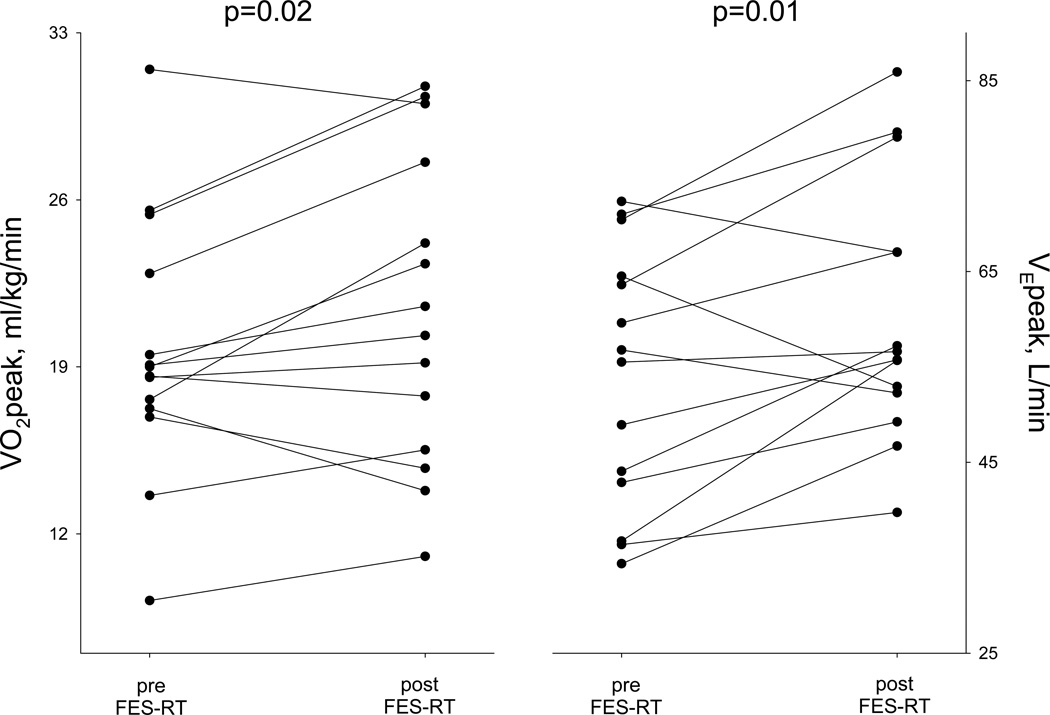
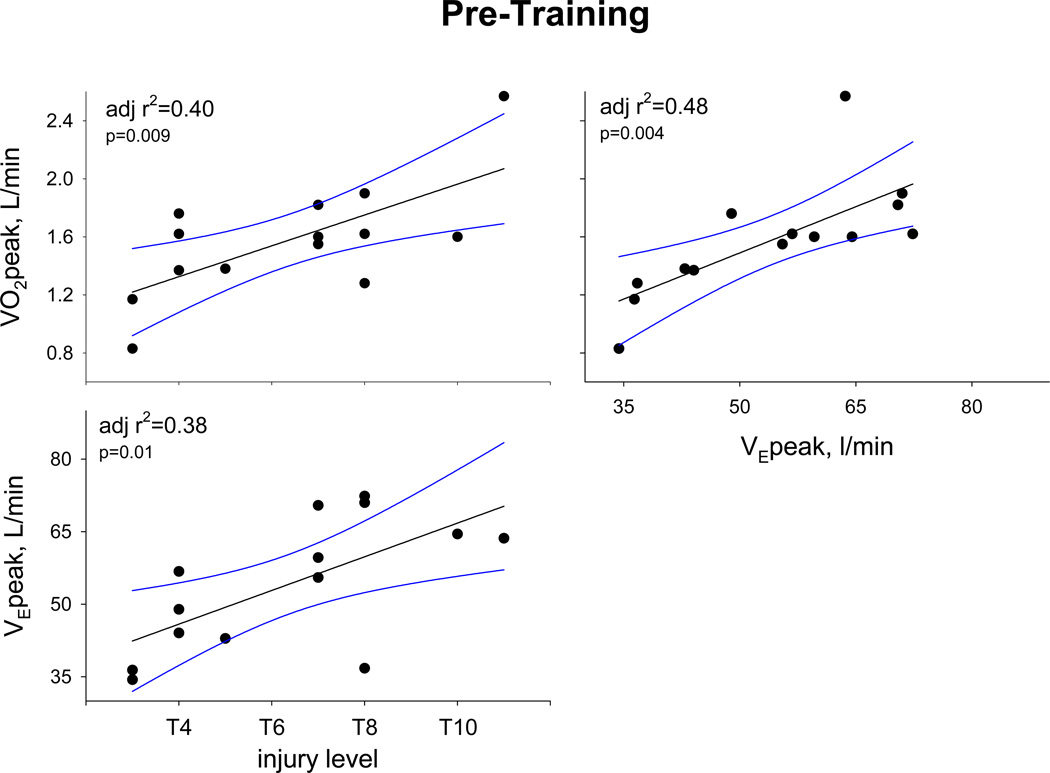
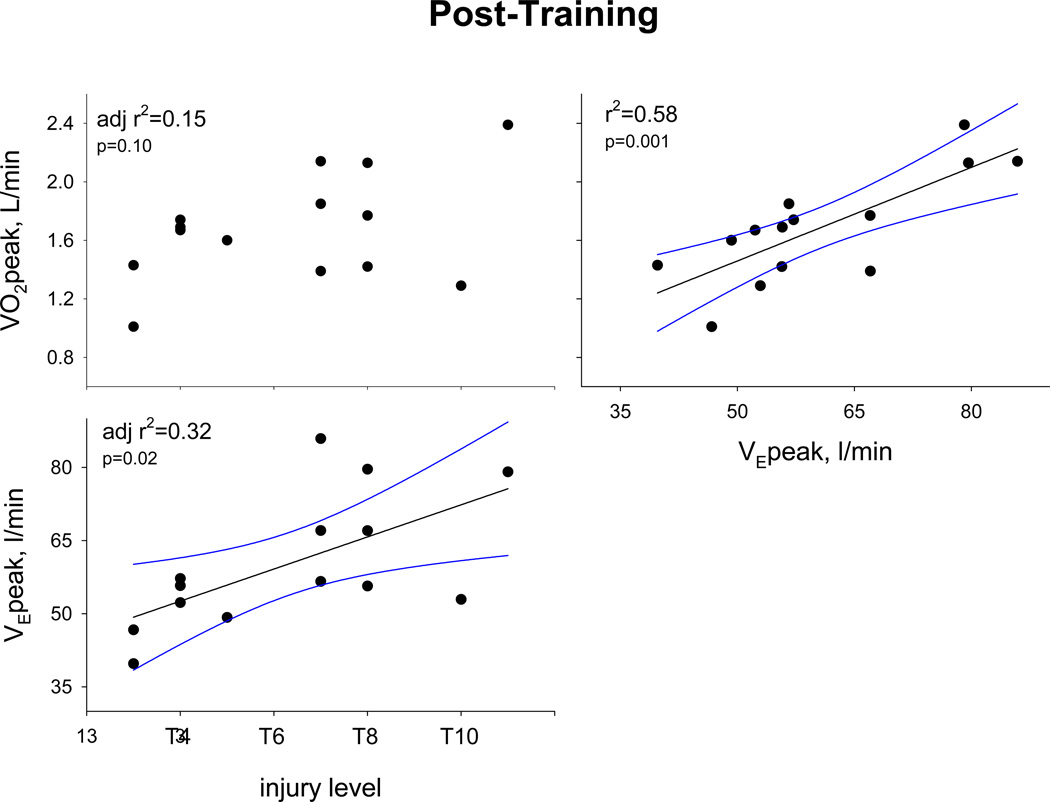
Results: FES row training significantly increased peak aerobic capacity and peak minute ventilation (both P<.05). Prior to FES row training, there was a close relation between level of SCI and peak aerobic capacity (adjusted R(2)=.40, P=.009) that was markedly reduced after FES row training (adjusted R(2)=.15, P=.10). In contrast, the relation between level of injury and peak minute ventilation was comparable before and after FES row training (adjusted R(2)=.38 vs .32, both P<.05).
Conclusions: The increased aerobic capacity reflects more than increased ventilation; FES row training effectively circumvents the effect of SCI on peak aerobic capacity by engaging more muscle mass for training, independent of the level of injury.
Keywords: Exercise; Rehabilitation.
Copyright © 2014 American Congress of Rehabilitation Medicine. Published by Elsevier Inc. All rights reserved.
Figures
References
-
- Hooker SP, Greenwood JD, Hatae DT, Husson RP, Matthiesen TL, Waters AR. Oxygen uptake and heart rate relationship in persons with spinal cord injury. Med Sci Sports Exerc. 1993;25:1115–1119. - PubMed
-
- Valent L, Dallmeijer A, Houdijk H, Talsma E, van der WL. The effects of upper body exercise on the physical capacity of people with a spinal cord injury: a systematic review. Clin Rehabil. 2007;21:315–330. - PubMed
-
- Battikha M, Sa L, Porter A, Taylor JA. Relationship Between Pulmonary Function and Exercise Capacity in Individuals with Spinal Cord Injury. Am J Phys Med Rehabil. 2014 - PubMed
-
- Burkett LN, Chisum J, Stone W, Fernhall B. Exercise capacity of untrained spinal cord injured individuals and the relationship of peak oxygen uptake to level of injury. Paraplegia. 1990;28:512–521. - PubMed
-
- Van L, McCluer S, Loftin JM, Boileau RA. Comparison of physiological responses to maximal arm exercise among able-bodied, paraplegics and quadriplegics. Paraplegia. 1987;25:397–405. - PubMed
Publication types
MeSH terms
Grants and funding
LinkOut - more resources
Full Text Sources
Other Literature Sources
Medical
Miscellaneous
