


Pregnancy associated plasma protein-A2: a novel biomarker for Down syndrome
- PMID: 25154785
- PMCID: PMC4198481
- DOI: 10.1016/j.placenta.2014.08.001
Pregnancy associated plasma protein-A2: a novel biomarker for Down syndrome
Abstract
Introduction: In an effort to improve prenatal screening for Trisomy 21, we evaluated pregnancy associated plasma protein-A2 (PAPP-A2) as a potential novel second trimester biomarker for Trisomy 21.
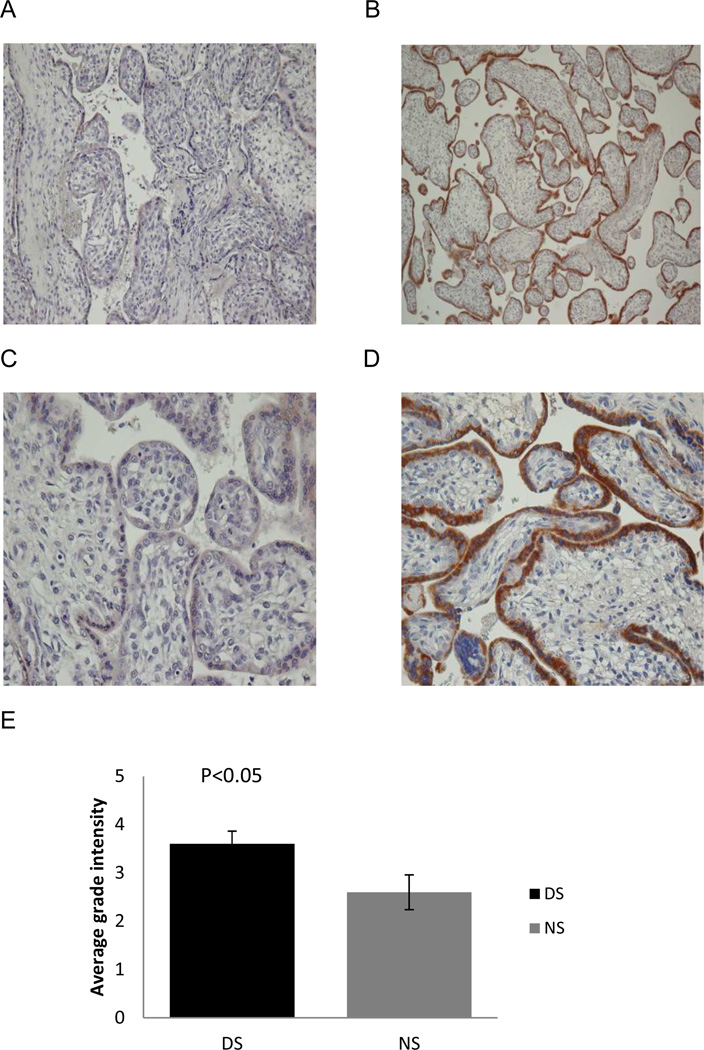
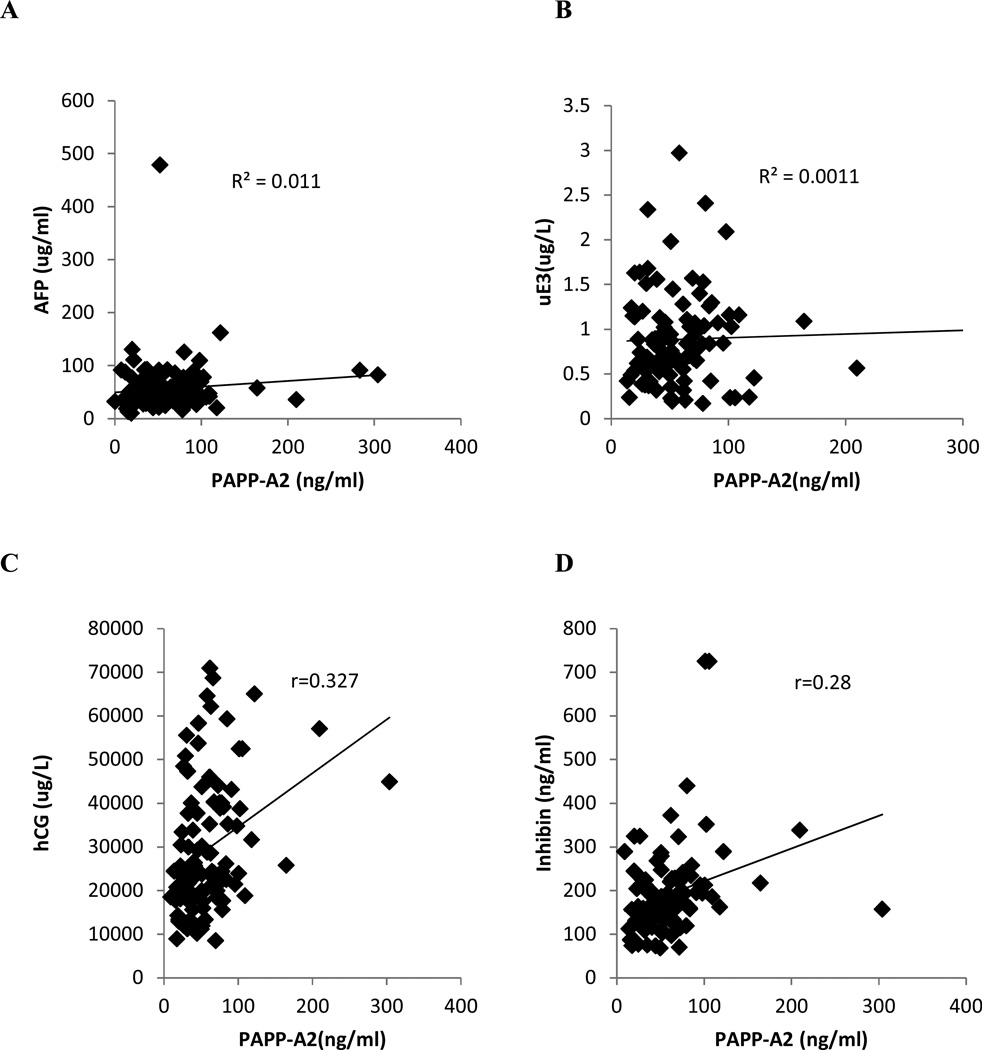
Methods: Trisomy 21 and normal control mid-trimester placental samples were subjected to quantitative rt PCR analysis of seven genes we had previously found to be differentially expressed in Trisomy 21 placentae. The localization and differential expression of PAPP-A2 in second trimester placentae from normal and Trisomy 21 pregnancies was determined by immunohistochemistry. PAPP-A2 maternal serum protein levels in ten Trisomy 21 and ten diploid pregnancies were compared by Western blotting. Maternal serum PAPP-A2 levels were measured in 30 Down syndrome cases and 142 normal controls, using ELISA. Regression analysis was used to determine the correlation of PAPP-A2 with other existing markers of Trisomy 21.
Results: PAPP-A2 (aka PLAC 3) mRNA and protein expression were both increased in Down syndrome placentae as compared to diploid placentae. PAPP-A2 was also increased in maternal serum from Down syndrome pregnancies as compared to diploid pregnancies. PAPP-A2 expression correlated weakly with established markers.
Discussion: This work takes advantage of our previously performed systematic approach to the discovery of novel maternal serum biomarkers for Trisomy 21, using cDNA microarray analysis. Beginning with the validation of the microarray results, we have tracked PAPP-A2 overexpression in Down syndrome from placental mRNA to maternal serum protein.
Conclusion: PAPP-A2 could serve as an additional maternal serum marker in prenatal screening for Trisomy 21.
Keywords: Biomarker; Down syndrome; Maternal serum; Placenta; Pregnancy associated plasma protein-A2; Second trimester.
Copyright © 2014 Elsevier Ltd. All rights reserved.
Conflict of interest statement
The authors have nothing to disclose and no conflict of interest.
Figures



References
-
- Merkatz IR, Nitowsky HM, Macri JN, Johnson WE. An association between low maternal serum alpha-fetoprotein and fetal chromosomal abnormalities. Obstet Gynecol. 1984 Apr 1;148(7):886–894. 1984. - PubMed
-
- Wald NJ, Huttly WJ, Hackshaw AK. Antenatal screening for Down's syndrome with the quadruple test. The Lancet. 2003;361(9360):835–836. 3/8. - PubMed
-
- Cuckle HS, Wald NJ, Lindenbaum RH. Maternal serum alpha-fetoprotein measurement: a screening test for Down syndrome. Lancet. 1984 Apr 28;1(8383):926–929. 1984. - PubMed
-
- Haddow JE, Kloza EM, Smith DE, Knight GJ. Data from an alpha-fetoprotein pilot screening program in Maine. Obstet Gynecol. 1983 Nov;62(5):556–560. - PubMed
Publication types
MeSH terms
Substances
Grants and funding
LinkOut - more resources
Full Text Sources
Other Literature Sources
Medical
