


The somatic genomic landscape of chromophobe renal cell carcinoma
- PMID: 25155756
- PMCID: PMC4160352
- DOI: 10.1016/j.ccr.2014.07.014
The somatic genomic landscape of chromophobe renal cell carcinoma
Abstract
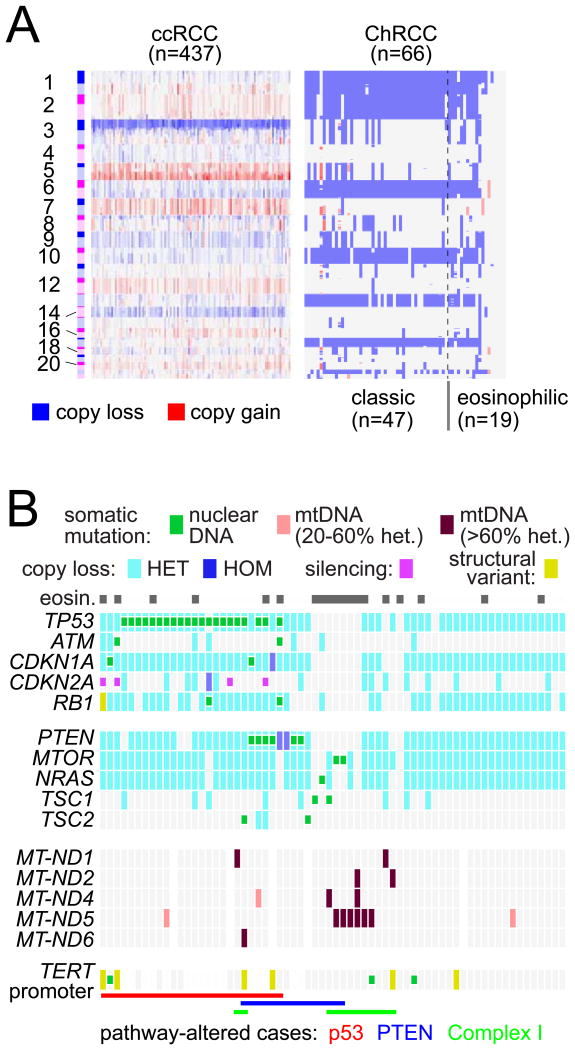
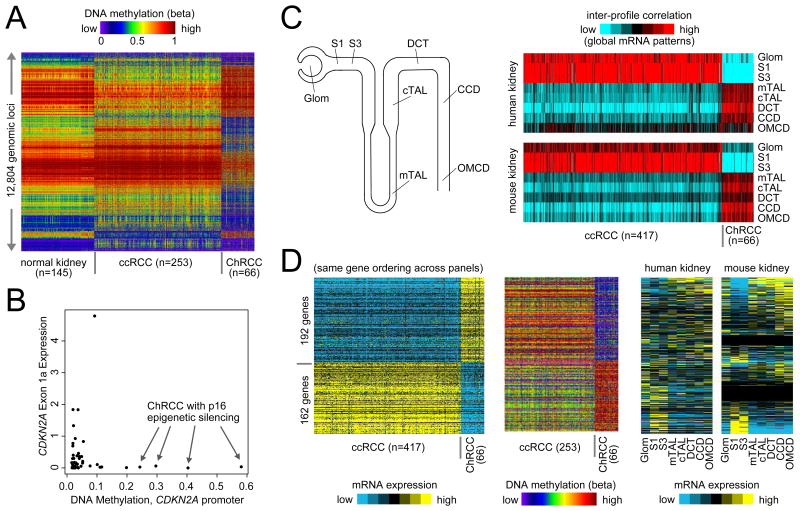
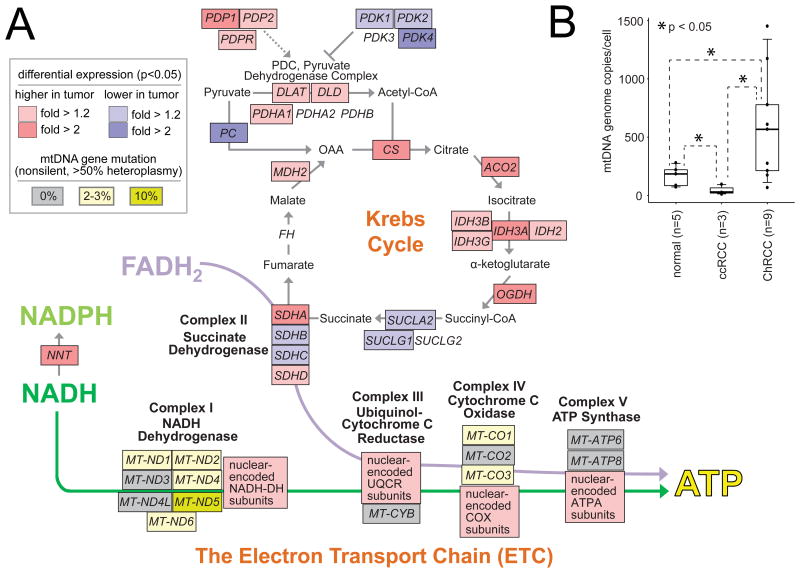
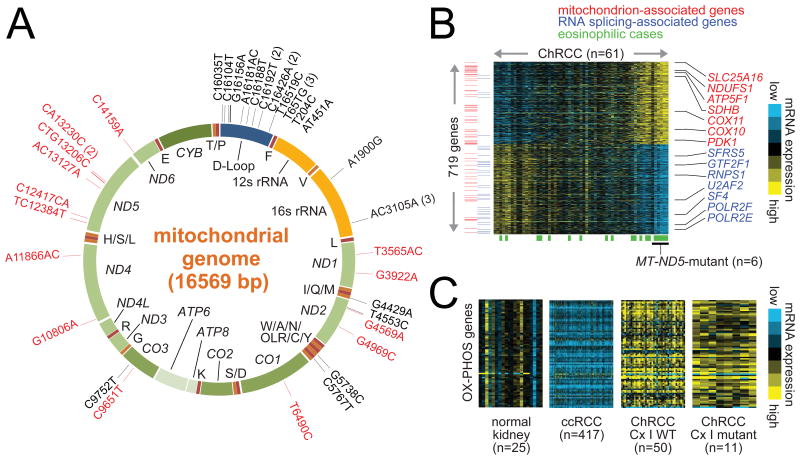
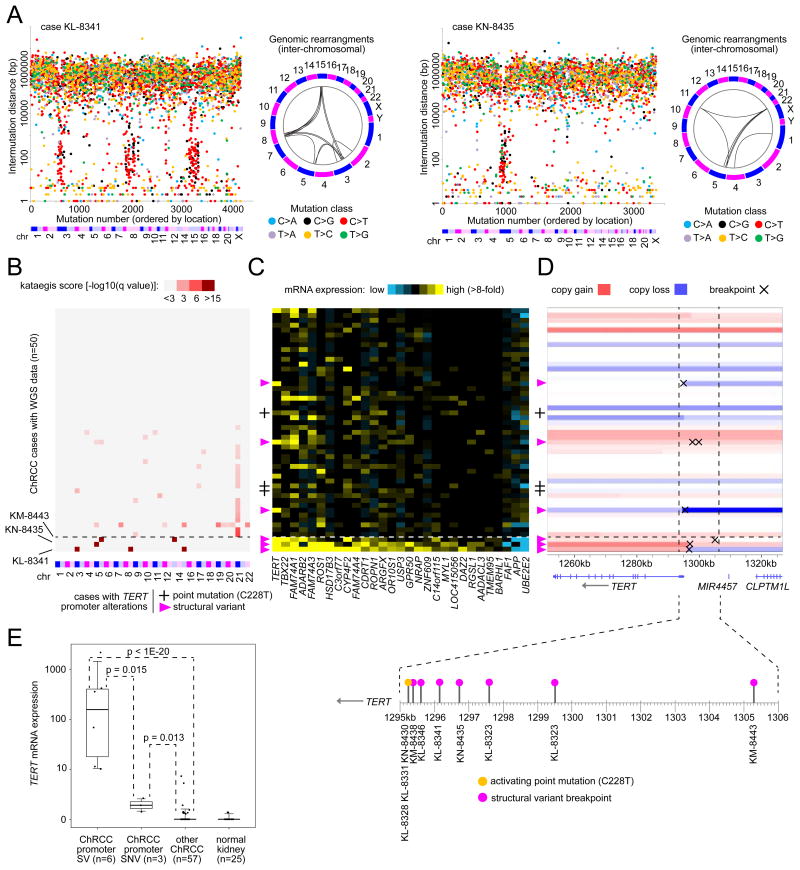
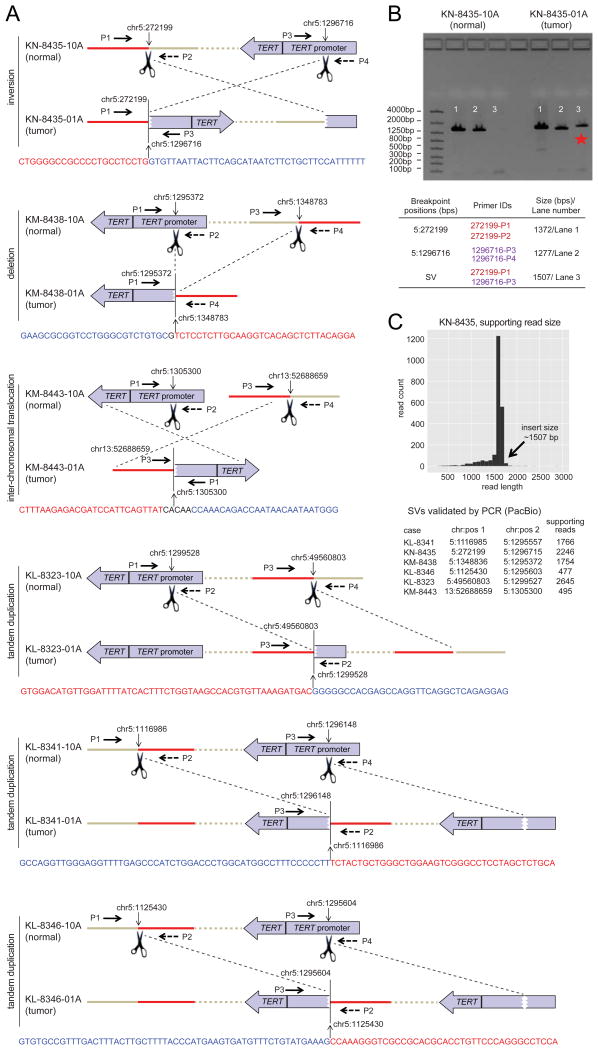
We describe the landscape of somatic genomic alterations of 66 chromophobe renal cell carcinomas (ChRCCs) on the basis of multidimensional and comprehensive characterization, including mtDNA and whole-genome sequencing. The result is consistent that ChRCC originates from the distal nephron compared with other kidney cancers with more proximal origins. Combined mtDNA and gene expression analysis implicates changes in mitochondrial function as a component of the disease biology, while suggesting alternative roles for mtDNA mutations in cancers relying on oxidative phosphorylation. Genomic rearrangements lead to recurrent structural breakpoints within TERT promoter region, which correlates with highly elevated TERT expression and manifestation of kataegis, representing a mechanism of TERT upregulation in cancer distinct from previously observed amplifications and point mutations.
Copyright © 2014 Elsevier Inc. All rights reserved.
Figures
References
-
- Amin MB, Amin MB, Tamboli P, Javidan J, Stricker H, de-Peralta Venturina M, Deshpande A, Menon M. Prognostic impact of histologic subtyping of adult renal epithelial neoplasms: an experience of 405 cases. Am J Surg Pathol. 2002;26:281–291. - PubMed
-
- Amin MB, Paner GP, Alvarado-Cabrero I, Young AN, Stricker HJ, Lyles RH, Moch H. Chromophobe renal cell carcinoma: histomorphologic characteristics and evaluation of conventional pathologic prognostic parameters in 145 cases. Am J Surg Pathol. 2008;32:1822–1834. - PubMed
-
- Brunelli M, Eble JN, Zhang S, Martignoni G, Delahunt B, Cheng L. Eosinophilic and classic chromophobe renal cell carcinomas have similar frequent losses of multiple chromosomes from among chromosomes 1, 2, 6, 10, and 17, and this pattern of genetic abnormality is not present in renal oncocytoma. Modern pathology : an official journal of the United States and Canadian Academy of Pathology, Inc. 2005;18:161–169. - PubMed
Publication types
MeSH terms
Substances
Grants and funding
- U24 CA143882/CA/NCI NIH HHS/United States
- UL1TR001111/TR/NCATS NIH HHS/United States
- P50 CA101942/CA/NCI NIH HHS/United States
- 5U24CA143866/CA/NCI NIH HHS/United States
- KL2 TR001109/TR/NCATS NIH HHS/United States
- P30 CA016086/CA/NCI NIH HHS/United States
- P01 CA120964/CA/NCI NIH HHS/United States
- U54 HG003273/HG/NHGRI NIH HHS/United States
- KL2TR001109/TR/NCATS NIH HHS/United States
- R01 GM103502/GM/NIGMS NIH HHS/United States
- P30 CA008748/CA/NCI NIH HHS/United States
- U24 CA180951/CA/NCI NIH HHS/United States
- U24 CA143843/CA/NCI NIH HHS/United States
- U24 CA143858/CA/NCI NIH HHS/United States
- U24 CA143848/CA/NCI NIH HHS/United States
- T15 LM007093/LM/NLM NIH HHS/United States
- T32 GM008719/GM/NIGMS NIH HHS/United States
- K24CA172355/CA/NCI NIH HHS/United States
- UL1 TR001111/TR/NCATS NIH HHS/United States
- P30 CA016672/CA/NCI NIH HHS/United States
- 5U24CA143843/CA/NCI NIH HHS/United States
- U54 HG003067/HG/NHGRI NIH HHS/United States
- U54HG003273/HG/NHGRI NIH HHS/United States
- P30 CA016056/CA/NCI NIH HHS/United States
- K24 CA172355/CA/NCI NIH HHS/United States
- R01 CA183793/CA/NCI NIH HHS/United States
- ImNIH/Intramural NIH HHS/United States
- U24 CA143867/CA/NCI NIH HHS/United States
- 5P50CA101942/CA/NCI NIH HHS/United States
LinkOut - more resources
Full Text Sources
Other Literature Sources
Medical
