


Effect of chlorogenic acid on melanogenesis of B16 melanoma cells
- PMID: 25157464
- PMCID: PMC6271456
- DOI: 10.3390/molecules190912940
Effect of chlorogenic acid on melanogenesis of B16 melanoma cells
Abstract
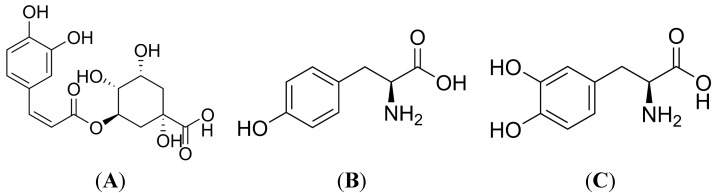
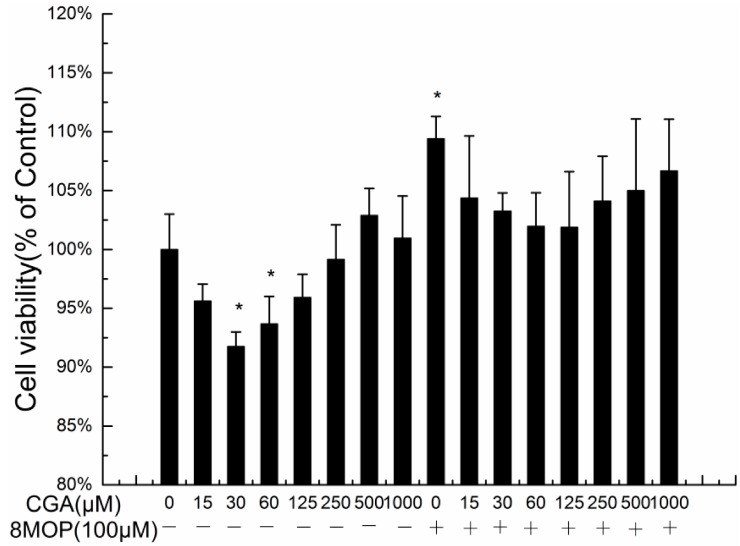
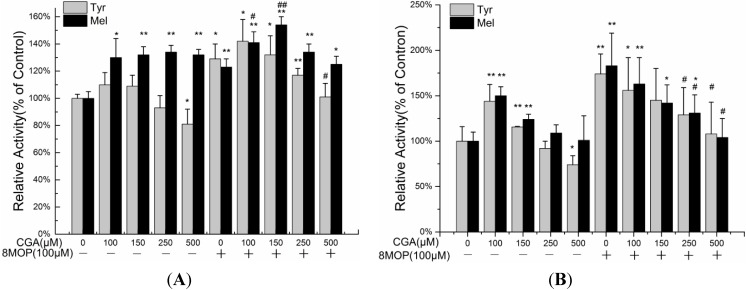
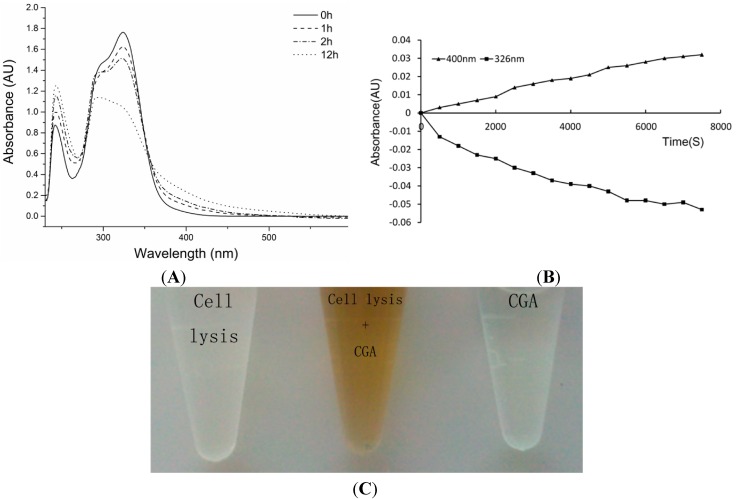
Chlorogenic acid (CGA), the ester formed between caffeic acid and l-quinic acid, is a widespread phenolic compound. It is part of the human diet, found in foods such as coffee, apples, pears, etc. CGA is also was widely used in cosmetics, but the effects of CGA on melanogenesis are unknown. In this study, we analyzed the effects of CGA on cell proliferation, melanin content and tyrosinase of B16 murine melanoma cells. Additionally, the enzymatic reactions of CGA in B16 melanoma cells lytic solution were detected by UV spectrophotometry. Results showed CGA at 30 and 60 μM significantly suppresses cell proliferation. 8-MOP at 100 μM significantly promotes cell proliferation, but CGA can counter this. Incubated for 24 h, CGA (500 μM) improves melanogenesis while suppressing tyrosinase activity in B16 melanoma cells or 8-methoxypsoralen (8-MOP) co-incubated B16 melanoma cells. After 12 h, B16 melanoma cell treatment with CGA leads to an increase in melanin accumulation, however, after 48 h there is a decrease in melanin production which correlates broadly with a decrease in tyrosinase activity. CGA incubated with lytic solution 24 h turned brown at 37 °C. The formation of new products (with a maximum absorption at 295 nm) is associated with reduction of CGA (maximum absorption at 326 nm). Therefore, CGA has its two sidesroles in melanogenesis of B16 melanoma cells. CGA is a likely a substrate of melanin, but the metabolic product(s) of CGA may suppress melanogenesis in B16 melanoma cells by inhibiting tyrosinase activity.
Conflict of interest statement
The authors declare no conflict of interest.
Figures
References
-
- Scharffetter-Kochanek K., Wlaschek M., Brenneisen P., Schauen M., Blaudschun R., Wenk J. UV-induced reactive oxygen species in photocarcinogenesis and photoaging. Biol. Chem. 1997;378:1247–1257. - PubMed
-
- Gaudout D., Megard D., Inisan C., Esteve C., Lejard F. Phloridzin-Rich Phenolic Fraction and Use Thereof as a Cosmetic, Dietary or Nutraceutical Agent. 7427418 B2. U.S. Patent. 2008 Sep 23;
-
- Gaudout D., Megard D., Lejard F. Use of a Dihydrochalcone-Rich Phenolic Fraction in a Cosmetic Treatment. 7285298. U.S. Patent. 2007 Oct 23;
Publication types
MeSH terms
Substances
LinkOut - more resources
Full Text Sources
Other Literature Sources
Research Materials
