


Setting the vision: applied patient-reported outcomes and smart, connected digital healthcare systems to improve patient-centered outcomes prediction in critical illness
- PMID: 25159475
- PMCID: PMC4217159
- DOI: 10.1097/MCC.0000000000000139
Setting the vision: applied patient-reported outcomes and smart, connected digital healthcare systems to improve patient-centered outcomes prediction in critical illness
Abstract
Purpose of review: Prediction models in critical illness are generally limited to short-term mortality and uncommonly include patient-centered outcomes. Current outcome prediction tools are also insensitive to individual context or evolution in healthcare practice, potentially limiting their value over time. Improved prognostication of patient-centered outcomes in critical illness could enhance decision-making quality in the ICU.
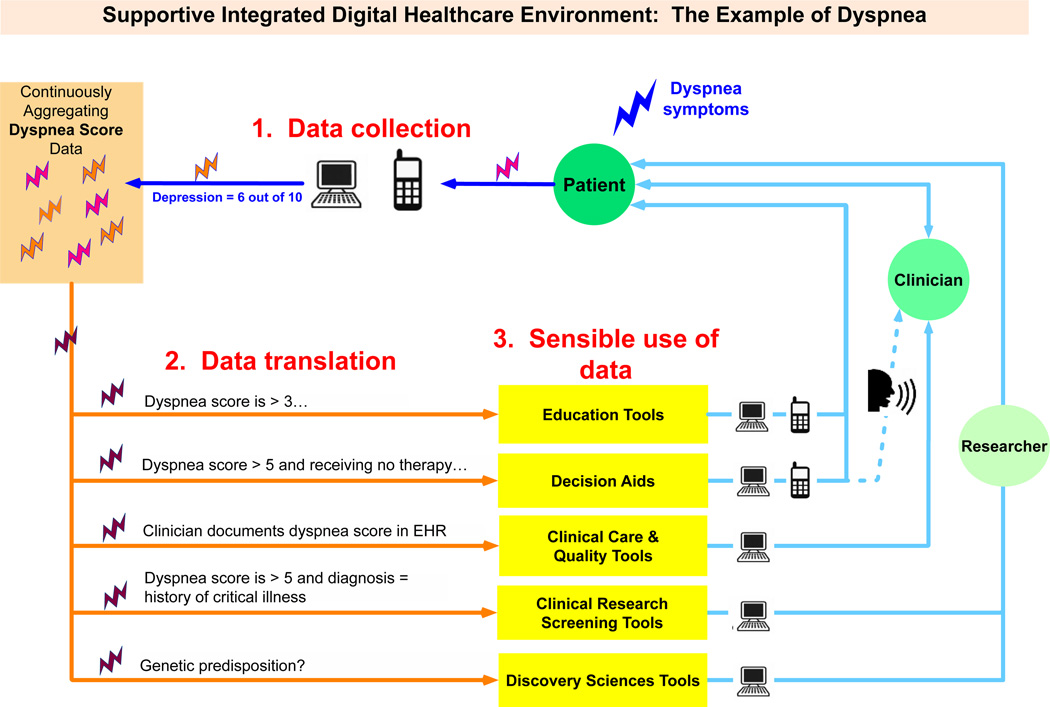
Recent findings: Patient-reported outcomes have emerged as precise methodological measures of patient-centered variables and have been successfully employed using diverse platforms and technologies, enhancing the value of research in critical illness survivorship and in direct patient care. The learning health system is an emerging ideal characterized by integration of multiple data sources into a smart and interconnected health information technology infrastructure with the goal of rapidly optimizing patient care. We propose a vision of a smart, interconnected learning health system with integrated electronic patient-reported outcomes to optimize patient-centered care, including critical care outcome prediction.
Summary: A learning health system infrastructure integrating electronic patient-reported outcomes may aid in the management of critical illness-associated conditions and yield tools to improve prognostication of patient-centered outcomes in critical illness.
References
-
-
Longo DR, Woolf SH. Rethinking the information priorities of patients. JAMA. 2014;311(18):1857–1858. * Describes the development of several decision-aids and the opportunities offered by developments in mobile technology, but also the heterogeneity in patient's informational desires and needs.
-
-
- Knaus WA, Harrell FE, Jr, Lynn J, et al. The SUPPORT prognostic model. Objective estimates of survival for seriously ill hospitalized adults. Study to understand prognoses and preferences for outcomes and risks of treatments. Ann Intern Med. 1995 Feb 1;122(3):191–203. - PubMed
-
- Rocker G, Cook D, Sjokvist P, et al. Clinician predictions of intensive care unit mortality. Crit Care Med. 2004 May;32(5):1149–1154. - PubMed
Publication types
MeSH terms
Grants and funding
LinkOut - more resources
Full Text Sources
Other Literature Sources
Medical
Research Materials
