


From sprouting angiogenesis to erythrocytes generation by cancer stem cells: evolving concepts in tumor microcirculation
- PMID: 25162040
- PMCID: PMC4138761
- DOI: 10.1155/2014/986768
From sprouting angiogenesis to erythrocytes generation by cancer stem cells: evolving concepts in tumor microcirculation
Abstract
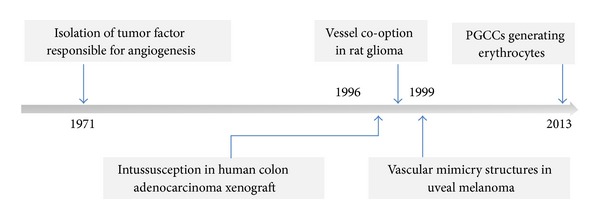
Angiogenesis is essential for tumor growth and metastasis. Over the last decades, a substantial progress has been achieved in defining different patterns of tumor microcirculation. Sprouting angiogenesis, the oldest model of microcirculation, is the de novo vessel formation from preexisting blood vessels. Vessel splitting and hijacking, also known, respectively, as intussusception and cooption, are alternative models that account for tumor resistance to antiangiogenic therapy. In addition to remodeling the microenvironment, the tumor cell can undergo intrinsic changes and survive hypoxic conditions by acquiring stem cell properties. In line with the concept of pluripotency, tumor cells can form vascular mimicry structures creating their own microcirculation despite a latent vessel growth. The recent identification of the polyploid giant cancer cells and tumor-derived erythrocytes is the most innovative survival mechanism in hypoxia and provides a potential target for more effective therapies.
Figures
References
-
- Otrock ZK, Mahfouz RAR, Makarem JA, Shamseddine AI. Understanding the biology of angiogenesis: review of the most important molecular mechanisms. Blood Cells, Molecules, and Diseases. 2007;39(2):212–220. - PubMed
-
- Carmeliet P. Mechanisms of angiogenesis and arteriogenesis. Nature Medicine. 2000;6(4):389–395. - PubMed
-
- Alameddine RS, Otrock ZK, Awada A, Shamseddine A. Crosstalk between HER2 signaling and angiogenesis in breast cancer: molecular basis, clinical applications and challenges. Current Opinion in Oncology. 2013;25(3):313–324. - PubMed
-
- Jakeman LB, Armanini M, Phillips HS, Ferrara N. Developmental expression of binding sites and messenger ribonucleic acid for vascular endothelial growth factor suggests a role for this protein in vasculogenesis and angiogenesis. Endocrinology. 1993;133(2):848–859. - PubMed
-
- Ferrara N, Gerber H, LeCouter J. The biology of VEGF and its receptors. Nature Medicine. 2003;9(6):669–676. - PubMed
Publication types
MeSH terms
Substances
LinkOut - more resources
Full Text Sources
Other Literature Sources
