


Mammalian gut immunity
- PMID: 25163502
- PMCID: PMC4714863
- DOI: 10.4103/2319-4170.130922
Mammalian gut immunity
Abstract
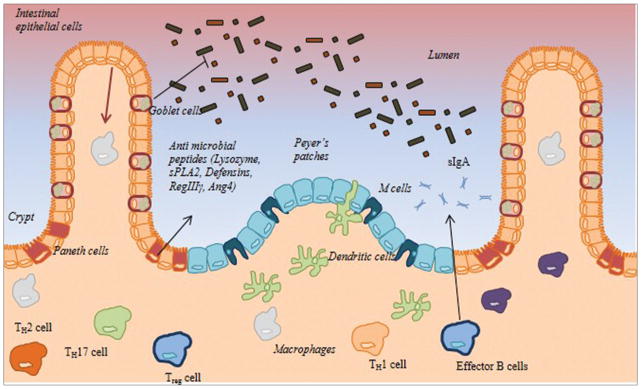
The mammalian intestinal tract is the largest immune organ in the body and comprises cells from non-hemopoietic (epithelia, Paneth cells, goblet cells) and hemopoietic (macrophages, dendritic cells, T-cells) origin, and is also a dwelling for trillions of microbes collectively known as the microbiota. The homeostasis of this large microbial biomass is prerequisite to maintain host health by maximizing beneficial symbiotic relationships and minimizing the risks of living in such close proximity. Both microbiota and host immune system communicate with each other to mutually maintain homeostasis in what could be called a "love-hate relationship." Further, the host innate and adaptive immune arms of the immune system cooperate and compensate each other to maintain the equilibrium of a highly complex gut ecosystem in a stable and stringent fashion. Any imbalance due to innate or adaptive immune deficiency or aberrant immune response may lead to dysbiosis and low-grade to robust gut inflammation, finally resulting in metabolic diseases.
Figures
Comment in
-
Mammalian gut microbiota and immunity.Biomed J. 2014 Sep-Oct;37(5):245. doi: 10.4103/2319-4170.142419. Biomed J. 2014. PMID: 25348488 No abstract available.
References
-
- Oresic M, Seppanen-Laakso T, Yetukuri L, Backhed F, Hanninen V. Gut microbiota affects lens and retinal lipid composition. Exp Eye Res. 2009;89:604–7. - PubMed
-
- Hamer HM, Jonkers D, Venema K, Vanhoutvin S, Troost FJ, Brummer RJ. Review article: The role of butyrate on colonic function. Aliment Pharmacol Ther. 2008;27:104–19. - PubMed
Publication types
MeSH terms
Grants and funding
LinkOut - more resources
Full Text Sources
Other Literature Sources
Medical