Ticagrelor: pharmacokinetics, pharmacodynamics, clinical efficacy, and safety
- PMID: 25164528
- PMCID: PMC4282310
- DOI: 10.1002/phar.1477
Ticagrelor: pharmacokinetics, pharmacodynamics, clinical efficacy, and safety
Abstract
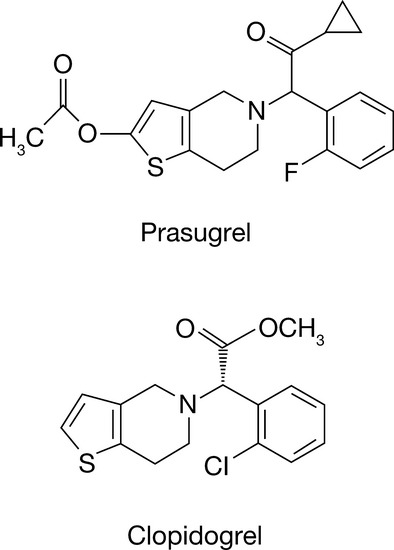
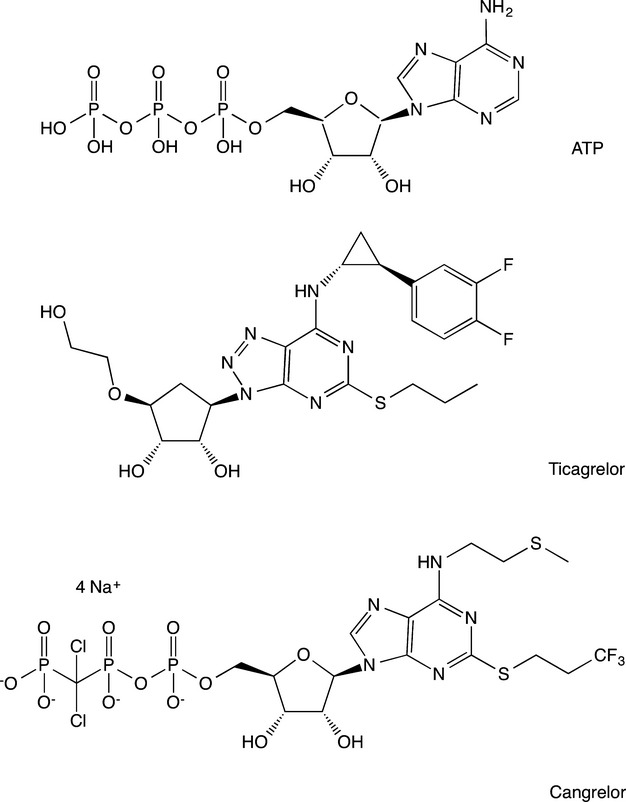
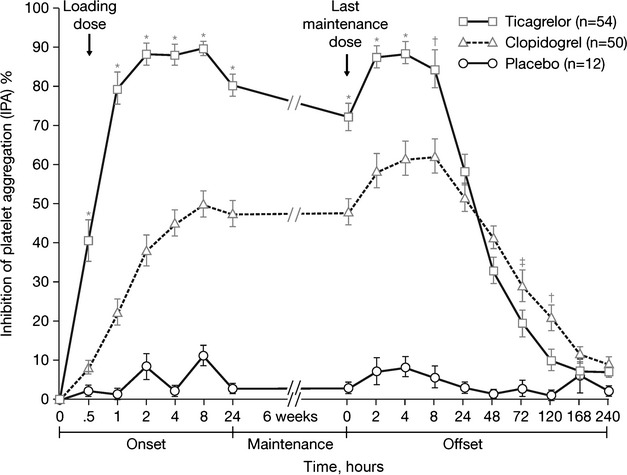
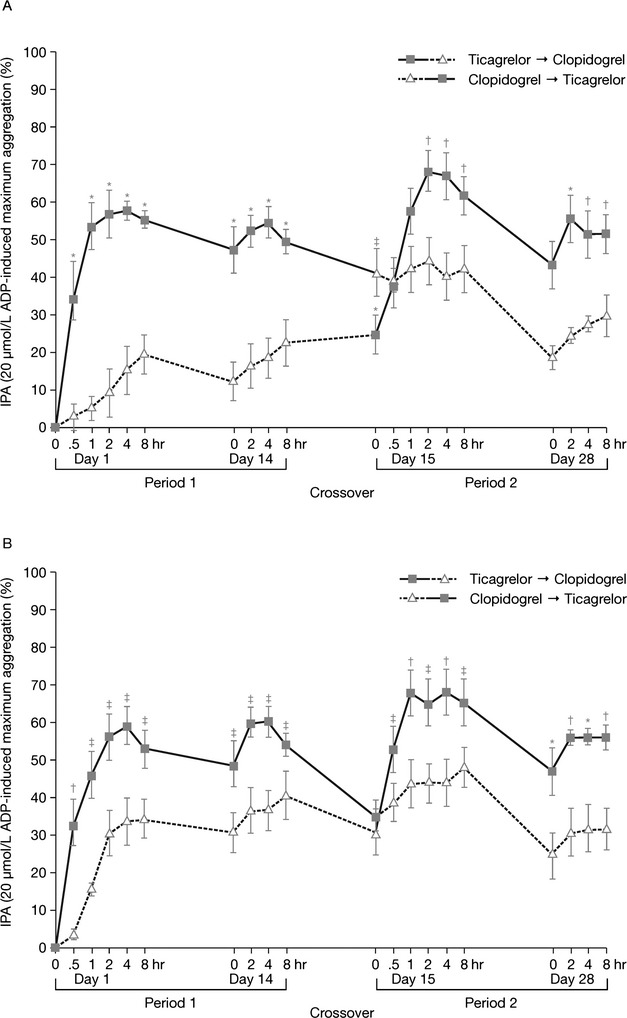
Dual antiplatelet therapy, composed of aspirin plus a P2Y12 -receptor antagonist, is the cornerstone of treatment for patients with acute coronary syndrome (ACS). A number of U.S. Food and Drug Administration-approved P2Y12 -receptor antagonists are available for treating patients with ACS, including the thienopyridine compounds clopidogrel and prasugrel. Ticagrelor, the first of a new class of antiplatelet agents, is a noncompetitive, direct-acting P2Y12 -receptor antagonist. Unlike the thienopyridine compounds, ticagrelor does not require metabolism for activity. Also, whereas clopidogrel and prasugrel are irreversible inhibitors of the P2Y12 receptor, ticagrelor binds reversibly to inhibit receptor signaling and subsequent platelet activation. In pharmacodynamic studies, ticagrelor demonstrated faster onset and more potent inhibition of platelet aggregation than clopidogrel. These properties of ticagrelor may contribute to reduced rates of thrombotic outcomes compared with clopidogrel, as demonstrated in a phase III clinical trial. However, in addition to bleeding, distinctive adverse effects of this new chemical entity have not been reported with the thienopyridine P2Y12 -receptor inhibitors. Although ticagrelor represents an advancement in P2Y12 -receptor inhibition therapy, a thorough understanding of this compound as an antiplatelet therapy remains to be elucidated.
Keywords: ACS; CAD; P2Y12 inhibitors; acute coronary syndrome; antiplatelets; coronary artery disease; ticagrelor.
© 2014 The Authors. Pharmacotherapy published by Wiley Periodicals, Inc. on behalf of Pharmacotherapy Publications, Inc.
Figures
References
-
- Mehta RS, Yusuf S, Peters JG, et al. Effects of pretreatment with clopidogrel and aspirin followed by long-term therapy in patients undergoing percutaneous coronary intervention: the PCI-CURE study. Lancet. 2001;358:527–33. - PubMed
-
- Jneid H, Anderson JL, Wright RS, et al. 2012 ACCF/AHA focused update of the guideline for the management of patients with unstable angina/non-ST-elevation myocardial infarction (updating the 2007 guideline and replacing the 2011 focused update): a report of the American College of Cardiology Foundation/American Heart Association Task Force on practice guidelines. Circulation. 2012;126:875–910. - PubMed
-
- O'Gara PT, Kushner FG, Ascheim DD, et al. 2013 ACCF/AHA guideline for the management of ST-elevation myocardial infarction: executive summary: a report of the American College of Cardiology Foundation/American Heart Association Task Force on Practice Guidelines. Circulation. 2013;127:529–55. - PubMed
-
- Levine GN, Bates ER, Blankenship JC, et al. 2011 ACCF/AHA/SCAI Guideline for Percutaneous Coronary Intervention: a report of the American College of Cardiology Foundation/American Heart Association Task Force on Practice Guidelines and the Society for Cardiovascular Angiography and Interventions. Circulation. 2011;124:e574–651. - PubMed
Publication types
MeSH terms
Substances
LinkOut - more resources
Full Text Sources
Other Literature Sources
Medical
Miscellaneous