


Anti-vascular endothelial growth factor for neovascular age-related macular degeneration
- PMID: 25170575
- PMCID: PMC4270425
- DOI: 10.1002/14651858.CD005139.pub3
Anti-vascular endothelial growth factor for neovascular age-related macular degeneration
Abstract
Background: Age-related macular degeneration (AMD) is the most common cause of uncorrectable severe vision loss in people aged 55 years and older in the developed world. Choroidal neovascularization (CNV) secondary to neovascular AMD accounts for most AMD-related severe vision loss. Anti-vascular endothelial growth factor (anti-VEGF) agents, injected intravitreally, aim to block the growth of abnormal blood vessels in the eye to prevent vision loss and, in some instances, improve vision.
Objectives: To investigate: (1) the ocular and systemic effects of, and quality of life associated with, intravitreally injected anti-VEGF agents (pegaptanib, ranibizumab, and bevacizumab) for the treatment of neovascular AMD compared with no anti-VEGF treatment; and (2) the relative effects of one anti-VEGF agent compared with another when administered in comparable dosages and regimens.
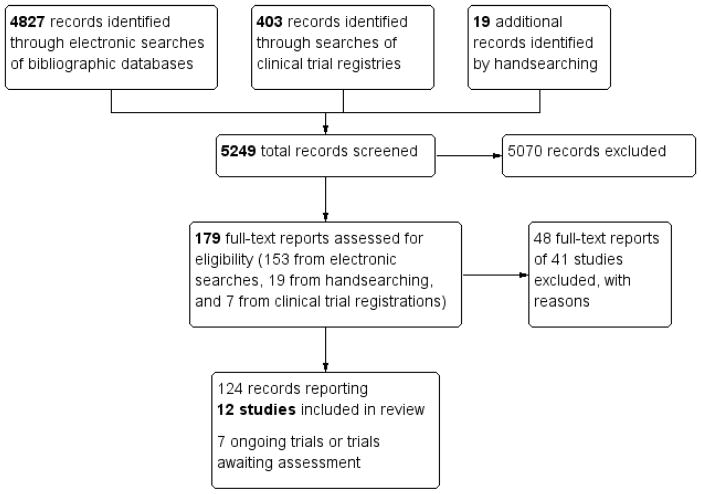
Search methods: We searched Cochrane Central Register of Controlled Trials (CENTRAL) (which contains the Cochrane Eyes and Vision Group Trials Register) (2014, Issue 3), Ovid MEDLINE, Ovid MEDLINE In-Process and Other Non-Indexed Citations, Ovid MEDLINE Daily, Ovid OLDMEDLINE (January 1946 to March 2014), EMBASE (January 1980 to March 2014), Latin American and Caribbean Health Sciences Literature Database (LILACS) (January 1982 to March 2014), the metaRegister of Controlled Trials (mRCT) (www.controlled-trials.com), ClinicalTrials.gov (www.clinicaltrials.gov) and the World Health Organization (WHO) International Clinical Trials Registry Platform (ICTRP) (www.who.int/ictrp/search/en). We used no date or language restrictions in the electronic searches for trials. We last searched the electronic databases on 27 March 2014.
Selection criteria: We included randomized controlled trials (RCTs) that evaluated pegaptanib, ranibizumab, or bevacizumab versus each other or a control treatment (e.g., sham treatment or photodynamic therapy). All trials followed participants for at least one year.
Data collection and analysis: Two review authors independently screened records, extracted data, and assessed risks of bias. We contacted trial authors for additional data. We analyzed outcomes as risk ratios (RRs) or mean differences (MDs). We used the standard methodological procedures expected by The Cochrane Collaboration.
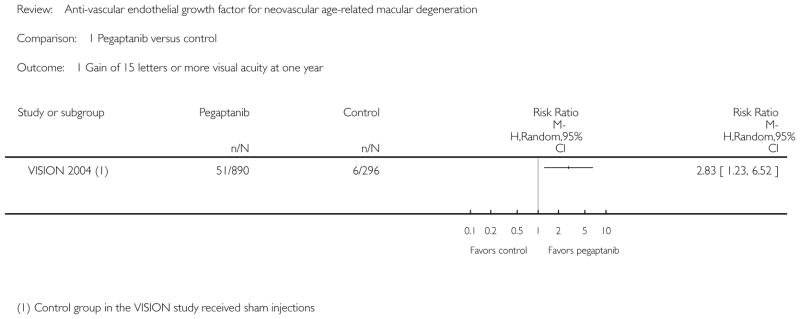
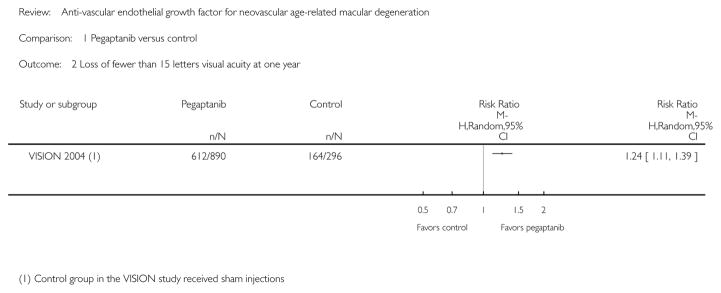
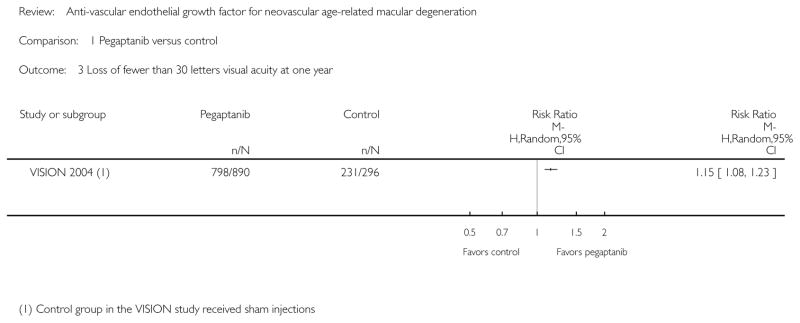
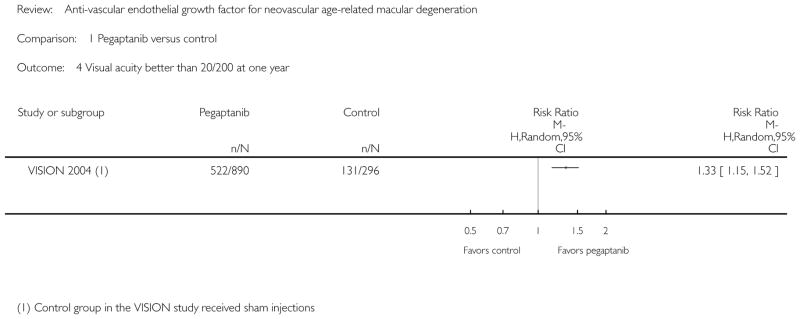
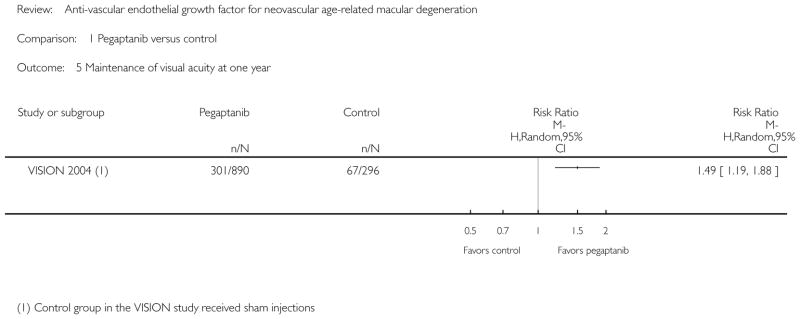
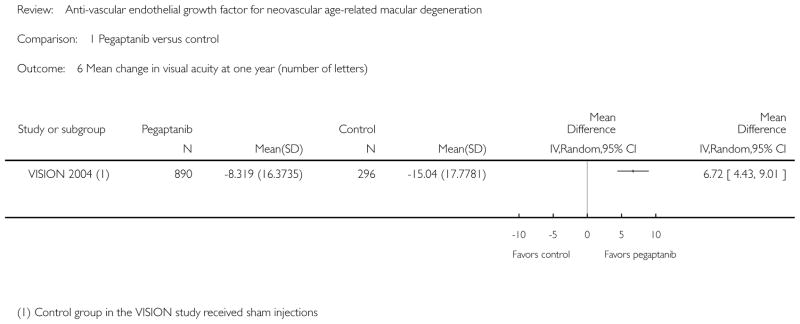
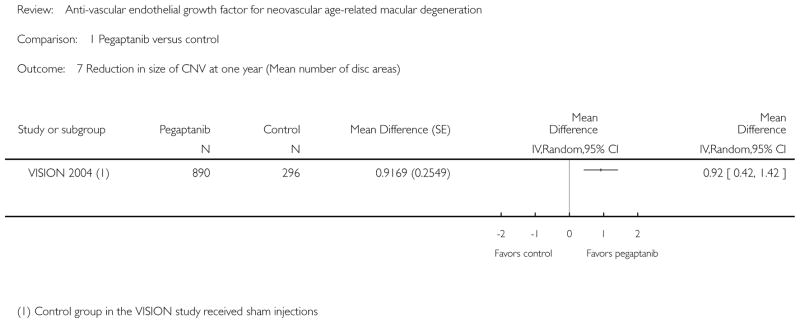
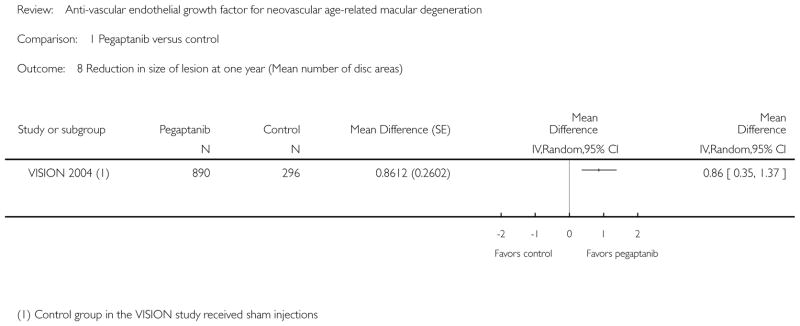
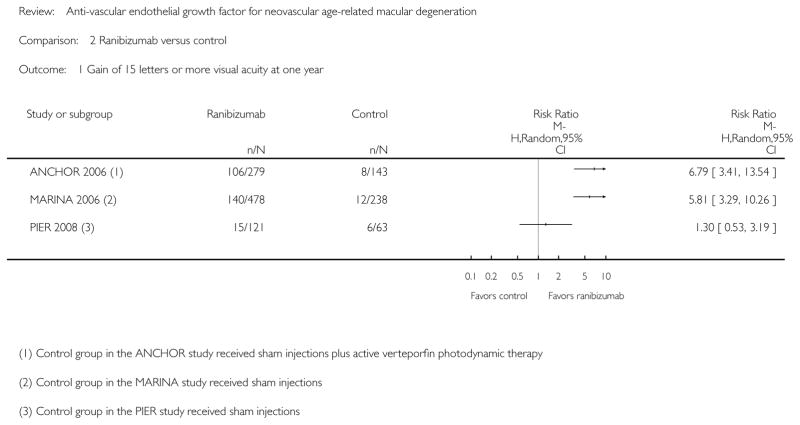
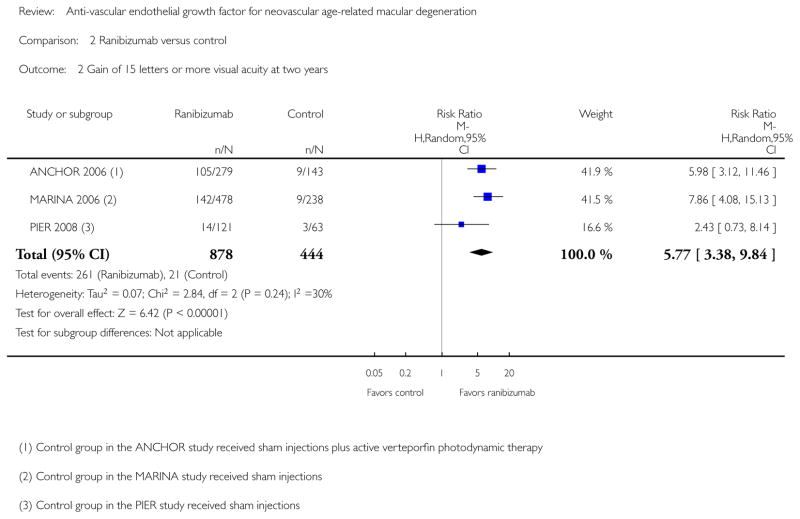
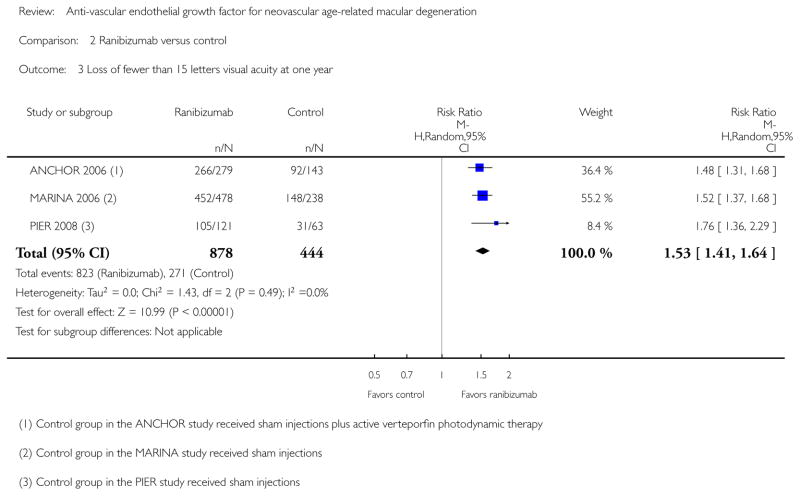
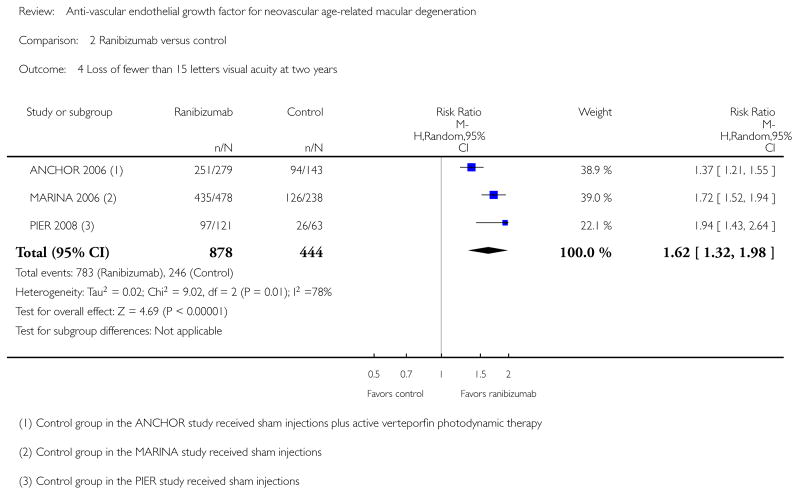
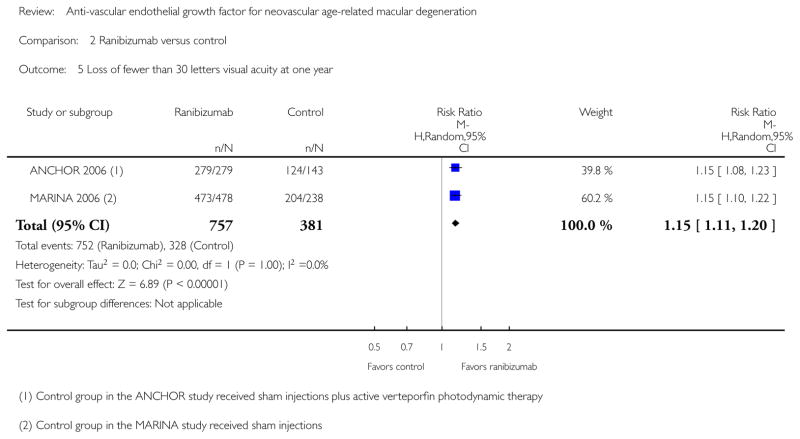
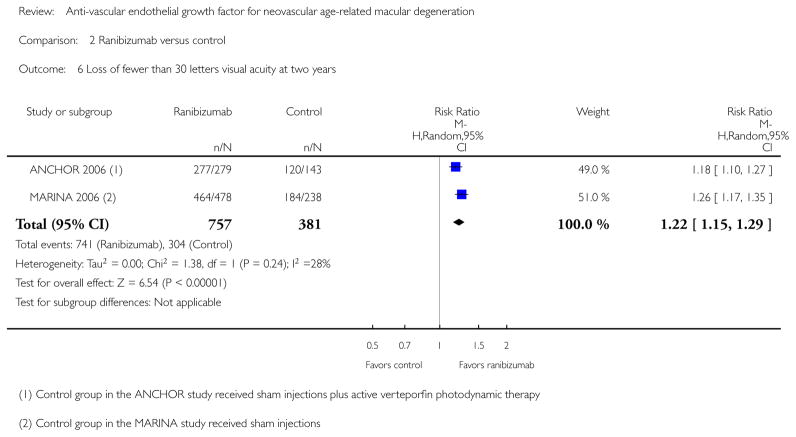
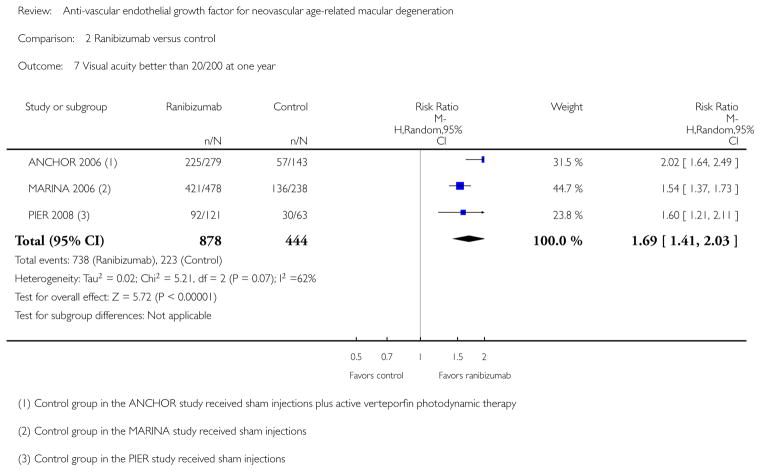
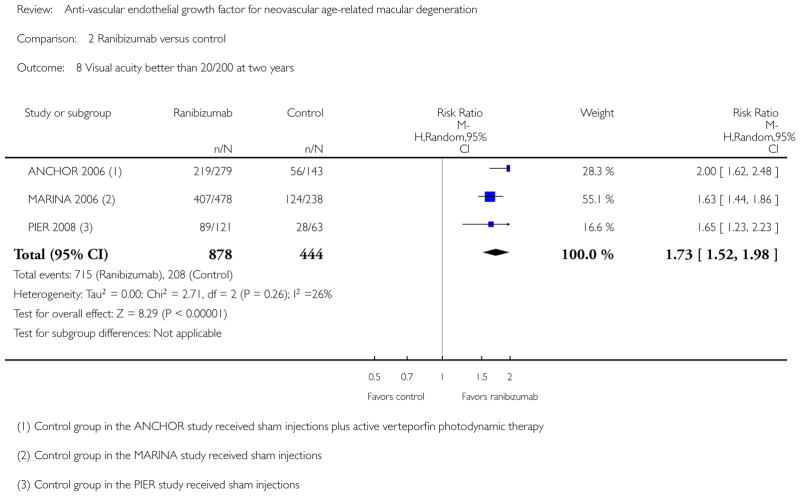
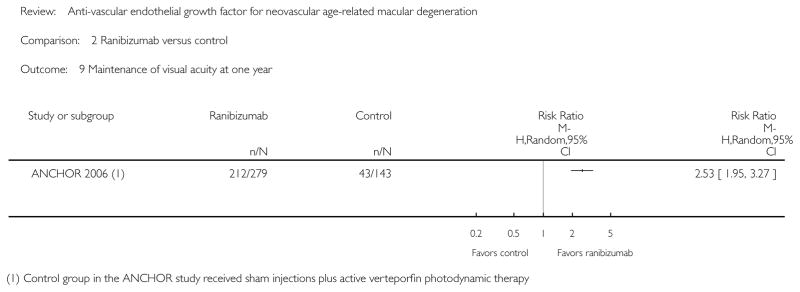
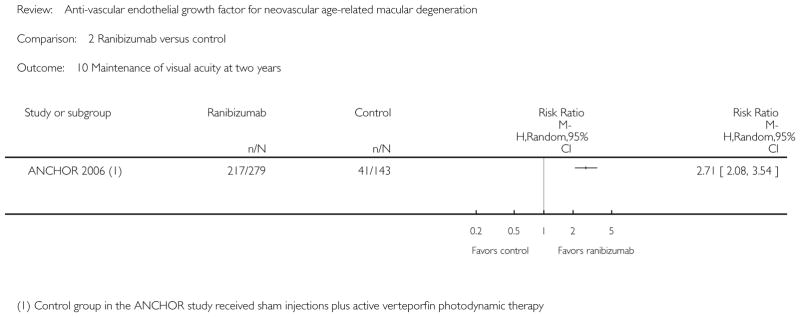
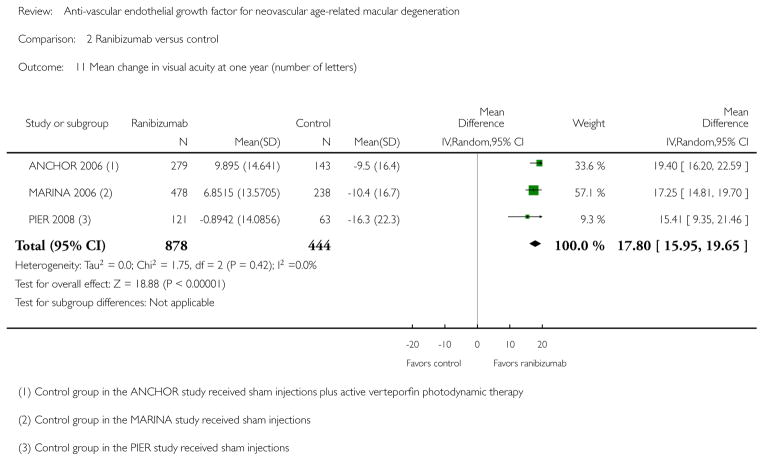
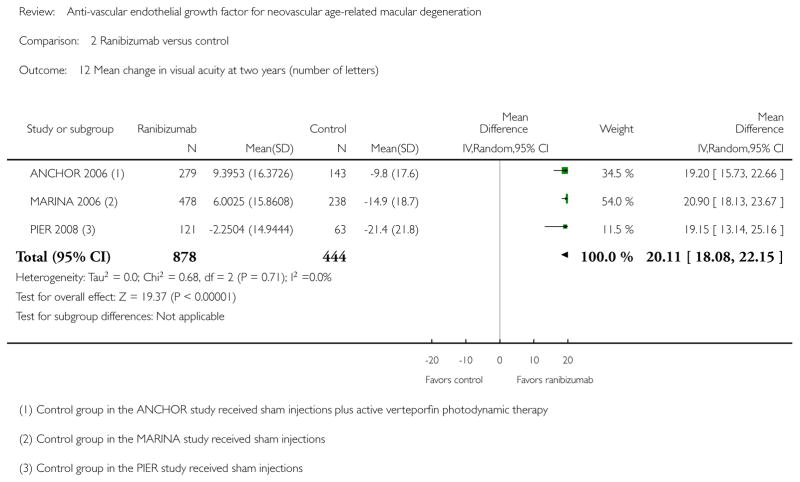
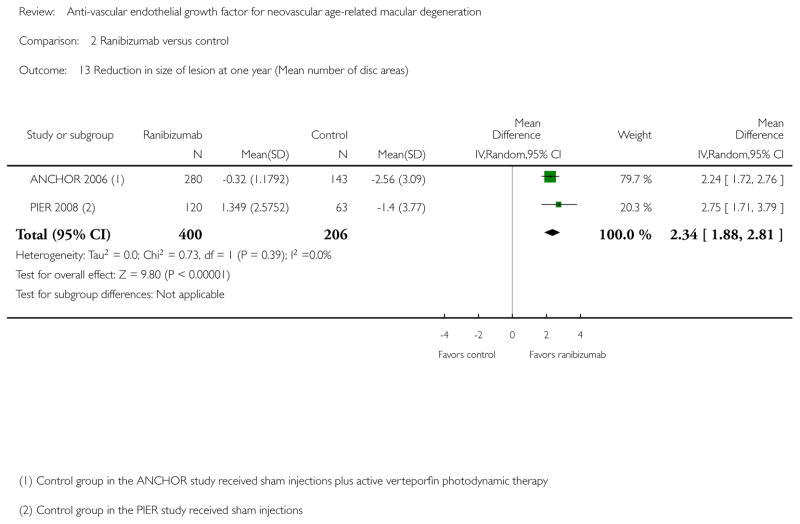
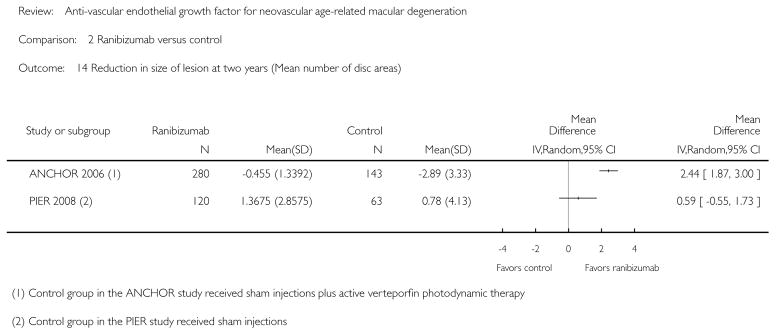
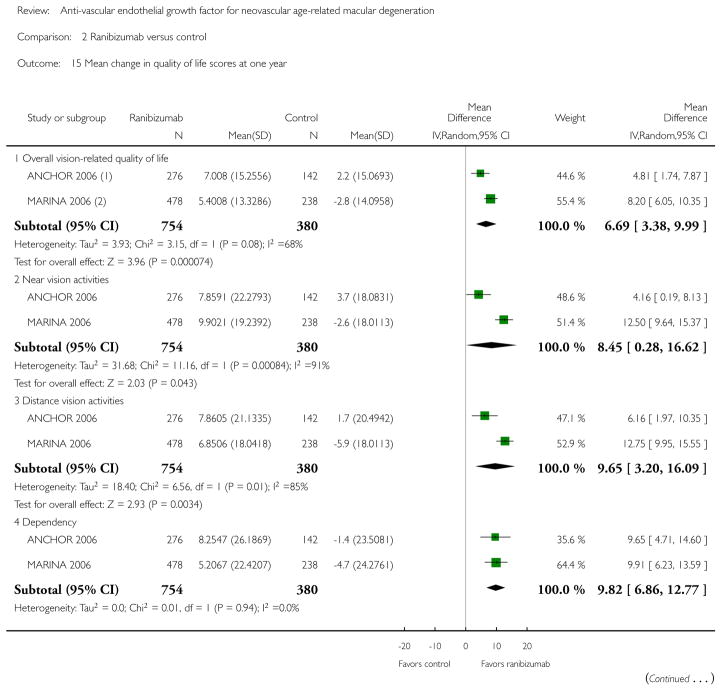
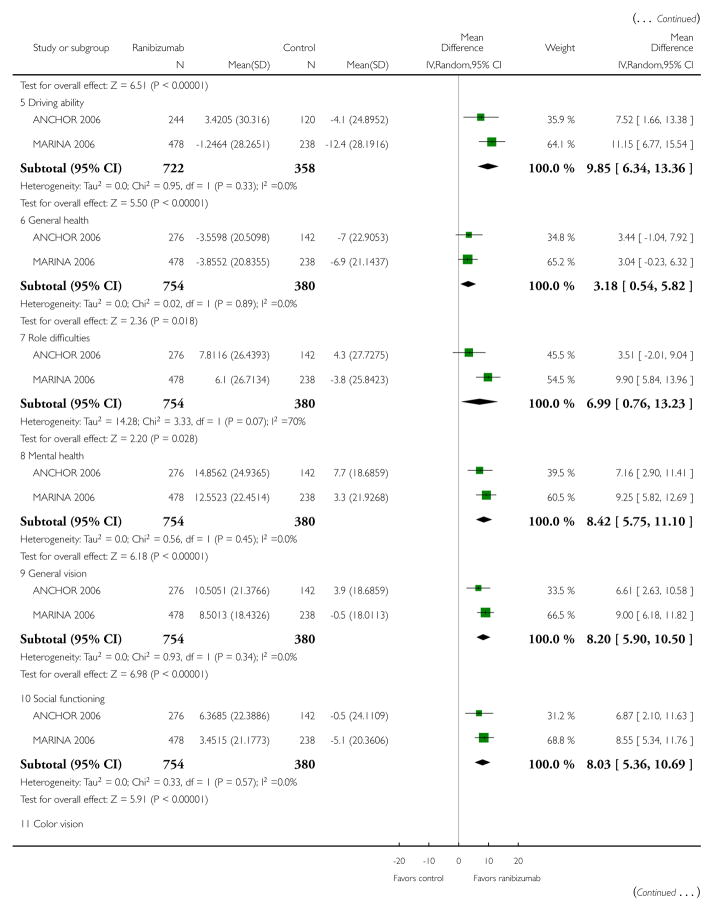
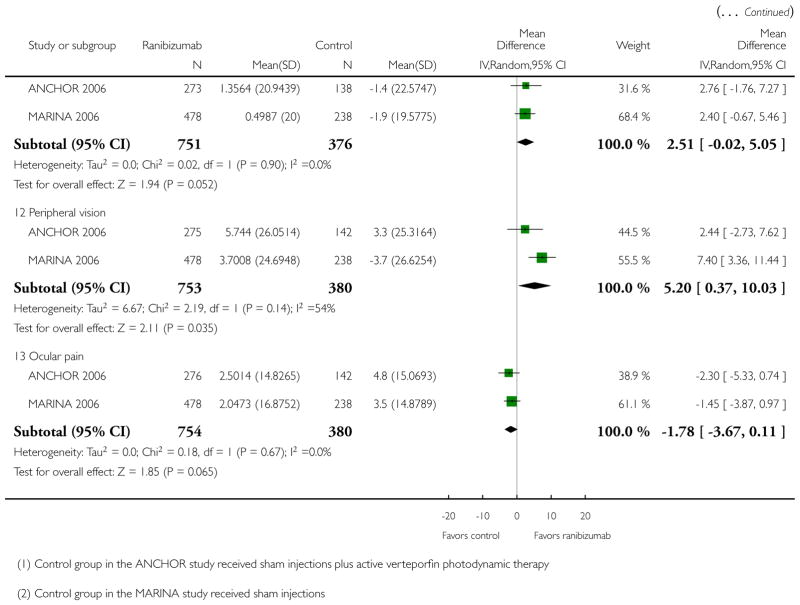
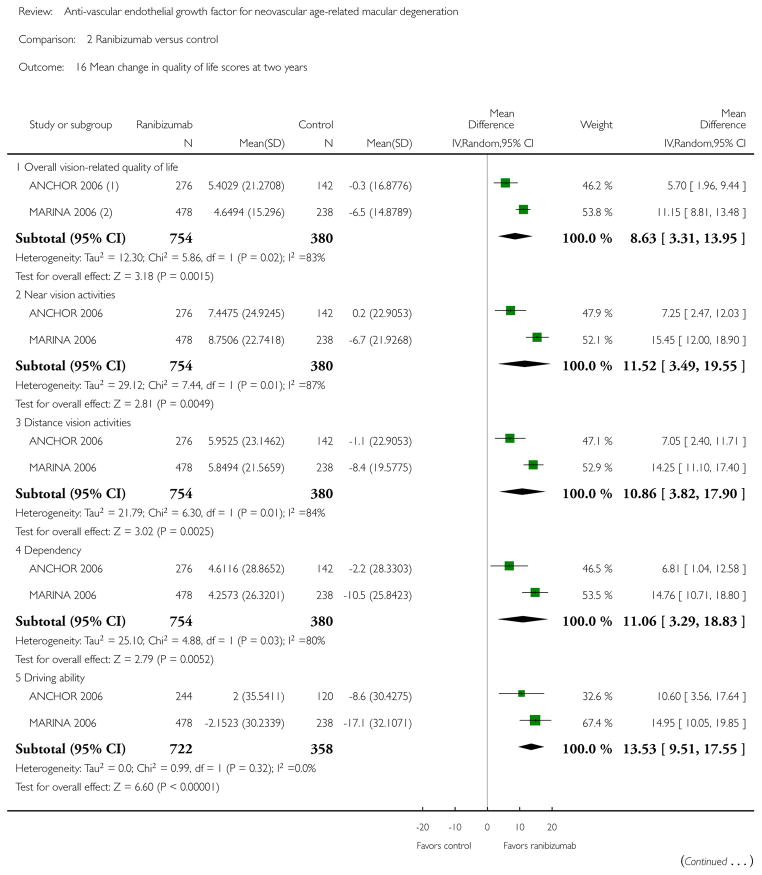
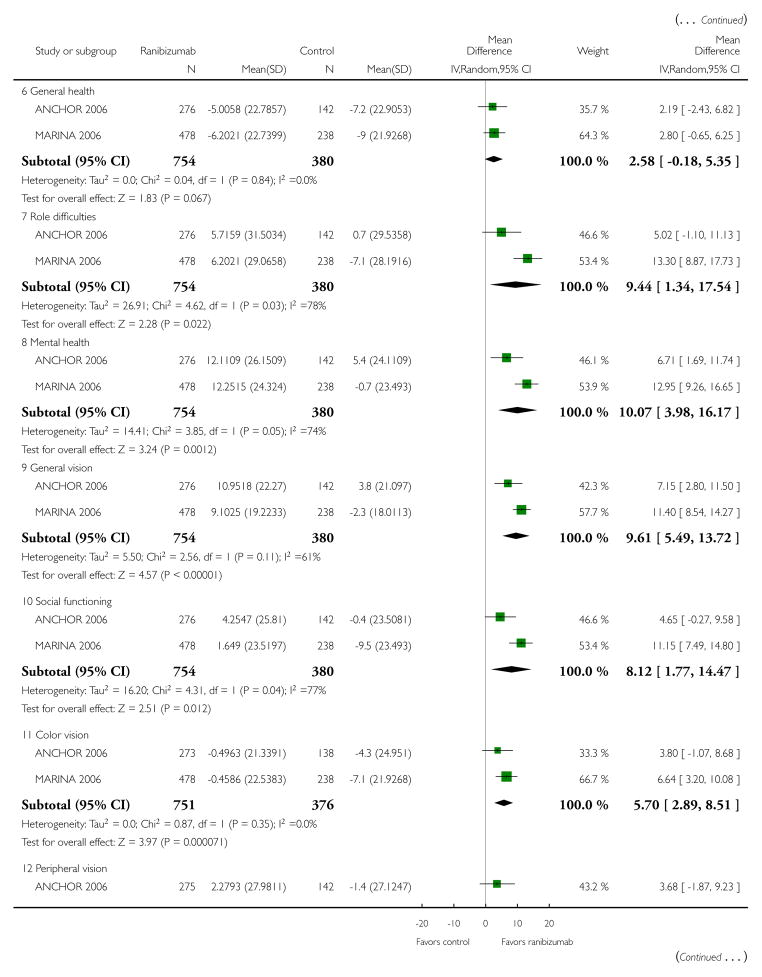
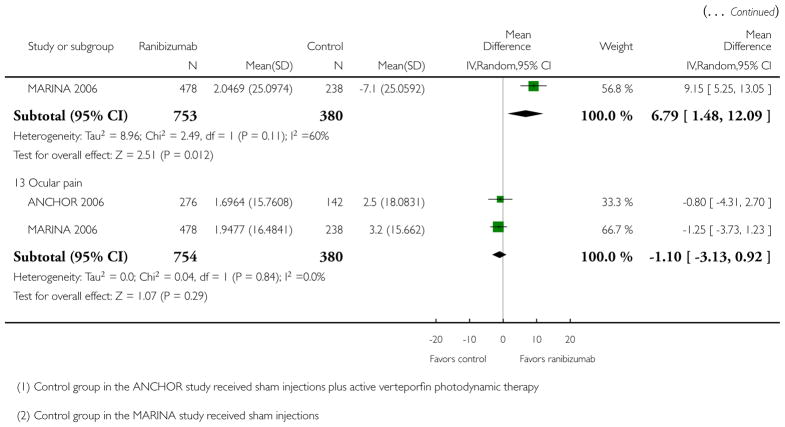
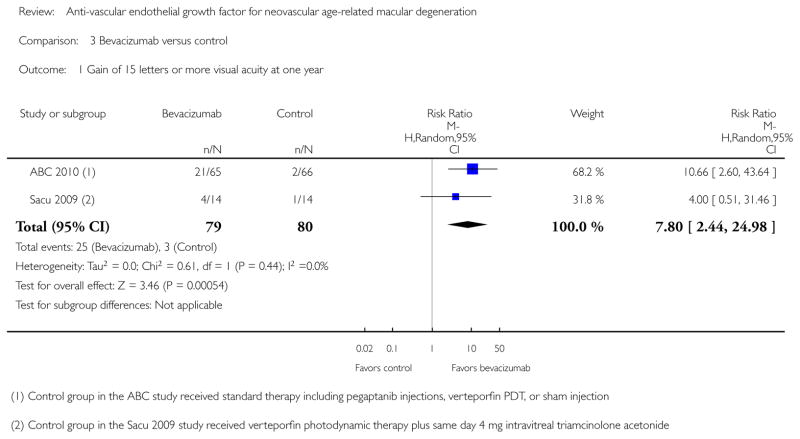
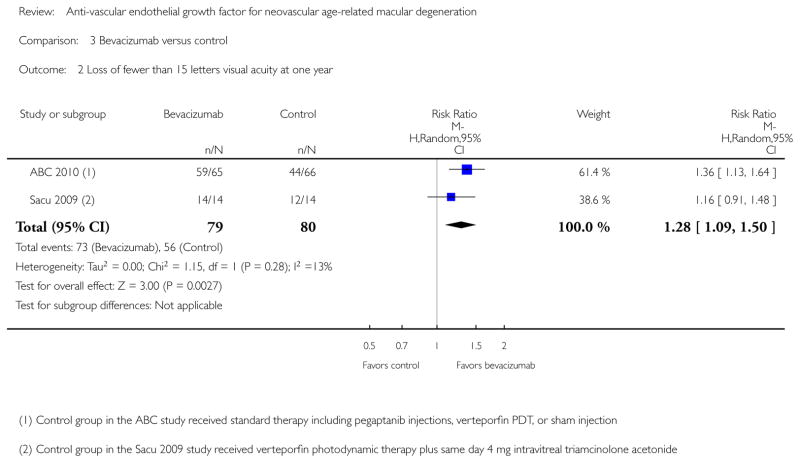
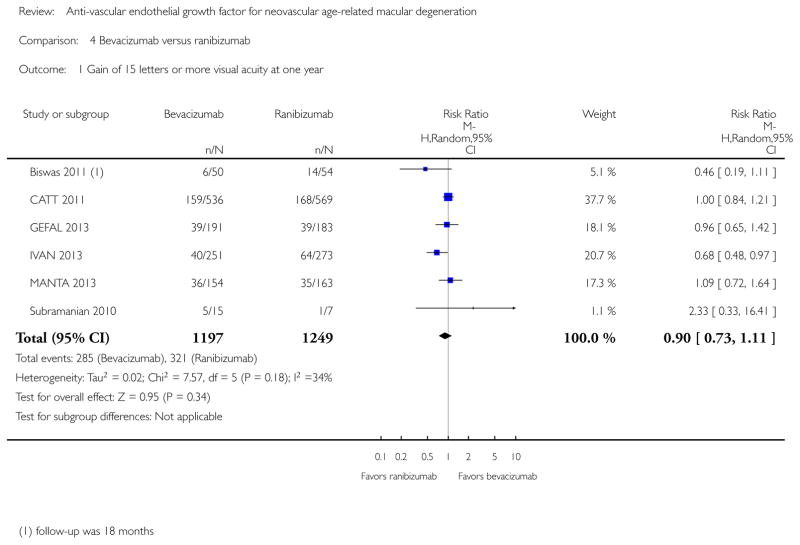
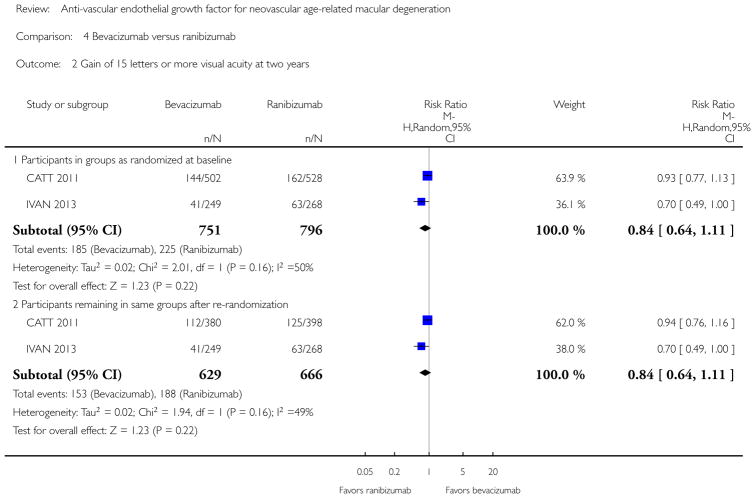
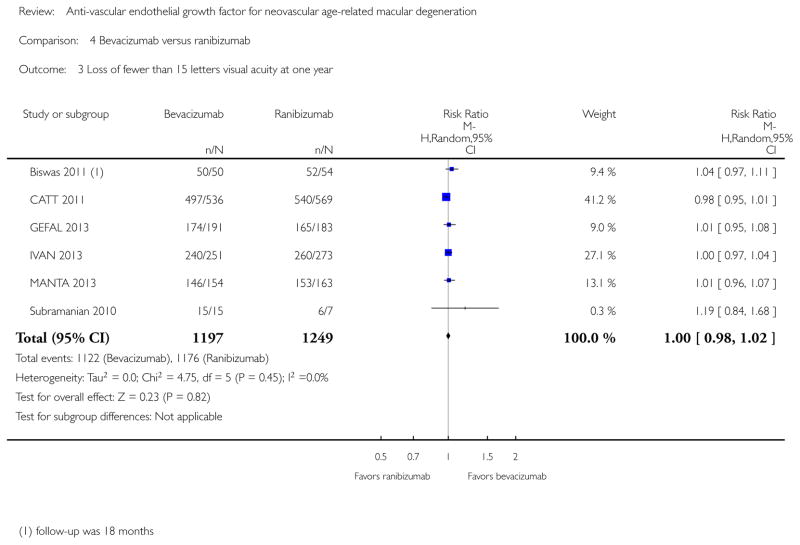
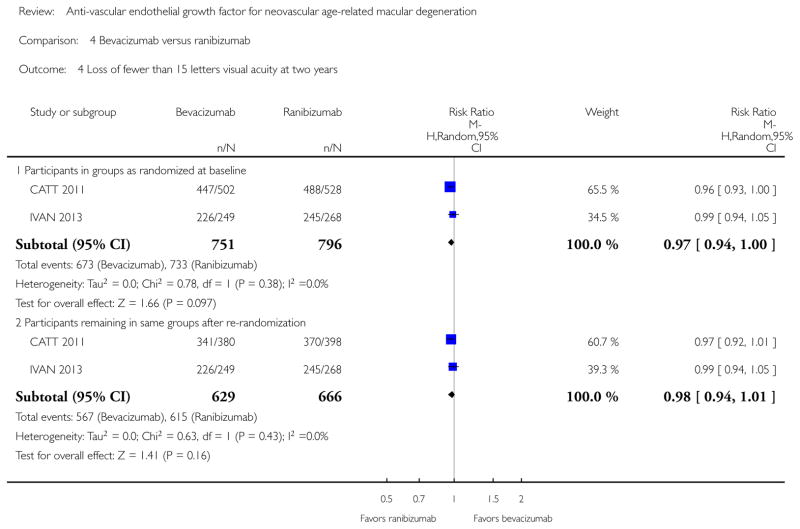
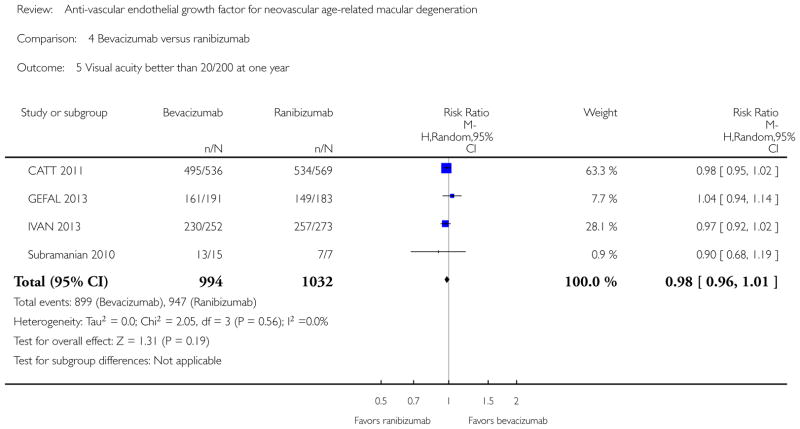
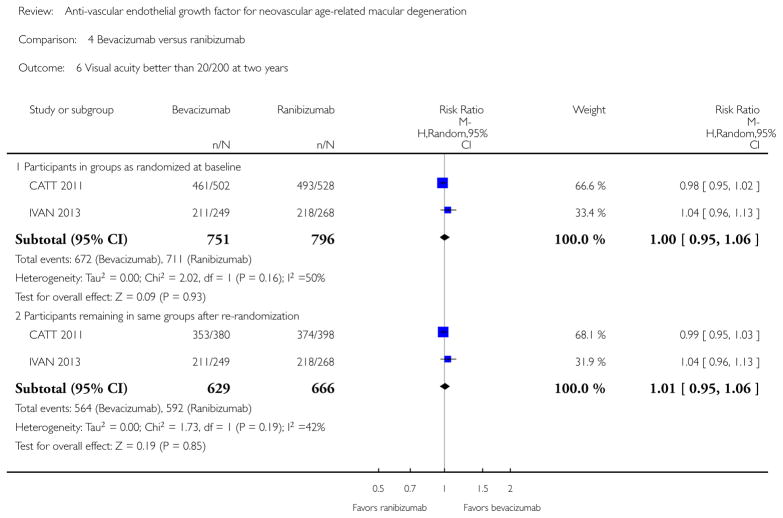
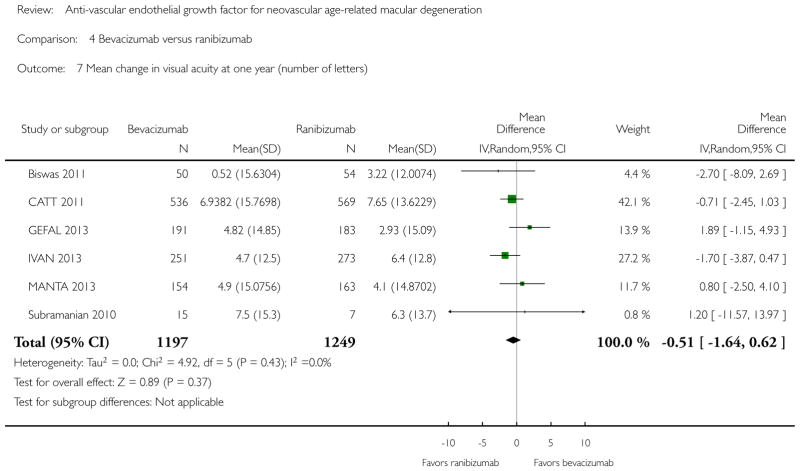
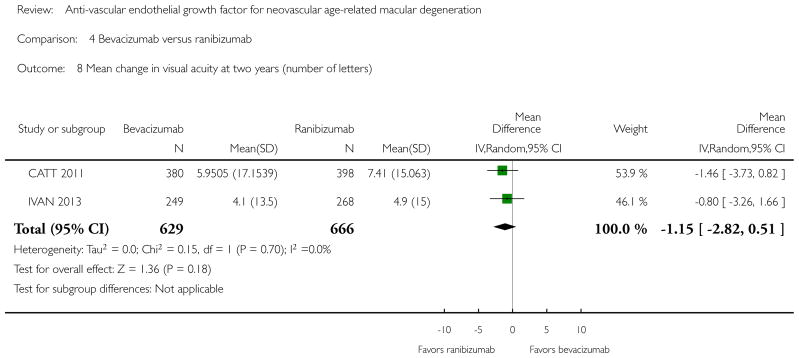
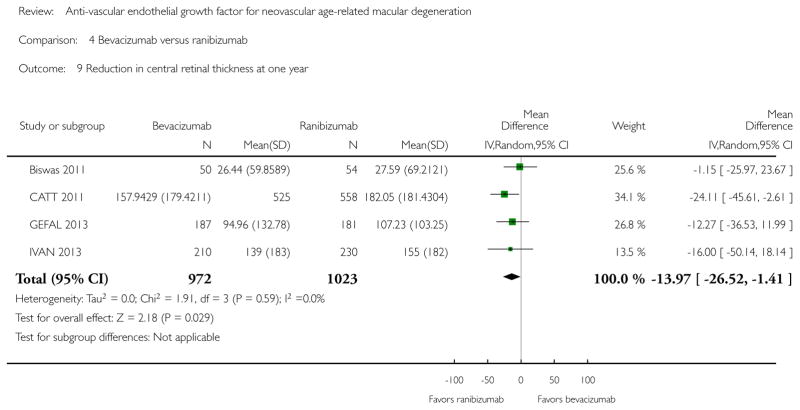
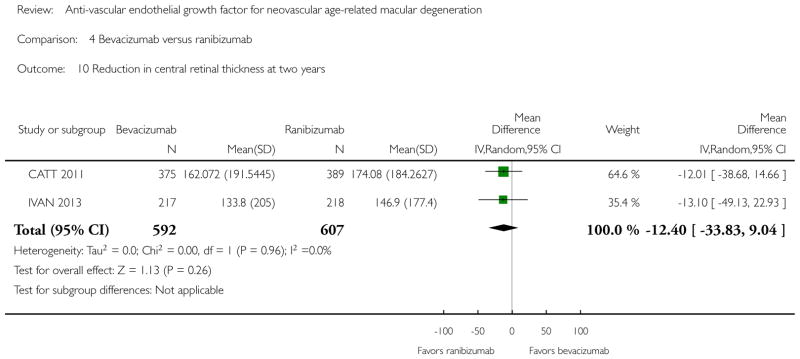
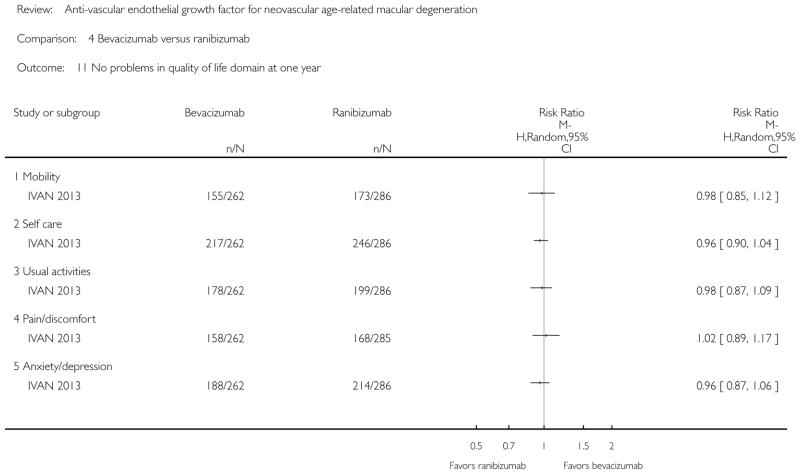
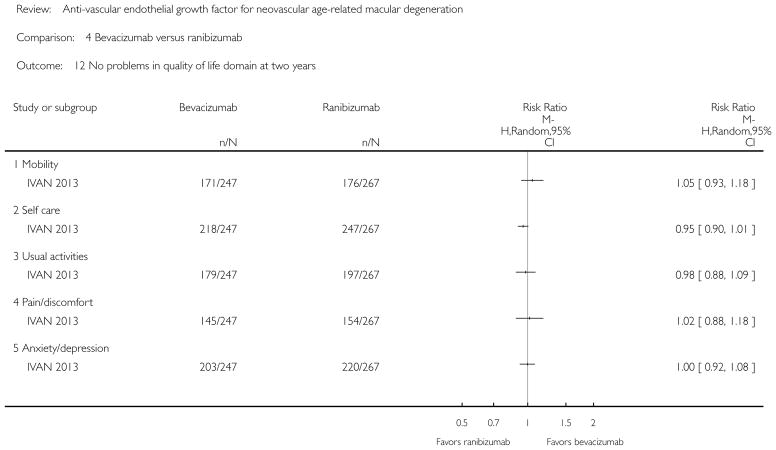
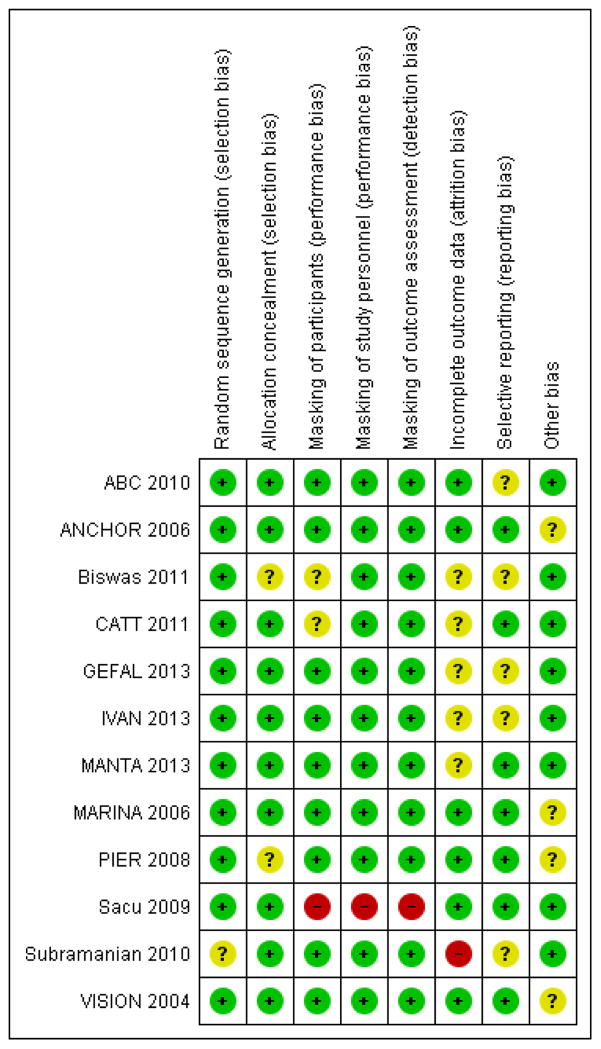
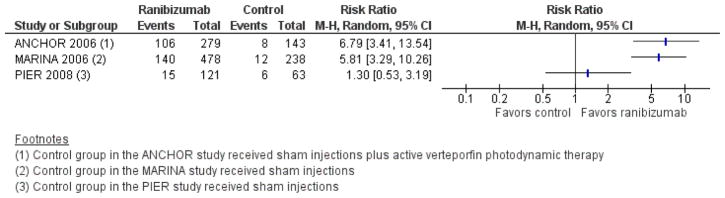
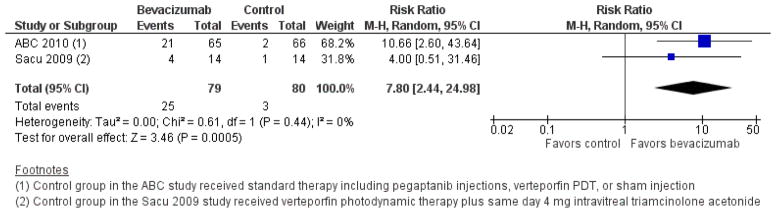
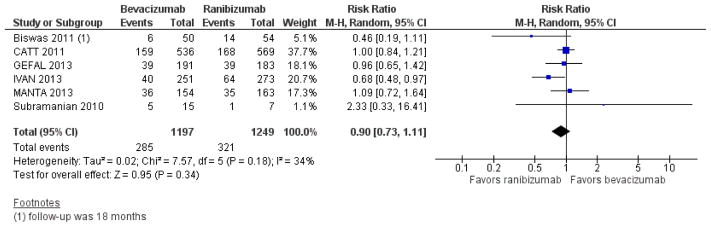
Main results: We included 12 RCTs including a total of 5496 participants with neovascular AMD (the number of participants per trial ranged from 28 to 1208). One trial compared pegaptanib, three trials ranibizumab, and two trials bevacizumab versus controls; six trials compared bevacizumab with ranibizumab. Four trials were conducted by pharmaceutical companies; none of the eight studies which evaluated bevacizumab were funded by pharmaceutical companies. The trials were conducted at various centers across five continents (North and South America, Europe, Asia and Australia). The overall quality of the evidence was very good, with most trials having an overall low risk of bias.When compared with control treatments, participants who received any of the three anti-VEGF agents were more likely to have gained 15 letters or more of visual acuity, lost fewer than 15 letters of visual acuity, and had vision 20/200 or better after one year of follow up. Visual acuity outcomes after bevacizumab and ranibizumab were similar when the same regimens were compared in the same RCTs, despite the substantially lower cost for bevacizumab compared with ranibizumab. No trial directly compared pegaptanib with other anti-VEGF agents; however, when compared with controls, ranibizumab or bevacizumab yielded larger improvements in visual acuity outcomes than pegaptanib.Participants treated with anti-VEGFs showed improvements in morphologic outcomes (e.g., size of CNV or central retinal thickness) compared with participants not treated with anti-VEGF agents. There was less reduction in central retinal thickness among bevacizumab-treated participants than among ranibizumab-treated participants after one year (MD -13.97 μm; 95% confidence interval (CI) -26.52 to -1.41); however, this difference is within the range of measurement error and we did not interpret it as being clinically meaningful.Ocular inflammation and increased intraocular pressure after intravitreal injection were the most frequently reported serious ocular adverse events. Endophthalmitis was reported in fewer than 1% of anti-VEGF treated participants; no cases were reported in control groups. The occurrence of serious systemic adverse events was comparable across anti-VEGF-treated groups and control groups; however, the numbers of events and trial participants may have been insufficient to detect a meaningful difference between groups. Data for visual function, quality of life, and economic outcomes were sparsely measured and reported.
Authors' conclusions: The results of this review indicate the effectiveness of anti-VEGF agents (pegaptanib, ranibizumab, and bevacizumab) in terms of maintaining visual acuity; ranibizumab and bevacizumab were also shown to improve visual acuity. The information available on the adverse effects of each medication do not suggest a higher incidence of potentially vision-threatening complications with intravitreal injection compared with control interventions; however, clinical trial sample sizes may not have been sufficient to detect rare safety outcomes. Research evaluating variable dosing regimens with anti-VEGF agents, effects of long-term use, combination therapies (e.g., anti-VEGF treatment plus photodynamic therapy), and other methods of delivering the agents should be incorporated into future Cochrane reviews.
Conflict of interest statement
None known.
Figures

Update of
-
Antiangiogenic therapy with anti-vascular endothelial growth factor modalities for neovascular age-related macular degeneration.Cochrane Database Syst Rev. 2008 Apr 16;(2):CD005139. doi: 10.1002/14651858.CD005139.pub2. Cochrane Database Syst Rev. 2008. Update in: Cochrane Database Syst Rev. 2014 Aug 29;(8):CD005139. doi: 10.1002/14651858.CD005139.pub3. Update in: Cochrane Database Syst Rev. 2019 Mar 04;3:CD005139. doi: 10.1002/14651858.CD005139.pub4. PMID: 18425911 Free PMC article. Updated.
References
References to studies included in this review
-
- Keane PA, Heussen FM, Ouyang Y, Mokwa N, Walsh AC, Tufail A, et al. Assessment of differential pharmacodynamic effects using optical coherence tomography in neovascular age-related macular degeneration. Investigative Ophthalmology and Visual Science. 2012;53(3):1152–61. - PMC - PubMed
- Patel PJ, Chen FK, Cruz L, Rubin GS, Tufail A. Contrast sensitivity outcomes in the ABC Trial: a randomized trial of bevacizumab for neovascular age-related macular degeneration. Investigative Ophthalmology and Visual Science. 2011;52(6):3089–93. - PubMed
- Patel PJ, Henderson L, Sivaprasad S, Bunce C, Wormald R, Tufail A. The ABC trial - a randomized double-masked phase III study of the efficacy and safety of Avastin® (Bevacizumab) intravitreal injections compared to standard therapy in subjects with choroidal neovascularization secondary to age-related macular degeneration (AMD) Investigative Ophthalmology and Visual Science. 2007;48 ARVO E-abstract 4536. - PMC - PubMed
- Patel PJ, Tufail A, Bunce C, da Cruz L, Dowler J, Egan C, et al. A randomised, double-masked phase III/IV study of the efficacy and safety of Avastin® (Bevacizumab) intravitreal injections compared to standard therapy in subjects with choroidal neovascularisation secondary to age-related macular degeneration: clinical trial design. Trials. 2008;9:56. - PMC - PubMed
- Tufail A, Patel PJ, Egan C, Hykin P, da Cruz L, Gregor Z, et al. Bevacizumab for neovascular age related macular degeneration (ABC Trial): multicentre randomised double masked study. BMJ. 2010;340:c2459. - PubMed
-
- Alexander SG, Blodi BA, Webster MKW, Elledge JA, Hiner CJ, Armstrong J, et al. Ranibizumab (Lucentis®) in subjects With predominantly classic CNV: reading center evaluation of angiographic eligibility characteristics and baseline fluorescein angiographic data. Investigative Ophthalmology and Visual Science. 2006;47 ARVO E-abstract 2207.
- Barbazetto I, Saroj N, Shapiro H, Wong P, Freund KB. Dosing regimen and the frequency of macular hemorrhages in neovascular age-related macular degeneration treated with ranibizumab. Retina. 2010;30(9):1376–85. - PubMed
- Barbazetto IA, Saroj N, Shapiro H, Wong P, Ho AC, Freund KB. Incidence of new choroidal neovascularization in fellow eyes of patients treated in the MARINA and ANCHOR trials. American Journal of Ophthalmology. 2010;149(6):939–46. - PubMed
- Bressler NM, Boyer DS, Williams DF, Butler S, Francom SF, Brown B, et al. Cerebrovascular accidents in patients treated for choroidal neovascularization with ranibizumab in randomized controlled trials. Retina. 2012;32(9):1821–8. - PubMed
- Bressler NM, Chang TS, Fine JT, Dolan CM, Ward J Anti-VEGF Antibody for the Treatment of Predominantly Classic Choroidal Neovascularization in Age-Related Macular Degeneration (ANCHOR) Research Group. Improved vision-related function after ranibizumab vs photodynamic therapy: a randomized clinical trial. Archives of Ophthalmology. 2009;127(1):13–21. - PubMed
- Bressler NM, Chang TS, Suñer IJ, Fine JT, Dolan CM, Ward J, et al. Vision-related function after ranibizumab treatment by better- or worse-seeing eye: clinical trial results from MARINA and ANCHOR. Ophthalmology. 2010;117(4):747–56. - PubMed
- Bressler NM, Chang TS, Varma R, Suner I, Lee P, Dolan CM, et al. Driving ability reported by neovascular age-related macular degeneration patients after treatment with ranibizumab. Ophthalmology. 2013;120(1):160–8. - PubMed
- Bressler NM, Dolan CM, Fine J, Marceau C, Chang TS. Vision-specific quality of life at 12 months in predominantly classic neovascular AMD in ANCHOR: a phase III trial of ranibizumab and verteporfin PDT. European VitreoRetinal Society; Symposium II: Anti-Angiogenesis (Part 2); 2006. [accessed 13 March 2013]. Available at www.evrs.eu/2006-evrs-congress-cannes.
- Brown DM, Kaiser PK, Michels M, Soubrane G, Heier JS, Kim R, et al. Ranibizumab versus verteporfin for neovascular age-related macular degeneration. New England Journal of Medicine. 2006;355(14):1432–44. - PubMed
- Brown DM, Michels M, Kaiser PK, Heier JS, Sy JP, Ianchulev T, et al. Ranibizumab versus verteporfin photodynamic therapy for neovascular age-related macular degeneration: two-year results of the ANCHOR study. Ophthalmology. 2009;116(1):57–65. - PubMed
- Brown DM, Shapiro H, Schneider S. Subgroup analysis of first-year results of ANCHOR: a phase III, double-masked, randomized comparison of ranibizumab and verteporfin photodynamic therapy for predominantly classic choroidal neovascularization related to age-related macular degeneration. Investigative Ophthalmology and Visual Science. 2006;47 ARVO E-abstract 2963.
- Chang TS, Fine JT, Bressler N. Self-reported vision-specific quality of life at 1 year in patients with neovascular age-related macular degeneration in 2 phase III randomized clinical trials of ranibizumab (Lucentis®) Investigative Ophthalmology and Visual Science. 2006;47 ARVO E-abstract 5252.
- Ciulla TA, Shapiro H, Schneider S. Ranibizumab (Lucentis®) for neovascular age-related macular degeneration (AMD): 1-year visual acuity (VA) results for fellow eyes with neovascular AMD in MARINA and ANCHOR. Investigative Ophthalmology and Visual Science. 2007;48 ARVO E-Abstract 4573.
- Cunningham ET, Feiner L, Chung C, Tuomi L, Ehrlich JS. Incidence of retinal pigment epithelial tears after intravitreal ranibizumab injection for neovascular age-related macular degeneration. Ophthalmology. 2011;118(12):2447–52. - PubMed
- Heier JS, Chung C, Schneider S. Time course of visual acuity changes with ranibizumab (Lucentis®) in the 2-tear ANCHOR study of patients with neovascular age-related macular degeneration (AMD) Investigative Ophthalmology and Visual Science. 2007;48 ARVO E-Abstract 2872.
- Kaiser PK, Brown DM, Zhang K, Hudson HL, Holz FG, Shapiro H, et al. Ranibizumab for predominantly classic neovascular age-related macular degeneration: subgroup analysis of first-year ANCHOR results. American Journal of Ophthalmology. 2007;144(6):850–7. - PubMed
- Korobelnik JF. Consistency of effect of ranibizumab at 2 doses on contrast sensitivity in 3 phase III and IIIB studies of patients with CNV secondary to AMD. European VitreoRetinal Society; Symposium I: Anti-Angiogenesis (Part 1); 2006. [accessed 13 March 2013]. Available at www.evrs.eu/2006-evrs-congress-cannes.
- Lanzetta P. Ranibizumab and patient-reported outcomes: VFQ-25 data from the ANCHOR and PIER trials in patients with neovascular AMD. Investigative Ophthalmology and Visual Science. 2008;49 ARVO E-abstract 5571.
- Lanzetta P MARINA and ANCHOR Study Groups. Combined safety of intravitreal ranibizumab in two phase III studies of CNV secondary to ARMD. European VitreoRetinal Society; Symposium I: Anti-Angiogenesis (Part 1); 2006. [accessed 13 March 2013]. Available at www.evrs.eu/2006-evrs-congress-cannes.
- Loewenstein A, MARINA and ANCHOR Study Groups. Combined efficacy of intravitreal ranibizumab in two phase III studies of choroidal neovascularization secondary to age-related macular degeneration. European VitreoRetinal Society; Symposium I: Anti-Angiogenesis (Part 1); 2006. [accessed 13 March 2013]. Available at www.evrs.eu/2006-evrs-congress-cannes.
- McDonald HR, Schneider S, Sy JP. One-year results of ANCHOR: a phase III, multicenter, randomized, double-masked comparison of ranibizumab and verteporfin photodynamic therapy in treatment of predominantly classic choroidal neovascularization secondary to age-related macular degeneration. The Macula Society; 2006. p. 114.
- Rofagha S, Bhisitkul RB, Boyer DS, Sadda SR, Zhang K. Seven-year outcomes in ranibizumab-treated patients in ANCHOR, MARINA, and HORIZON: A multicenter cohort study (SEVEN-UP) Ophthalmology. 2013;120(11):2292–9. - PubMed
- Rosenfeld PJ, Shapiro H, Shams N, Schneider S, Depperschmidt EE MARINA and ANCHOR Study Groups. Baseline and treatment characteristics of patients losing vision at year 1 of the MARINA and ANCHOR trials. Investigative Ophthalmology and Visual Science. 2007;48 ARVO E-abstract 4576.
- Rosenfeld PJ, Shapiro H, Tuomi L, Webster M, Elledge J, Blodi B. Characteristics of patients losing vision after 2 years of monthly dosing in the phase III ranibizumab clinical trials. Ophthalmology. 2011;118(3):523–30. - PubMed
- Rosenfeld PJ, Shapiro H, Tuomi L, Webster M, Elledge J, Blodi B. Lesion characteristics in ranibizumab (Lucentis®) treated patients with a visual acuity (VA) gain or loss in the MARINA and ANCHOR trials for wet age-related macular degeneration (AMD) Investigative Ophthalmology and Visual Science. 2008;49 ARVO E-abstract 329.
- Sadda SR, Shapiro H, Schneider S. Anatomic outcomes at 2 years in the ANCHOR study comparing ranibizumab (Lucentis®) and verteporfin photodynamic therapy (PDT) in predominantly classic neovascular age-related macular degeneration (AMD) Investigative Ophthalmology and Visual Science. 2007;48 ARVO E-abstract 4561.
- Sadda SR, Stoller G, Boyer DS, Blodi BA, Shapiro H, Ianchulev T. Anatomical benefit from ranibizumab treatment of predominantly classic neovascular age-related macular degeneration in the 2-year anchor study. Retina. 2010;30(9):1390–9. - PubMed
- Schwartz SG, Bressler N, Fine JT, Dolan CM, Yu EM, Ward JF, et al. Patient-reported visual function over 24 months in predominantly classic neovascular AMD: results from ANCHOR, a phase III trial of ranibizumab and verteporfin PDT. Investigative Ophthalmology and Visual Science. 2007;48 ARVO E-abstract 1822.
- Sutter FK, Kurz-Levin MM. Towards an optimized treatment scheme of ranibizumab in patients with subfoveal choroidal neovascularization secondary to age-related macular degeneration: subanalysis of clinical trial data and clinical routine use. Investigative Ophthalmology and Visual Science. 2008;49 ARVO E-abstract 2884.
- Webster MK, Blodi BA, Elledge JA, Danis RP. Angiographic results of the ANCHOR study of ranibizumab in neovascular age-related macular degeneration: reading center evaluation of angiographic data. Investigative Ophthalmology and Visual Science. 2007;48:ARVO E-Abstract 4583.
- Weinberg DV, Shapiro H, Ehrlich JS. Ranibizumab treatment outcomes in phakic versus pseudophakic eyes: An individual patient data analysis of 2 phase 3 trials. Ophthalmology. 2013;120(6):1278–82. - PubMed
- Win PH, Bressler NM, Chang TS, Fine JT, Dolan CM, Ward J. Self-reported perception of driving function after ranibizumab therapy in patients with neovascular age-related macular degeneration (AMD) Investigative Ophthalmology and Visual Science. 2008;49 ARVO E-abstract 5578.
- Wolf S. Visual acuity gain with ranibizumab therapy: two-year data from the MARINA, ANCHOR, and PIER trials in patients with neovascular AMD. Investigative Ophthalmology and Visual Science. 2008;49 ARVO E-abstract 2883.
- Wolf S, Holz FG, Korobelnik JF, Lanzetta P, Mitchell P, Prünte C, et al. Outcomes following three-line vision loss during treatment of neovascular age-related macular degeneration: subgroup analyses from MARINA and ANCHOR. British Journal of Ophthalmology. 2011;95(12):1713–8. - PubMed
- Yang YC. Two year contrast sensitivity results from the ANCHOR study comparing intravitreal ranibizumab 0.3 mg and 0.5 mg with verteporfin PDT for predominantly classic CNV lesions secondary to age-related macular degeneration. Investigative Ophthalmology and Visual Science. 2007;48 ARVO E-Abstract 4545.
-
- [accessed 20 December 2011];Comparison of Age-related macular degeneration Treatment Trials. www.med.upenn.edu/cpob/studies/documents/CATTEligibilityCriteria.pdf.
- CATT Research Group. Martin DF, Maguire MG, Ying GS, Grunwald JE, Fine SL, Jaffe GJ. Ranibizumab and bevacizumab for neovascular age-related macular degeneration. New England Journal of Medicine. 2011;364(20):1897–908. - PMC - PubMed
- Daniel E, Toth CA, Grunwald JE, Jaffe GJ, Martin DF, Fine SL, et al. Risk of scar in the Comparison of Age-related Macular Degeneration Treatments Trials. Ophthalmology. 2014;121(3):656–66. - PMC - PubMed
- Grunwald JE, Daniel E, Huang J, Ying GS, Maguire MG, Toth CA, et al. Risk of geographic atrophy in the Comparison of Age-Related Macular Degeneration Treatments Trials. Ophthalmology. 2014;121(1):150–61. - PMC - PubMed
- Grunwald JE, Daniel E, Ying GS, Pistilli M, Maguire MG, Alexander J, et al. Photographic assessment of baseline fundus morphologic features in the Comparison of Age-Related Macular Degeneration Treatments Trials. Ophthalmology. 2012;119(8):1634–41. - PMC - PubMed
- Hagstrom SA, Ying GS, Pauer GJ, Sturgill-Short GM, Huang J, Callanan DG, et al. Pharmacogenetics for genes associated with age-related macular degeneration in the Comparison of AMD Treatments Trials (CATT) Ophthalmology. 2013;120(3):593–9. - PMC - PubMed
- Jaffe GJ, Martin DF, Toth CA, Daniel E, Maguire MG, Ying GS, et al. Macular morphology and visual acuity in the comparison of age-related macular degeneration treatments trials. Ophthalmology. 2013;120(9):1860–70. - PMC - PubMed
- Maguire MG. Comparing treatments for age-related macular degeneration: safety, effectiveness and cost. LDI Issue Brief. 2012;17(8):1–4. - PubMed
- Maguire MG, Daniel E, Shah AR, Grunwald JE, Hagstrom SA, Avery RL, et al. Incidence of choroidal neovascularization in the fellow eye in the comparison of age-related macular degeneration treatments trials. Ophthalmology. 2013;120(10):2035–41. - PMC - PubMed
- Martin DF, Maguire MG, Fine SL, Ying GS, Jaffe GJ, Grunwald JE, et al. Ranibizumab and bevacizumab for treatment of neovascular age-related macular degeneration: Two-year results. Ophthalmology. 2012;119(7):1388–98. - PMC - PubMed
- Ying GS, Huang J, Maguire MG, Jaffe GJ, Grunwald JE, Toth C, et al. Baseline predictors for one-year visual outcomes with ranibizumab or bevacizumab for neovascular age-related macular degeneration. Ophthalmology. 2013;120(1):122–9. - PMC - PubMed
-
- Kodjikian L, Souied EH, Mimoun G, Mauget-Faysse M, Behar-Cohen F, Decullier E, et al. Ranibizumab versus bevacizumab for neovascular age-related macular degeneration: Results from the GEFAL noninferiority randomized trial. Ophthalmology. 2013;120(11):2300–9. - PubMed
References to studies excluded from this review
-
- Bashshur ZF, Schakal A, Hamam RN, El Haibi CP, Jaafar R, Noureddin BN. Intravitreal bevacizumab vs verteporfin photodynamic therapy for neovascular age-related macular degeneration. Archives of Ophthalmology. 2007;125(10):1357–61. - PubMed
-
- Schmid-Kubista KE, Krebs I, Gruenberger B, Schueller J, Binder S. Systemic bevacizumab therapy for exudative neovascular age-related macular degeneration (BEAT-AMD-Study) Investigative Ophthalmology and Visual Science. 2008;49:ARVO E-abstract 304. - PubMed
- Schmid-Kubista KE, Krebs I, Gruenberger B, Zeiler F, Schueller J, Binder S. Systemic bevacizumab (Avastin®) therapy for exudative neovascular age-related macular degeneration. The BEAT-AMD-Study. British Journal of Ophthalmology. 2009;93(7):914–9. - PubMed
-
- Bolz M, Pruente C, Benesch T, Ritter M, Deak G, Golbaz I, et al. The relevance of measuring central retinal thickness during intra-vitreal therapy with ranibizumab: analyzing a multi-center clinical trial. Investigative Ophthalmology and Visual Science. 2008;49 ARVO E-abstract 5576.
-
- Cohen SY, Bremond-Gignac D, Quentel G, Mimoun G, Citterio T, Bisot-Locard S, et al. Cost-effectiveness sequential modeling of ranibizumab versus usual care in age-related macular degeneration. Graefe’s Archive for Clinical and Experimental Ophthalmology. 2008;246(11):1527–34. - PubMed
-
- Costagliola C, Romano MR, Rinaldi M, dell’Omo R, Chiosi F, Menzione M, Semeraro F. Low fluence rate photodynamic therapy combined with intravitreal bevacizumab for neovascular age-related macular degeneration. British Journal of Ophthalmology. 2010;94(2):180–4. - PubMed
References to studies awaiting assessment
-
- NCT00087763. [accessed 14 August 2013];A phase II prospective, randomized, double-masked, sham-controlled, dose-ranging, multicenter trial to assess the effect of pegaptanib sodium on foveal thickening in patients with exudative subfoveal age-related macular degeneration (AMD) clinicaltrials.gov/show/NCT00087763.
References to ongoing studies
-
- NCT00531336. Comparison of combined therapy of intravitreal injection of Avastin and Macugen versus monotherapy. [accessed 6 August 2013];The MAAM Study - a pilot study. clinicaltrials.gov/show/NCT00531336.
-
- NCT00559715. [accessed 14 August 2013];Prevention of vision loss in patients with age-related macular degeneration (AMD) by Intravitreal Injection of Bevacizumab and Ranibizumab (VIBERA) clinicaltrials.gov/show/NCT00559715.
-
- NCT01127360. Lucentis compared to Avastin study. [accessed 11 January 2013];A randomized, double blind, prospective multicenter study comparing the effect of intravitreal injection of Bevacizumab (Avastin) to Ranibizumab (Lucentis) when given to patients with exudative (wet) age-related macular degeneration. clinicaltrials.gov/show/NCT01127360.
-
- NCT01319188. [accessed 17 May 2013];Ranibizumab for age-related macular degeneration and the risk of arterial thromboembolic events (RATE) clinicaltrials.gov/show/NCT01319188.
-
- NCT02036723. [accessed 4 April 2014];Multicentre double blind randomized clinical study evaluating the efficacy and safety of BCD-021 (CJSC BIOCAD, Russia) and Lucentis® (Novartis Pharmaceuticals Canada Inc.) in patients with neovascular wet age-related macular degeneration. clinicaltrials.gov/show/NCT02036723.
Additional references
-
- Aiello LP, Avery RL, Arrigg PG, Keyt BA, Jampel HD, Shah ST, et al. Vascular endothelial growth factor in ocular fluid of patients with diabetic retinopathy and other retinal disorders. New England Journal of Medicine. 1994;331(22):1480–7. - PubMed
-
- Age-Related Eye Disease Study Research Group. A randomized, placebo-controlled, clinical trial of high-dose supplementation with vitamins C and E, beta carotene, and zinc for age-related macular degeneration and vision loss: AREDS report no. 8. Archives of Ophthalmology. 2001;119(10):1414–36. - PMC - PubMed
-
- Age-Related Eye Disease Study 2 Research Group. Lutein + zeaxanthin and omega-3 fatty acids for age-related macular degeneration: the Age-Related Eye Disease Study 2 (AREDS2) randomized clinical trial. JAMA. 2013;309(19):2005–15. - PubMed
-
- Boekhoorn SS, Vingerling JR, Witteman JCM, Hofman A, de Jong PT. C-reactive protein level and risk of aging macula disorder: The Rotterdam Study. Archives of Ophthalmology. 2007;125(10):1396–401. - PubMed
-
- Bourne RR, Jonas JB, Flaxman SR, Keeffe J, Leasher J, Naidoo K, et al. Prevalence and causes of vision loss in high-income countries and in Eastern and Central Europe: 1990–2010. British Journal of Ophthalmology. 2014;98(5):629–38. - PubMed
References to other published versions of this review
Publication types
MeSH terms
Substances
Grants and funding
LinkOut - more resources
Full Text Sources
Other Literature Sources
Medical
Research Materials
Miscellaneous
