


Effect of transcranial direct-current stimulation combined with treadmill training on balance and functional performance in children with cerebral palsy: a double-blind randomized controlled trial
- PMID: 25171216
- PMCID: PMC4149519
- DOI: 10.1371/journal.pone.0105777
Effect of transcranial direct-current stimulation combined with treadmill training on balance and functional performance in children with cerebral palsy: a double-blind randomized controlled trial
Abstract
Background: Cerebral palsy refers to permanent, mutable motor development disorders stemming from a primary brain lesion, causing secondary musculoskeletal problems and limitations in activities of daily living. The aim of the present study was to determine the effects of gait training combined with transcranial direct-current stimulation over the primary motor cortex on balance and functional performance in children with cerebral palsy.
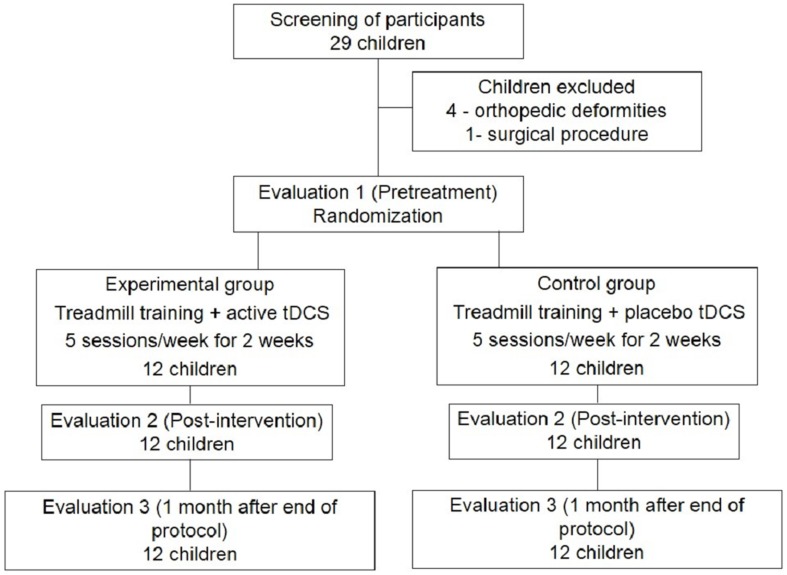
Methods: A double-blind randomized controlled study was carried out with 24 children aged five to 12 years with cerebral palsy randomly allocated to two intervention groups (blocks of six and stratified based on GMFCS level (levels I-II or level III).The experimental group (12 children) was submitted to treadmill training and anodal stimulation of the primary motor cortex. The control group (12 children) was submitted to treadmill training and placebo transcranial direct-current stimulation. Training was performed in five weekly sessions for 2 weeks. Evaluations consisted of stabilometric analysis as well as the administration of the Pediatric Balance Scale and Pediatric Evaluation of Disability Inventory one week before the intervention, one week after the completion of the intervention and one month after the completion of the intervention. All patients and two examiners were blinded to the allocation of the children to the different groups.
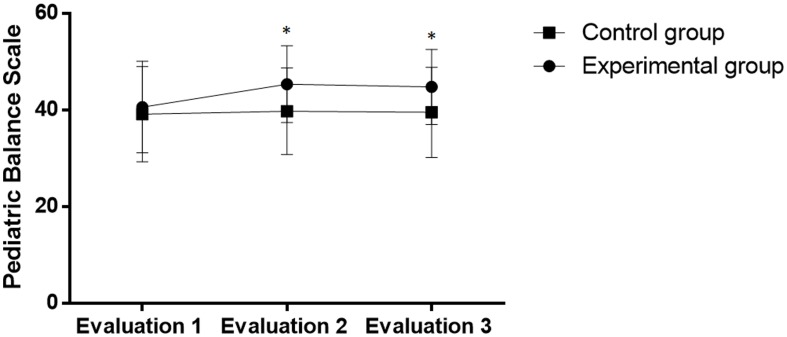
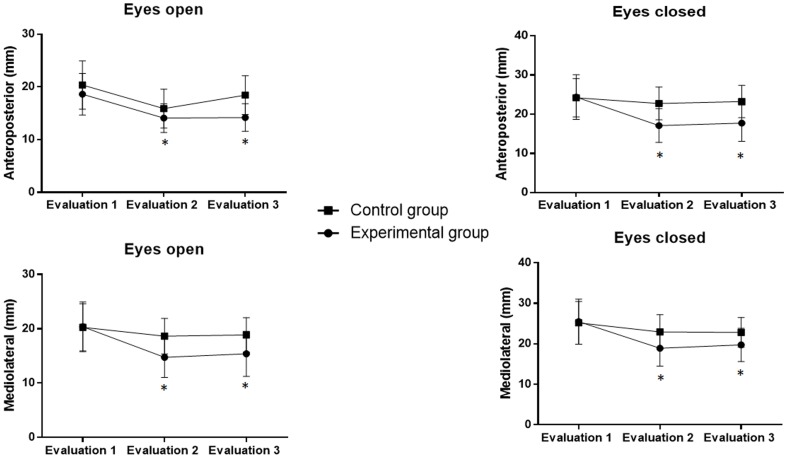
Results: The experimental group exhibited better results in comparison to the control group with regard to anteroposterior sway (eyes open and closed; p<0.05), mediolateral sway (eyes closed; p<0.05) and the Pediatric Balance Scale both one week and one month after the completion of the protocol.
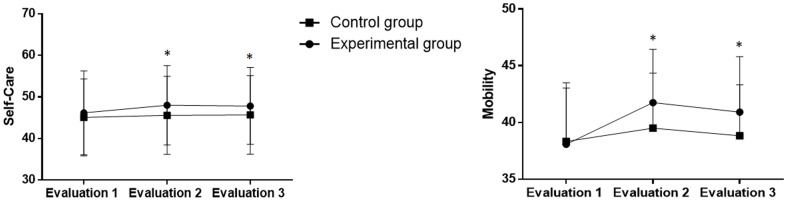
Conclusion: Gait training on a treadmill combined with anodal stimulation of the primary motor cortex led to improvements in static balance and functional performance in children with cerebral palsy.
Trial registration: Ensaiosclinicos.gov.br/RBR-9B5DH7.
Conflict of interest statement
Figures
References
-
- Inder TE, Huppi PS, Warfield S, Kikinis R, Zientara GP, et al. (1999) Periventricular white injury in the premature infant is followed by reduced cerebral cortical gray matter volume at term. Ann Neurol 46: 755–760. - PubMed
-
- Kurz MJ, Wilson TW (2011) Neuromagnetic activity in the somatosensory cortices if children with cerebral palsy. Neurosci Let 490: 1–5. - PubMed
-
- Shin YK, Lee DR, Hwang HJ, You SJ (2012) A novel EEG-based brain mapping to determine cortical activation patterns in normal children and children with cerebral palsy during motor imagery tasks. NeuroRehabil 31: 349–55. - PubMed
-
- Rose S, Guzzetta A, Pannek K, Boyd R (2011) MRI structural connectivity, disruption of primary sensorimotor pathways, and hand function in cerebral palsy. Brain Connect 1: 309–16. - PubMed
Publication types
MeSH terms
LinkOut - more resources
Full Text Sources
Other Literature Sources
Medical
