


The prevalence of aortic stenosis in the elderly in Iceland and predictions for the coming decades: the AGES-Reykjavík study
- PMID: 25171970
- PMCID: PMC4742571
- DOI: 10.1016/j.ijcard.2014.08.053
The prevalence of aortic stenosis in the elderly in Iceland and predictions for the coming decades: the AGES-Reykjavík study
Abstract
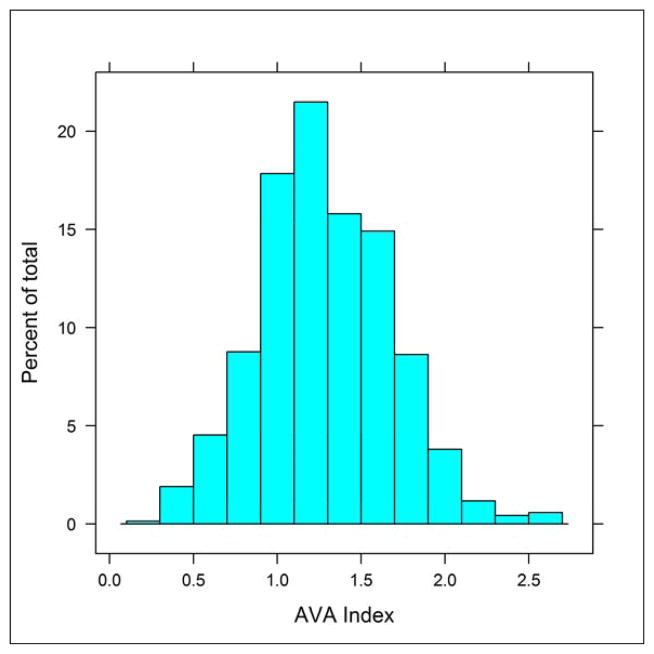
Aims: To evaluate the prevalence of significant aortic valve stenosis (AS) in a randomly selected study population of elderly individuals representing the general population of Iceland. Furthermore, to predict the number of individuals likely to have severe AS in the future.
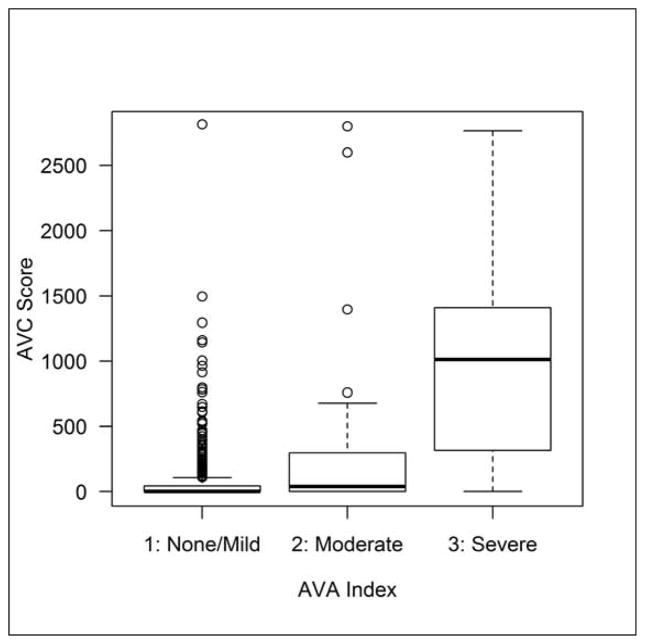
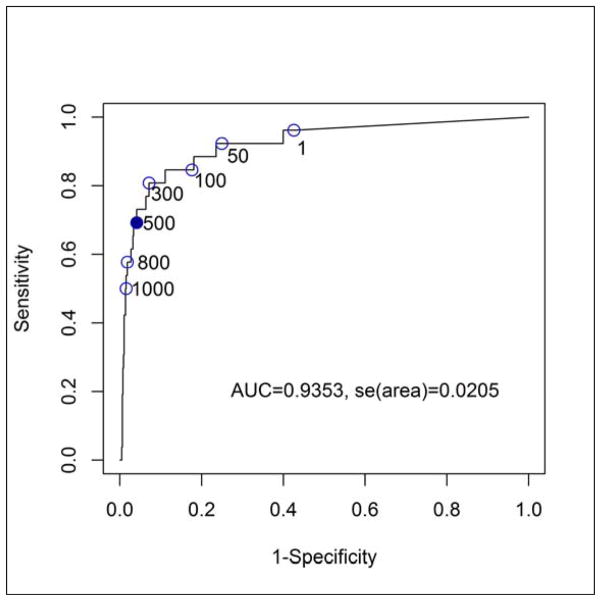
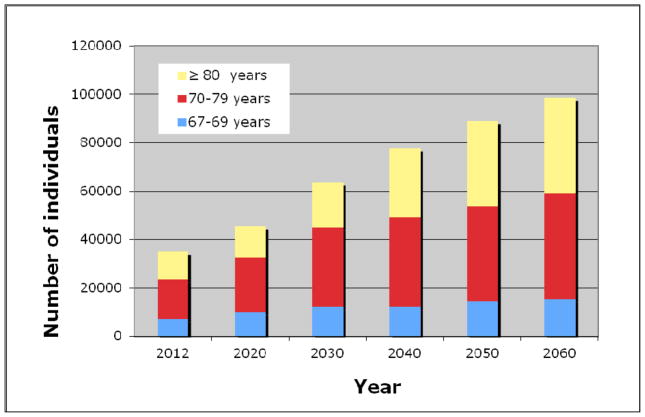
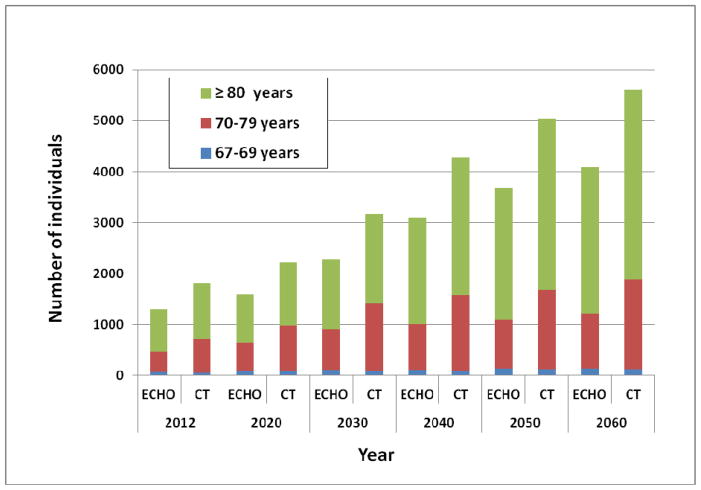
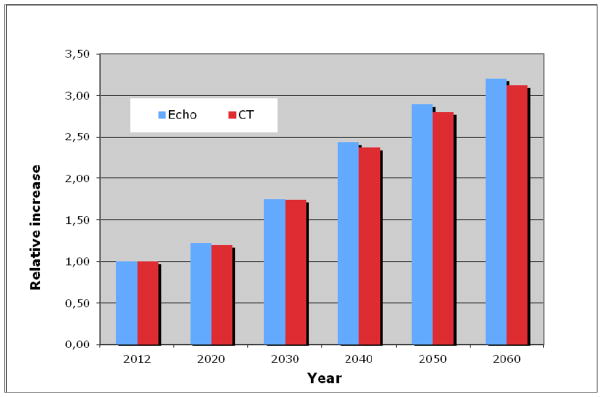
Methods and results: Echocardiography and computed tomography (CT) data from individuals who participated in the AGES-Reykjavik study were used. Echocardiography data from 685 individuals (58% females) aged 67-95 years were available. In both sexes combined, the prevalence for severe AS, defined as an aortic valve area index of <0.6 cm2/m2, in the age groups<70, 70-79 and ≥80 years was 0.92%, 2.4% and 7.3%, respectively. A ROC analysis on the relation between the echocardiography data and the aortic valve calcium score on CT defined a score≥500 to be indicative of severe AS. Subsequently, in a CT study cohort of 5256 individuals the prevalence of severe AS in the same age groups was 0.80%, 4.0% and 9.5%, respectively. Overall, the prevalence of severe AS by echocardiography and CT in individuals≥70 years was 4.3% and 5.9%, respectively. A prediction on the number of elderly≥70 years for the coming decades demonstrated that patients with severe AS will have increased 2.4 fold by the year 2040 and will more than triple by the year 2060.
Conclusion: This study, in a cohort of elderly individuals representative of the general population in a Nordic country, predicts that AS will be a large health problem in the coming decades.
Keywords: Aortic valve stenosis; Elderly; Epidemiology; Future prediction; Prevalence.
Copyright © 2014 Elsevier Ireland Ltd. All rights reserved.
Figures
References
-
- Iung B, Baron G, Butchart EG, et al. A prospective survey of patients with valvular heart disease in Europe: The Euro Heart Survey on Valvular Heart Disease. Eur Heart J. 2003;24:1231–1243. - PubMed
-
- Eveborn GW, Chirmer H, Heggelund G, Lunde P, Rasmussen K. The evolving epidemiology of valvular aortic stenosis. The Tromsö study. Heart. 2013;99:396–400. - PubMed
-
- Berry C, Lloyd SM, Wang Y, MacDonald A. The changing course of aortic valve disease in Scotland: temporal trends in hospitalizations and mortality and prognostic importance of aortic stenosis. Euro Heart J. 2013;34:1538–1547. - PubMed
-
- Lindroos M, Kupari M, Heikkilä J, Tilvis R. Prevalence of aortic valve abnormalities in the elderly: An echocardiographic study of a random population sample. J Am Coll Cardiol. 1993;21:1220–1225. - PubMed
-
- Osnabrugge RL, Mylotte D, Head SJ, et al. Aortic stenosis in the elderly. Disease prevalence and number of candidates for transcatheter aortic valve replacement: A Meta-analysis and modeling study. J Am Coll Cardiol. 2013;62:1002–1012. - PubMed
Publication types
MeSH terms
Grants and funding
LinkOut - more resources
Full Text Sources
Other Literature Sources
Medical
Research Materials
