


Neural correlates of a Go/NoGo task with alcohol stimuli in light and heavy young drinkers
- PMID: 25172182
- PMCID: PMC4179865
- DOI: 10.1016/j.bbr.2014.08.039
Neural correlates of a Go/NoGo task with alcohol stimuli in light and heavy young drinkers
Abstract
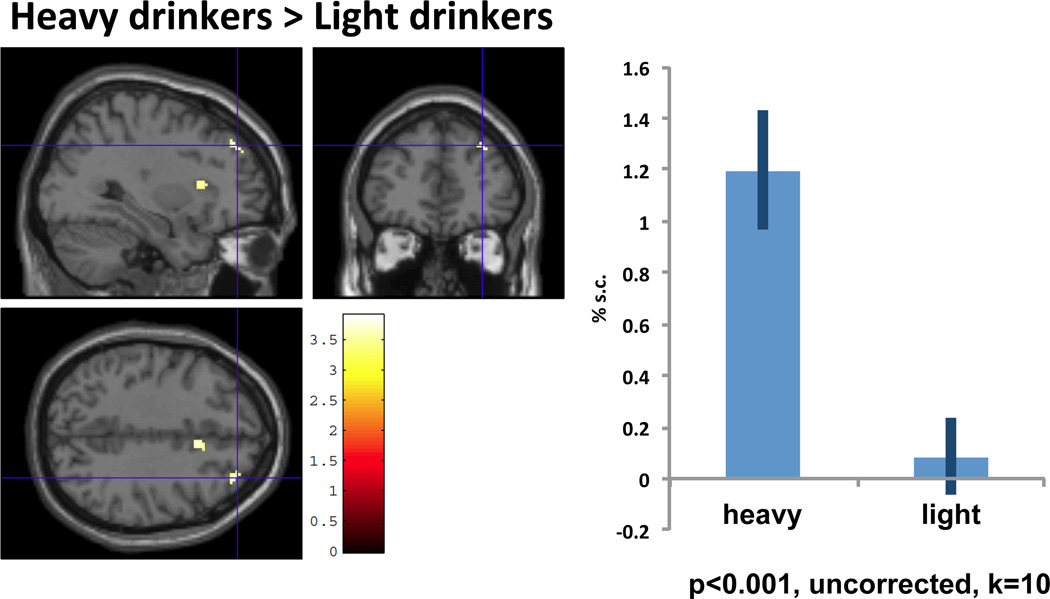
Inhibitory processes are highly relevant to behavioral control affecting decisions made daily. The Go/NoGo task is a common task used to tap basic inhibitory processes important in higher order executive functioning. The present study assessed neural correlates of response inhibition during performance of a Go/NoGo task in which NoGo signals or tests of inhibitory control consisted of images of beer bottles. Group comparisons were conducted between 21 heavy and 20 light drinkers, ranging in age from 18 to 22. Behaviorally, overall performance assessed with d-prime was significantly better among the lighter drinkers. On a neural level, the heavy drinkers showed significantly greater activity in the right dorsolateral prefrontal cortex, medial frontal cortex and cingulate relative to the light drinkers during the NoGo trials. These regions are implicated in reflective or control processing of information. Further, heavy drinkers showed significantly greater activity in the insula relative to light drinkers during NoGo trials, a neural region implicated in habit circuitry and tied to cue induced urges and emotional memories of physical effects of drugs. These results suggest that the heavier drinkers may have experienced increased working memory demand and control efforts to withhold a response due to poorer inhibitory control from enhanced salience of alcohol cues on the beer NoGo trials, which also engaged insula mediated effects.
Keywords: Alcohol; Dorsolateral prefrontal; Go/NoGo; Response inhibition; fMRI.
Copyright © 2014 Elsevier B.V. All rights reserved.
Conflict of interest statement
The authors declare that no financial support or compensation has been received from any individual or corporate entity over the past three years for research or professional services and there are no personal financial holdings that could be perceived as constituting a potential conflict of interest.
Figures



References
-
- Substance Abuse and Mental Health Services Administration (SAMHSA) Results from the 2011 National Survey on Drug Use and Health: Summary of National Findings. 2012 NSDUH Series H-44, HHS Publication No. (SMA) 12-4713.
-
- Spear LP. The adolescent brain and the college drinker: Biological basis of propensity to use and misuse alcohol. J Stud Alcohol. 2002;(SUPPL14):71–81. - PubMed
Publication types
MeSH terms
Substances
Grants and funding
LinkOut - more resources
Full Text Sources
Other Literature Sources
Medical
Miscellaneous
