


Development and validity of a scale of perception of velocity in resistance exercise
- PMID: 25177180
- PMCID: PMC4126290
Development and validity of a scale of perception of velocity in resistance exercise
Abstract
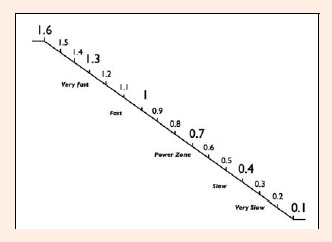
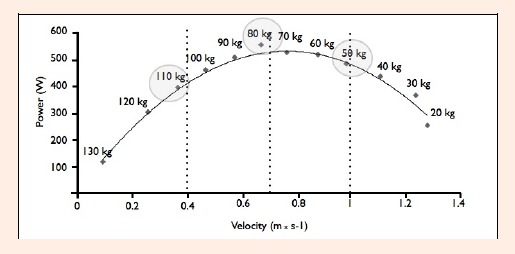
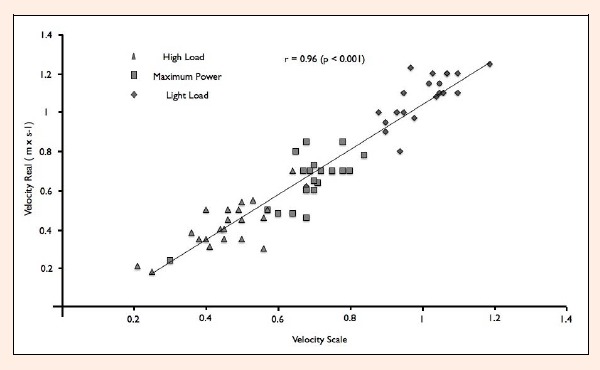
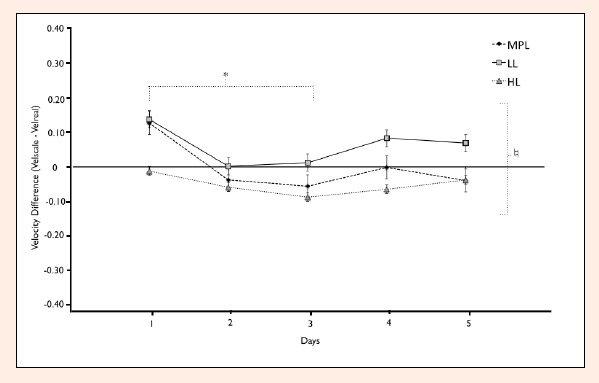
This aims of this study were twofold; 1) to development a new scale of perceived velocity in the bench press exercise and 2) to examine the scales concurrent validity. Twenty one physically active males with mean ±SD age, height and weights of: 27.5 ± 4.7 years, 1.77 ± 0.07 m, and 79.8 ± 10.3 kg respectively, took part in the study. The criterion variable used to test the validity of the new scale was the mean execution velocity (Velreal) of the bench press exercise. Three intensities (light loads [< 40% 1RM], medium loads [40% -70% 1RM] and heavy loads [> 70% 1RM]) were measured randomly during 5 days of testing. Perceived velocity (Velscale) was measured immediately after each exercise set using the new scale. A positive linear correlation (r range = 0.69 to 0.81) was found in all three intensities, analyzed individually, between the Velreal and Velscale. Pearson correlations showed a greater frequency of scale use resulted higher correlation values (range r = 0.88 to 0.96). This study provides evidence of the concurrent validity of a new scale of perceived velocity in the bench press exercise in trained adult males. These results suggest the exercise intensity of the bench press can be quantified quickly and effective using this new scale of perceived velocity, particularly when training for maximum power. Key PointsMeasurement of perception of velocity can complement other scales of perception such as the 15 category Borg scale or the OMNI-RES.The results obtained in this study show that there was a positive correlation between the perceived velocity measured by the scale and actual velocityRegular use of the new scale of perceived velocity in external resistance training provides athletes with continuous feedback of execution velocity in each repetition and set, especially with high power loads.
Keywords: RPE; rating perceived velocity; strength training; weight lifting.
Figures
References
-
- Atkinson G., Nevill A. (1998) Statistical methods for assessing measurement error (reliability) in variables relevant to sports medicine. Sports Medicine 4, 217-238 - PubMed
-
- Baker D., Nance S., Moore M. (2001) The load that maximizes the average mechanical power output during explosive bench press throws in highly trained athletes. Journal of Strength and Conditioning Research 15, 20-24 - PubMed
-
- Bird S.P., Tarpenning K.M., Marino F.E. (2005) Designing resistance training programmes to enhance muscular fitness: a review of the acute programme variables. Sport Medicine 35, 841-851 - PubMed
-
- Buckley J.P., Borg G.A.V. (2011) Borg’s scales in strength training; from theory to practice in young and older adults. Applied Physiology Nutritional and Metabolism 36, 682-692 - PubMed
-
- Buitrago S., Wirtz N., Yue Z., Kleinöder H., Mester J. (2012) Mechanical load and physiological responses of four different resistance training methods in bench press exercise. Journal of Strength and Conditioning Research 112, 2739-2748 - PubMed
LinkOut - more resources
Full Text Sources