


Adult neurogenesis and mental illness
- PMID: 25178407
- PMCID: PMC4262910
- DOI: 10.1038/npp.2014.230
Adult neurogenesis and mental illness
Abstract
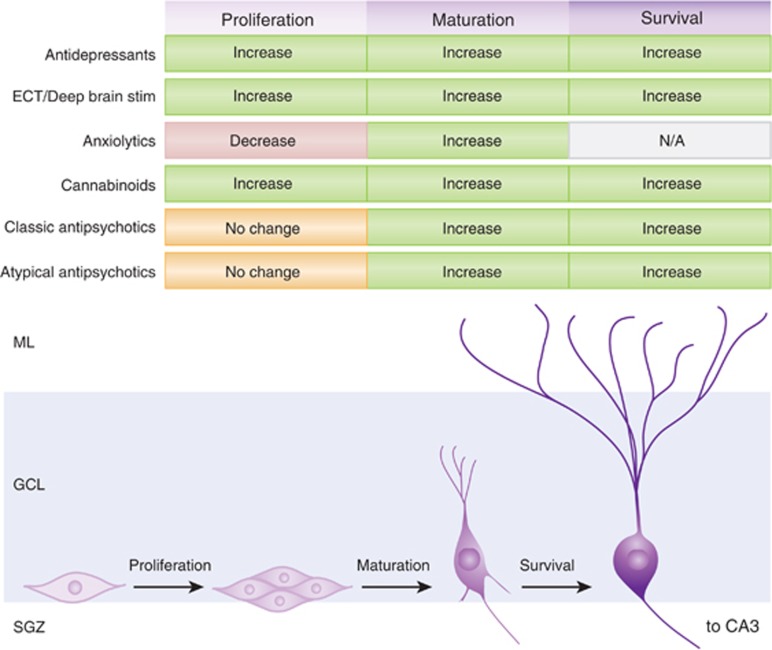
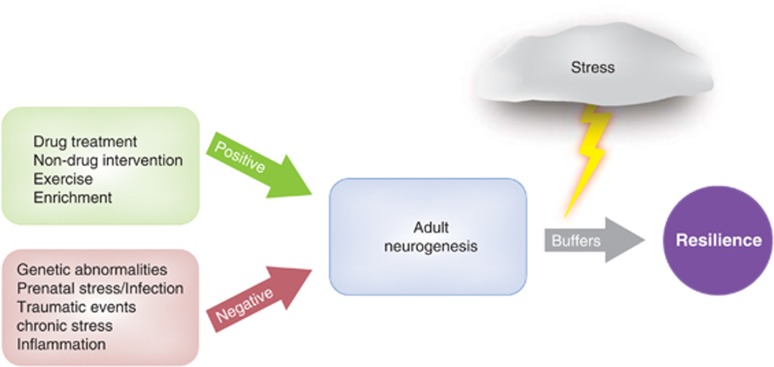
Several lines of evidence suggest that adult neurogenesis, the production of new neurons in adulthood, may play a role in psychiatric disorders, including depression, anxiety, and schizophrenia. Medications and other treatments for mental disorders often promote the proliferation of new neurons; the time course for maturation and integration of new neurons in circuitry parallels the delayed efficacy of psychiatric therapies; adverse and beneficial experiences similarly affect development of mental illness and neurogenesis; and ablation of new neurons in adulthood alters the behavioral impact of drugs in animal models. At present, the links between adult neurogenesis and depression seem stronger than those suggesting a relationship between new neurons and anxiety or schizophrenia. Yet, even in the case of depression there is currently no direct evidence for a causative role. This article reviews the data relating adult neurogenesis to mental illness and discusses where research needs to head in the future.
Figures
References
-
- Abe H, Hidaka N, Kawagoe C, Odagiri K, Watanabe Y, Ikeda T et al (2007). Prenatal psychological stress causes higher emotionality, depression-like behavior, and elevated activity in the hypothalamo-pituitary-adrenal axis. Neurosci Res 59: 145–151. - PubMed
-
- Agid O, Shapira B, Zislin J, Ritsner M, Hanin B, Murad H et al (1999). Environment and vulnerability to major psychiatric illness: a case control study of early parental loss in major depression, bipolar disorder and schizophrenia. Mol Psychiatry 4: 163–172. - PubMed
-
- Aimone JB, Deng W, Gage FH (2014). Adult neurogenesis in the dentate gyrus. In: Derdikman D, Knierim JJ (eds). Space, time and memory in the hippocampal formation. Springer: Vienna. pp 409–429.
-
- Airan RD, Meltzer LA, Roy M, Gong Y, Chen H, Deisseroth K (2007). High-speed imaging reveals neurophysiological links to behavior in an animal model of depression. Science (New York, NY) 317: 819–823. - PubMed
-
- Aisa B, Elizalde N, Tordera R, Lasheras B, Del Río J, Ramírez MJ (2009). Effects of neonatal stress on markers of synaptic plasticity in the hippocampus: implications for spatial memory. Hippocampus 19: 1222–1231. - PubMed
Publication types
MeSH terms
Grants and funding
LinkOut - more resources
Full Text Sources
Other Literature Sources
Medical
