Coming out in color: racial/ethnic differences in the relationship between level of sexual identity disclosure and depression among lesbians
- PMID: 25181323
- PMCID: PMC4345130
- DOI: 10.1037/a0037644
Coming out in color: racial/ethnic differences in the relationship between level of sexual identity disclosure and depression among lesbians
Abstract
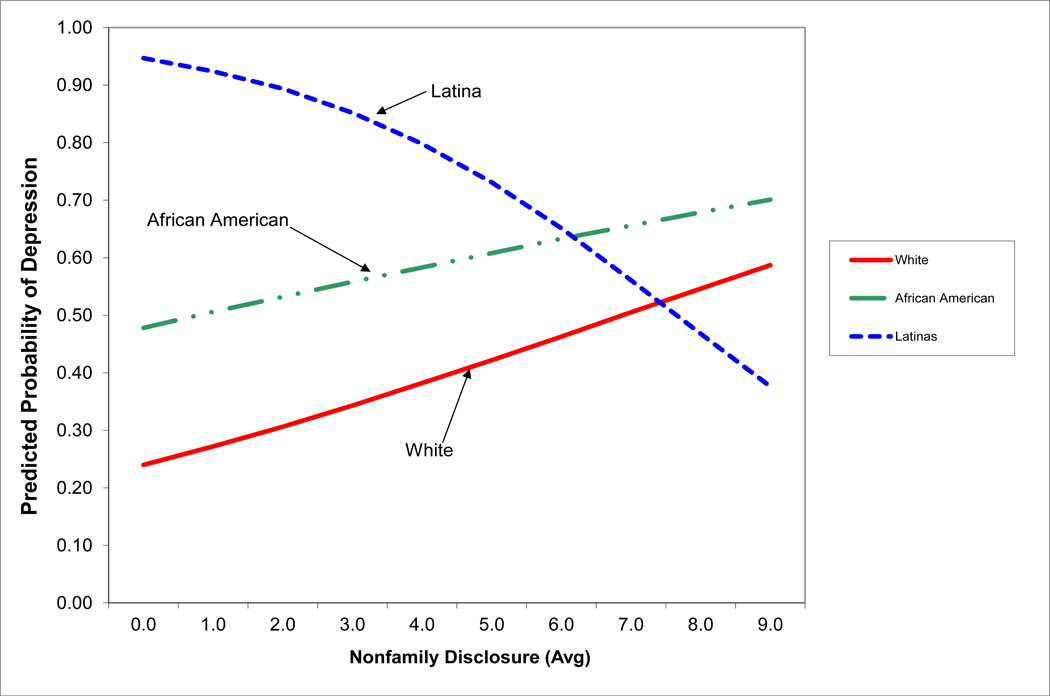
Disclosing one's sexual minority identity, or "coming out," has varying effects on the mental health of lesbians. Previous research indicates a negative association between disclosure and depression. However, these findings are based on research with White lesbians. To date, there is a paucity of studies that examined how the relationship between disclosure and depression may differ by race/ethnicity among lesbians. To address this gap, we examined the relationship between disclosure and depression among African American (26.5%), Latina (19.7%), and White (53.8%) self-identified lesbians (N = 351) in 2 survey-interviews (∼ 3-years apart). Over 50% of the participants reported a history of lifetime depression at baseline and 35.9% reported depression at Time 2 (T2). Disclosure levels varied: 78.9% had disclosed to their mother, 58.4% to their father, and 83.3% to a sibling. The mean level for disclosure to nonfamily individuals was 6.29 (SD 2.64; range 0-9). Disclosure results varied by race/ethnicity showing African American lesbians (vs. White lesbians) were less likely to disclose to nonfamily individuals when controlling for covariates. Results for the relationship between disclosure and depression showed disclosure to either parent or sibling was not associated with depression for the total sample. Among Latinas only, disclosure to nonfamily individuals was associated with less depression. Additional research is needed to explore racial/ethnic differences in disclosure with certain individuals and to better understand the relation between disclosure and depression. Findings have implications for reducing overall rates of depression among lesbians living with multiple-minority identities.
(c) 2015 APA, all rights reserved).
Figures
References
-
- Akerlund M, Cheung M. Teaching beyond the deficit model: Gay and lesbian issues among African Americans, Latinos, and Asian Americans. Journal of Social Work Education. 2000;36(2):279–292.
-
- American Psychiatric Association (APA) Diagnostic and statistical manual of mental health disorders: DSM-5. 5th ed. Washington, DC: American Psychiatric Publishing; 2013.
-
- Anthony R. A challenge to critical understandings of race. Journal for the Theory of Social Behaviour. 2012;42(3):260–282.
-
- Ayala J, Coleman H. Predictors of depression among lesbian women. Journal of Lesbian Studies. 2000;4(3):71–86. - PubMed
Publication types
MeSH terms
Grants and funding
LinkOut - more resources
Full Text Sources
Other Literature Sources
Miscellaneous