


The unexplored roles of human serum IgA
- PMID: 25188736
- PMCID: PMC4248255
- DOI: 10.1089/dna.2014.2639
The unexplored roles of human serum IgA
Abstract
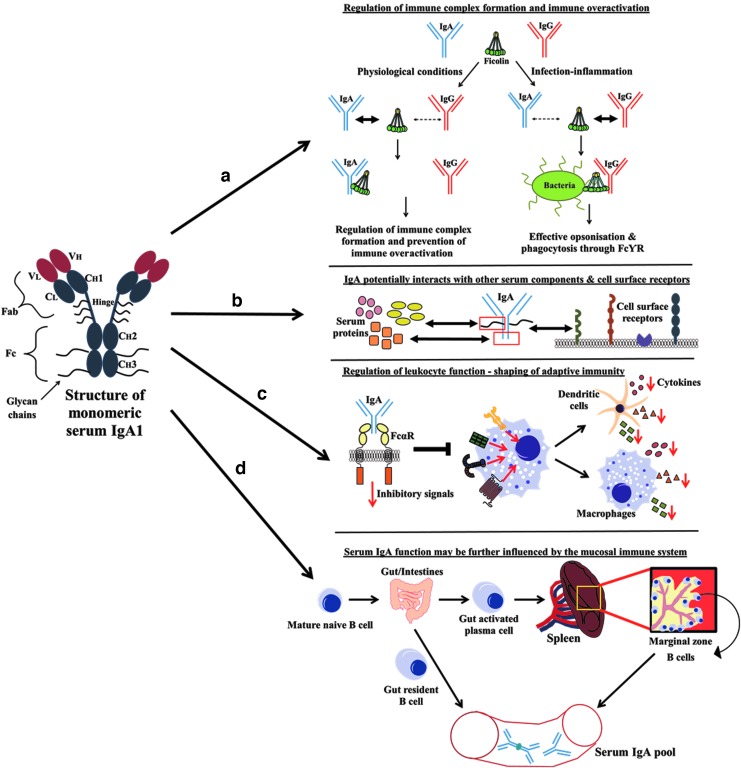
The roles of human serum IgA, in contrast to that of mucosal IgA, are relatively unexplored. Previous studies have shown that IgA mediates either pro- or anti-inflammatory effects in innate immune cells. Serum IgA has been shown to interact with many proteins and glycoproteins of which the functions and mechanisms are not fully characterized. Here, we present fresh perspectives into the roles of serum IgA, describing novel IgA-protein interactions, the importance of its glycosylation status in normal functions, and the plausible role of IgA as a driver and regulator of autoimmune diseases/immune overactivation. Other potential roles, including the regulation of cytokines, effector cell function, and homeostasis, are considered in view of the maintenance of immune function. We anticipate future research to uncover new anti-inflammatory or pro-inflammatory roles of human serum IgA in immune functions and dysfunctions, with implications on systemic lupus erythematosus (SLE).
Figures
References
-
- Bakema J.E., and van Egmond M. (2011). The human immunoglobulin A Fc receptor FcalphaRI: a multifaceted regulator of mucosal immunity. Mucosal Immunol 4,612–624 - PubMed
-
- Blank U., Launay P., Benhamou M., and Monteiro R.C. (2009). Inhibitory ITAMs as novel regulators of immunity. Immunol Rev 232,59–71 - PubMed
-
- Conley M.E., and Delacroix D.L. (1987). Intravascular and Mucosal Immunoglobulin A: two separate but related systems of immune defense? Ann Intern Med 106,892–899 - PubMed
Publication types
MeSH terms
Substances
LinkOut - more resources
Full Text Sources
Other Literature Sources
Miscellaneous
