


Preterm infants' orally directed behaviors and behavioral state responses to the integrated H-HOPE intervention
- PMID: 25189523
- PMCID: PMC4262744
- DOI: 10.1016/j.infbeh.2014.08.001
Preterm infants' orally directed behaviors and behavioral state responses to the integrated H-HOPE intervention
Abstract
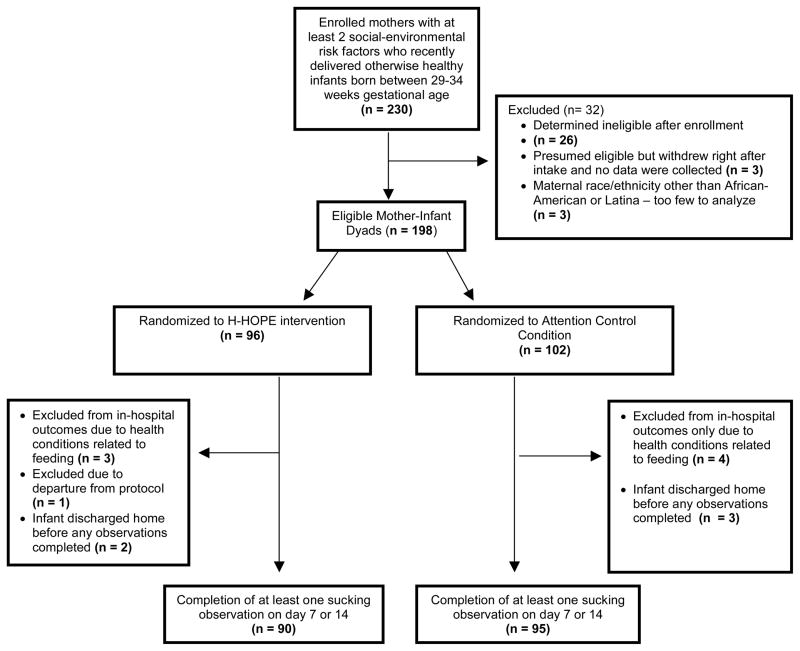
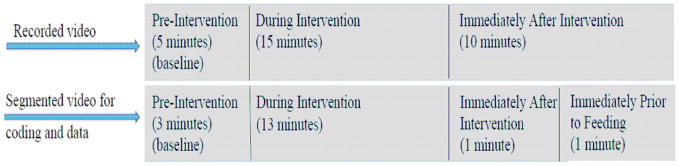
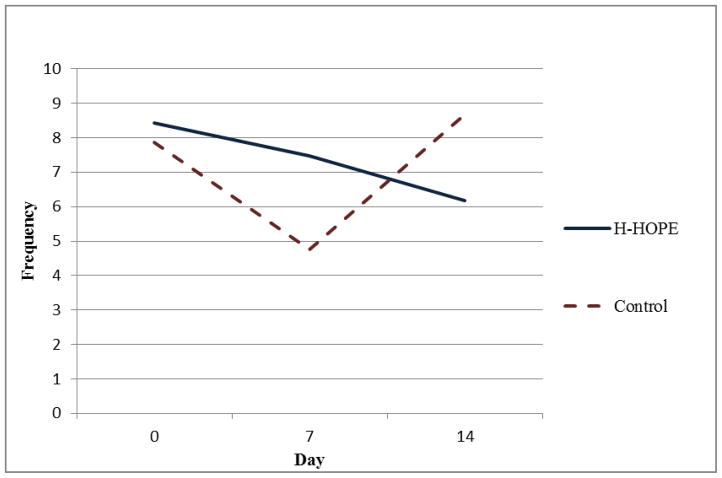
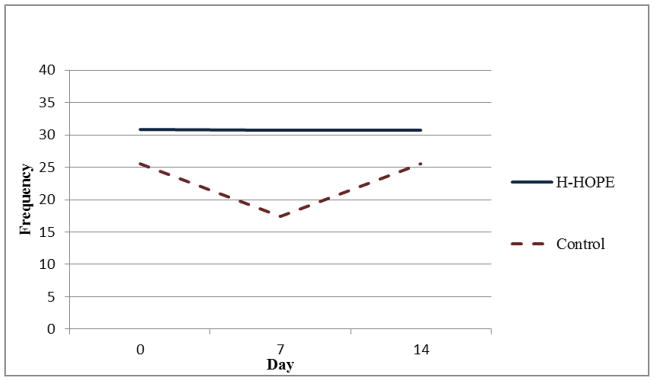
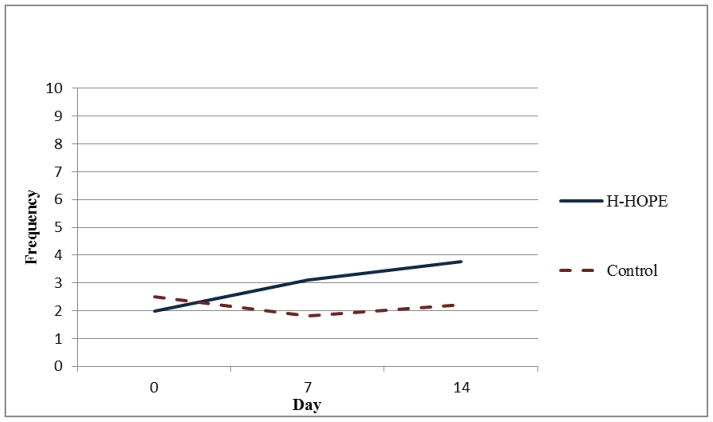
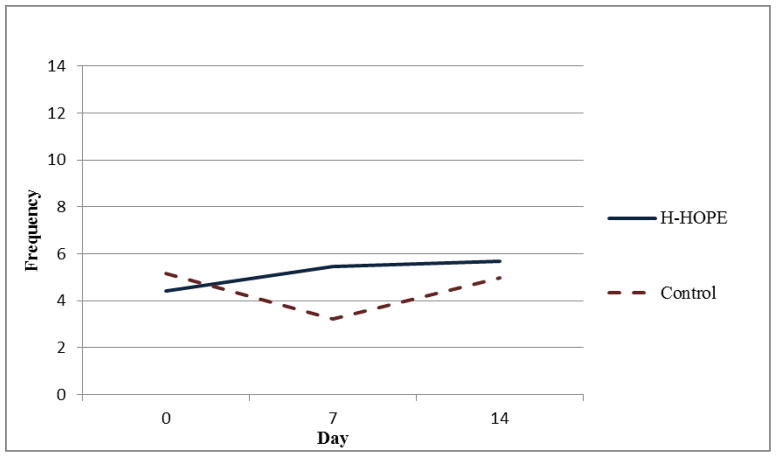
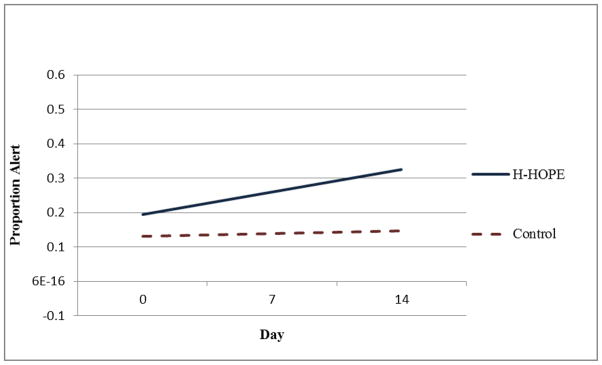
Preterm infants are challenged by immature infant behavioral organization which may negatively influence their ability to oral feed. The purpose of this study was to determine whether the integrated H-HOPE (Hospital to Home: Optimizing the Infant's Environment) intervention would improve infant behavioral organization by increasing the frequency of orally directed behaviors and the proportion of time spent in an alert behavioral state when offered prior to oral feeding. Mother-infant dyads (n=198) were randomly assigned to the H-HOPE intervention or the Attention Control groups. Infants were born at 29-34 weeks gestation and were clinically stable. Mothers had at least two social environmental risk factors such as minority status or less than high school education. H-HOPE is an integrated intervention that included (1) twice-daily infant directed stimulation using the ATVV intervention (auditory, tactile, visual, and vestibular stimuli) and (2) maternal participatory guidance sessions by a nurse-community advocate team. Orally directed behaviors and behavioral states were assessed weekly prior to feeding during hospitalization when infants were able to feed orally. There were no differences between the groups at baseline (Day 0, prior to the initiation of the integrated H-HOPE intervention). We observed a pattern of increased frequency of orally directed behaviors in the H-HOPE intervention group when compared to the Attention Control group, however, the proportion of time spent in an alert behavioral state remained stable in both groups over the course of the study. On Day 7, the H-HOPE intervention group exhibited a significantly higher mean frequency of orally directed behaviors than the Attention Control group (12.6 vs. 7.1 pre-intervention, 51.8 vs. 33.2 during intervention, 4.3 vs. 3.2 immediately after intervention, and 8.9 vs. 5.3 immediately prior to feeding). On Day 7, the H-HOPE intervention group exhibited a significantly higher proportion of time spent in an alert behavioral state only during intervention (0.26 vs. 0.11) and immediately after intervention (0.28 vs. 0.06). These findings are suggestive that the integrated H-HOPE intervention facilitated infant behavioral organization for clinically stable infants born between 29 and 34 weeks gestation. The orally directed behaviors appear to be an important indicator of the infant's preparation for feeding, and when used in conjunction with assessment of behavioral states, are especially valuable to the clinician. Use of this combined assessment approach in practice would strengthen clinician assessment for initiation of (beginning the first oral feeding) and daily preparation for oral feeding in preterm infants.
Keywords: Behavioral states; Multisensory intervention; Orally directed behaviors; Preterm infants.
Copyright © 2014 Elsevier Inc. All rights reserved.
Figures
References
-
- Ardura J, Andres J, Aldana J, Revilla MA. Development of sleep-wakefulness rhythm in premature babies. Acta Pædiatrica. 1995;84(5):484–489. - PubMed
-
- Bell AF, White-Traut R, Rankin K. Fetal exposure to synthetic oxytocin and the relationship with prefeeding cues within one hour postbirth. Early Human Development. 2012;89(3):137–143. - PubMed
-
- Bingham PM, Ashikaga T, Abbasi S. Relationship of behavioral state and tube-feeding to non-nutritive sucking in premature infants. Journal of Neonatal Nursing. 2011;17:150–157.
-
- Brazelton TB, Nugent JK. Neonatal Behavioral Assessment Scale. Vol. 3. London: Mac Keith Press; 1995.
Publication types
MeSH terms
Grants and funding
LinkOut - more resources
Full Text Sources
Other Literature Sources
Medical
