


Sulfurization induced surface constitution and its correlation to the performance of solution-processed Cu2ZnSn(S,Se)4 solar cells
- PMID: 25190491
- PMCID: PMC4155337
- DOI: 10.1038/srep06288
Sulfurization induced surface constitution and its correlation to the performance of solution-processed Cu2ZnSn(S,Se)4 solar cells
Abstract
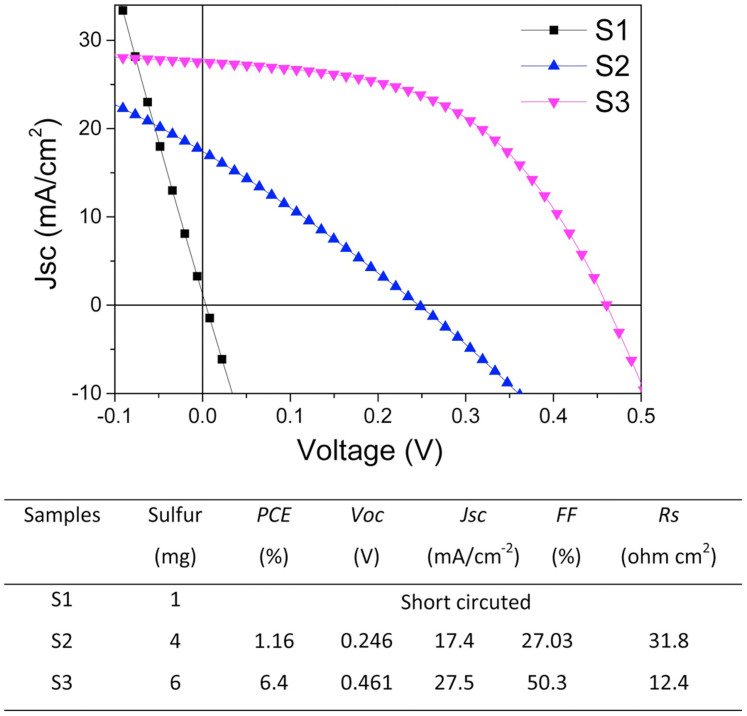
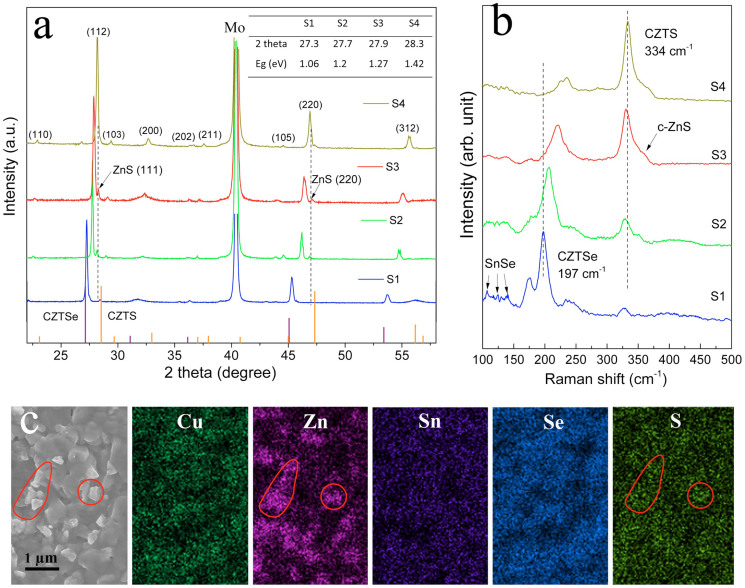
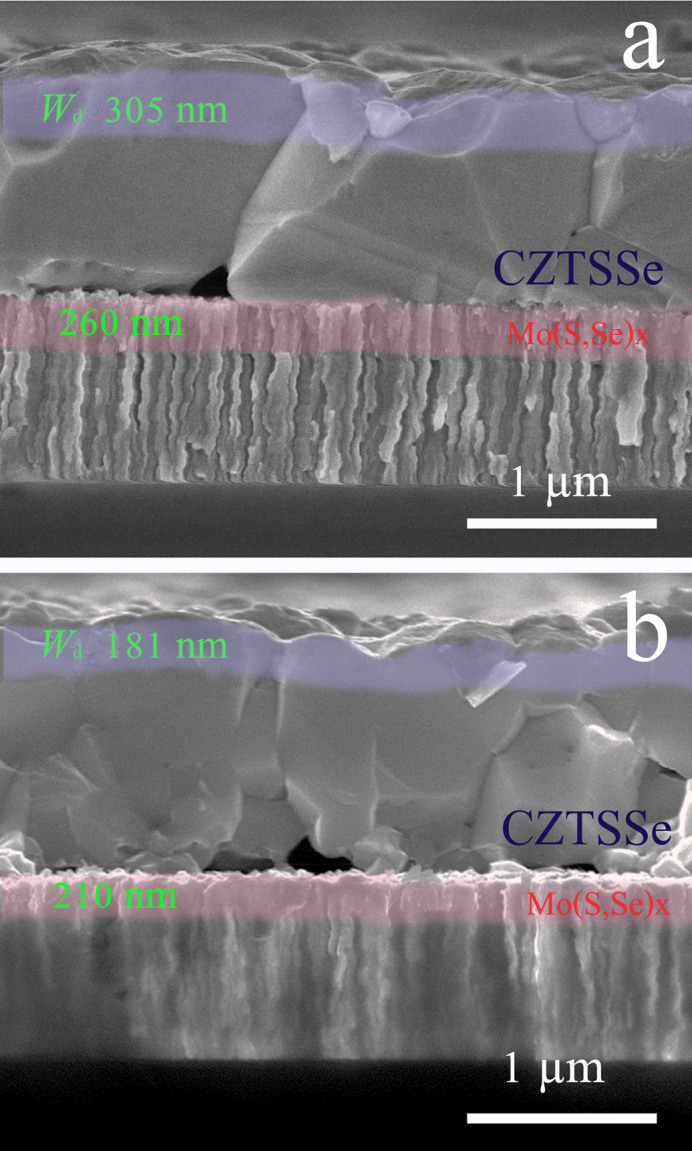
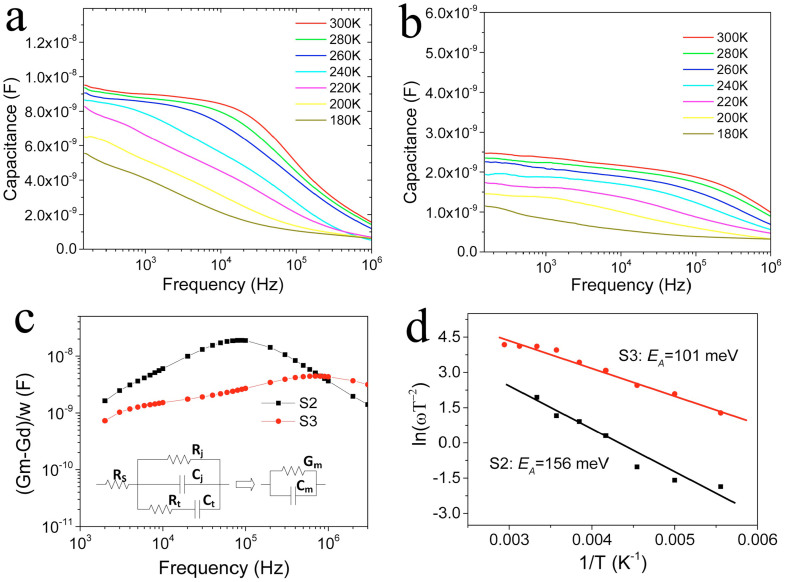
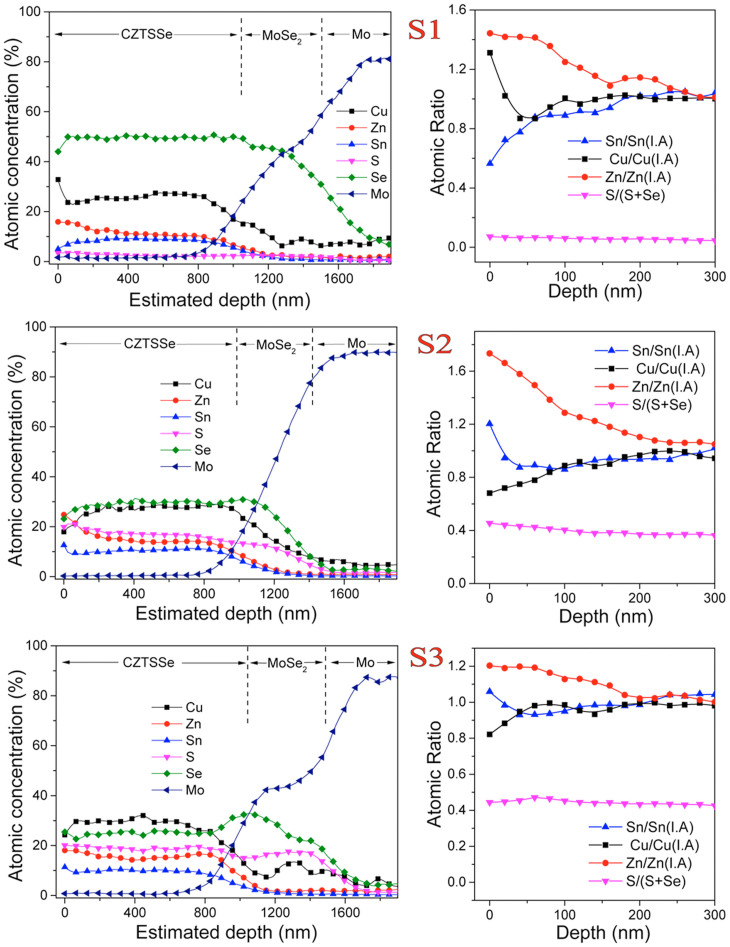
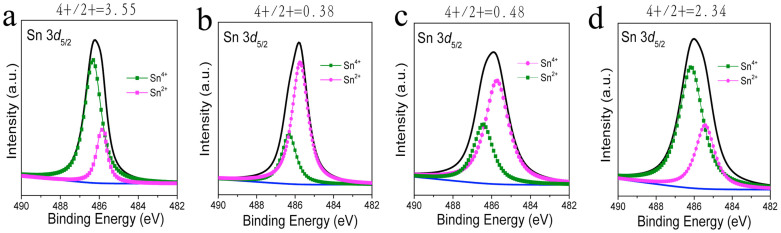
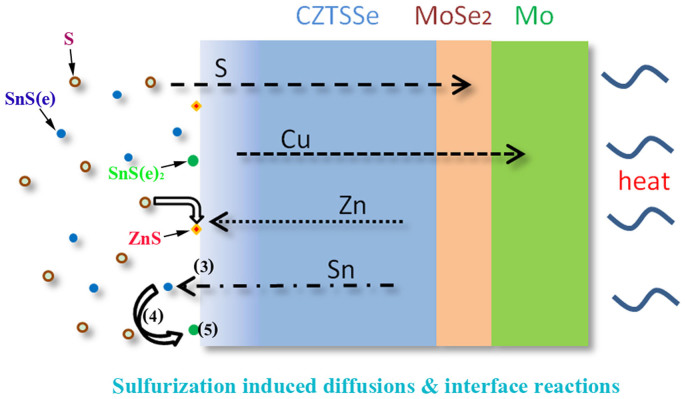
To obtain high photovoltaic performances for the emerging copper zinc tin sulfide/selenide (CZTSSe) thin film solar cells, much effort has deservedly been placed on CZTSSe phase purification and CZTSSe grain size enhancement. Another highly crucial but less explored factor for device performance is the elemental constitution of CZTSSe surface, which is at the heart of p-n junction where major photogenerated carriers generate and separate. In this work we demonstrate that, despite the well-built phase and large grained films are observed by common phases and morphology characterization (XRD, Raman and SEM), prominent device efficiency variations from short circuited to 6.4% are obtained. Insight study highlights that the surface (0-250 nm) compositions variation results in different bulk defect depths and doping densities in the depletion zone. We propose that suitable sulfurization (at ~ 10 kPa sulfur pressure) drives optimization of surface constitution by managing the Cu, Zn and Sn diffusion and surface reaction. Therefore, our study reveals that the balance of elemental diffusion and interface reactions is the key to tuning the surface quality CZTSSe film and thus the performance of as resulted devices.
Figures
References
-
- Siebentritt S. & Schorr S. Kesterites—a challenging material for solar cells. Prog. Photovoltaics Res. Appl. 20, 512–519 (2012).
-
- Jimbo K. et al. Cu2ZnSnS4-type thin film solar cells using abundant materials. Thin Solid Films 515, 5997–5999 (2007).
-
- Fernandes P. A., Salomé P. M. P., da Cunha A. F. & Schubert B.-A. Cu2ZnSnS4 solar cells prepared with sulphurized dc-sputtered stacked metallic precursors. Thin Solid Films 519, 7382–7385 (2011).
-
- Platzer-Bjorkman C., Scragg J., Flammersberger H., Kubart T. & Edoff M. Influence of precursor sulfur content on film formation and compositional changes in Cu2ZnSnS4 films and solar cells. Sol. Energy Mater. Sol. Cells 98, 110–117 (2012).
-
- Katagiri H. et al. Preparation and evaluation of Cu2ZnSnS4 thin films by sulfurization of E-B evaporated precursors. Sol. Energy Mater. Sol. Cells 49, 407–414 (1997).
Publication types
LinkOut - more resources
Full Text Sources
Other Literature Sources
