


The Manx shearwater (Puffinus puffinus) as a candidate sentinel of Atlantic Ocean health
- PMID: 25191536
- PMCID: PMC4154383
- DOI: 10.1186/2046-9063-10-6
The Manx shearwater (Puffinus puffinus) as a candidate sentinel of Atlantic Ocean health
Abstract
Introduction: Seabirds have been historically used to monitor environmental contamination. The aim of the present study was to test the suitability of a species belonging to the Procellariiformes group, the Manx shearwater, Puffinus puffinus, as a sentinel of environmental health, by determining contaminant levels (trace metals and organochlorine compounds) from carcass tissues and by isolating Vibrio spp. and Aeromonas spp. from live specimens. To this end, 35 Puffinus puffinus carcasses wrecked on the north-central coast of the state of Rio de Janeiro, Brazil, and two carcasses recovered in Aracruz, on the coast of the state of Espírito Santo, Brazil, were sampled, and fragments of muscle and hepatic tissues were collected for contaminant analyses. Swabs from eleven birds found alive at the north-central coast of Rio de Janeiro were collected for isolation of the aforementioned bacteria.
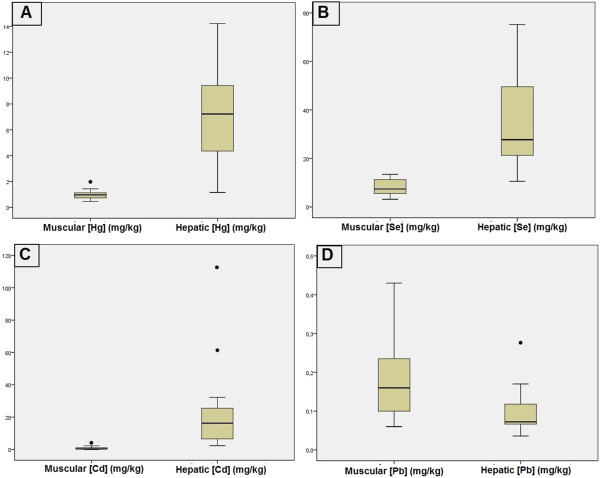
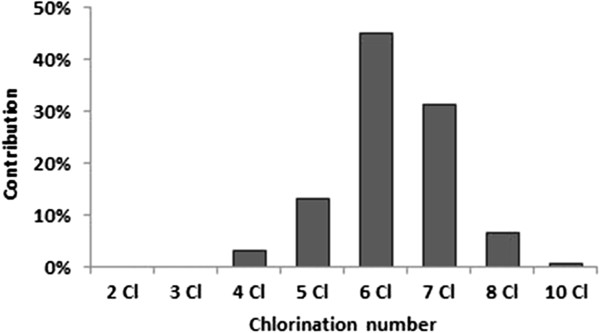
Results: THE AVERAGE CONCENTRATION IN DRY WEIGHT (DW) OF THE TRACE METALS WERE: mercury 7.19 mg kg(-1)(liver) and 1.23 mg kg(-1) (muscle); selenium 34.66 mg kg(-1) (liver) and 7.98 mg kg(-1) (muscle); cadmium 22.33 mg kg(-1) (liver) and 1.11 mg kg(-1) (muscle); and lead, 0.1 mg kg(--1) (liver) and 0.16 mg kg(-1) (muscle). Organochlorine compounds were detected in all specimens, and hexachlorbiphenyls, heptachlorbiphenyls and DDTs presented the highest levels. Regarding microbiological contamination, bacteria from the Vibrio genus were isolated from 91% of the analyzed specimens. Vibrio harveyi was the predominant species. Bacteria from the Aeromonas genus were isolated from 18% of the specimens. Aeromonas sobria was the only identified species.
Conclusions: The results indicate that Puffinus puffinus seems to be a competent ocean health sentinel. Therefore, the monitoring of contaminant levels and the isolation of public health interest bacteria should proceed in order to consolidate this species importance as a sentinel.
Keywords: Aeromonas; Brazil; Metal; Organochlorines; Puffinus puffinus; Sentinel; Vibrio.
Figures
References
-
- Odum EP, Barret GW. In: Fundamentos de Ecologia. 5. Odum EP, Barret GW, editor. São Paulo: Cengage Learning; 2008. Ecologia Regional: Principais Tipos de Ecossistemas e Biomas; pp. 412–458.
-
- Joint Group of Experts on the Scientific Aspects of Marine Environmental Protection (GESAMP) Protecting the Oceans from Land-Based Activities. New York; 2001.
-
- Augusto LGS, Câmara VM, Carneiro FF, Câncio J, Gouveia N. Saúde e Ambiente: uma reflexão da Associação Brasileira de Pós-Graduação em Saúde Coletiva – ABRASCO. Rev Bras Epidemiol. 2003;6(2):87–94.
LinkOut - more resources
Full Text Sources
Other Literature Sources
Research Materials
Miscellaneous
