


Diagnostic accuracy of computer-aided detection of pulmonary tuberculosis in chest radiographs: a validation study from sub-Saharan Africa
- PMID: 25192172
- PMCID: PMC4156349
- DOI: 10.1371/journal.pone.0106381
Diagnostic accuracy of computer-aided detection of pulmonary tuberculosis in chest radiographs: a validation study from sub-Saharan Africa
Abstract
Background: Chest radiography to diagnose and screen for pulmonary tuberculosis has limitations, especially due to inter-reader variability. Automating the interpretation has the potential to overcome this drawback and to deliver objective and reproducible results. The CAD4TB software is a computer-aided detection system that has shown promising preliminary findings. Evaluation studies in different settings are needed to assess diagnostic accuracy and practicability of use.
Methods: CAD4TB was evaluated on chest radiographs of patients with symptoms suggestive of pulmonary tuberculosis enrolled in two cohort studies in Tanzania. All patients were characterized by sputum smear microscopy and culture including subsequent antigen or molecular confirmation of Mycobacterium tuberculosis (M.tb) to determine the reference standard. Chest radiographs were read by the software and two human readers, one expert reader and one clinical officer. The sensitivity and specificity of CAD4TB was depicted using receiver operating characteristic (ROC) curves, the area under the curve calculated and the performance of the software compared to the results of human readers.
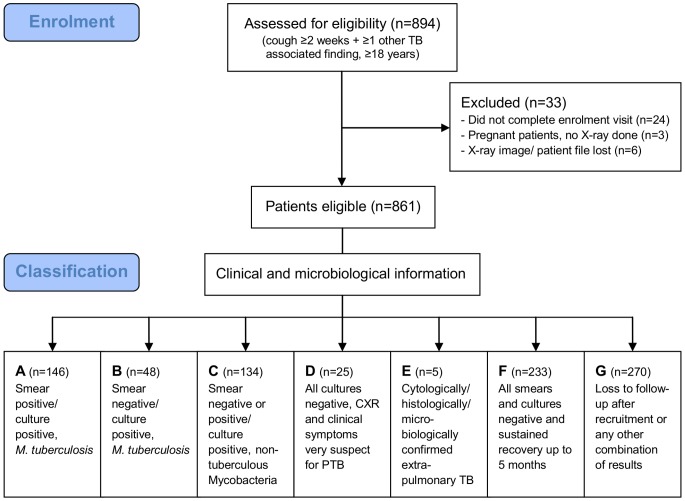
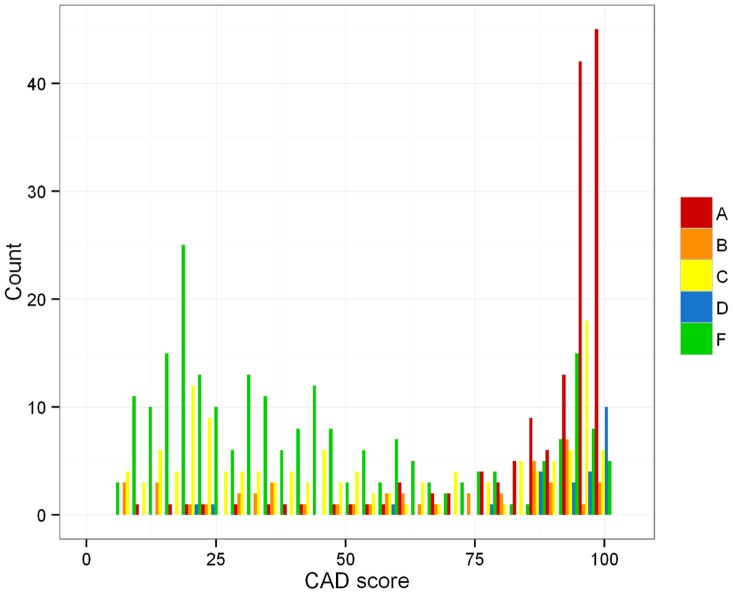
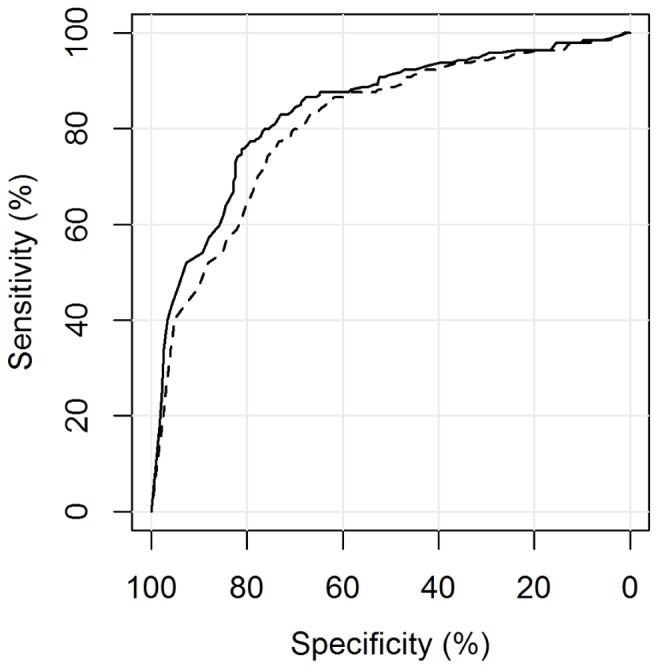
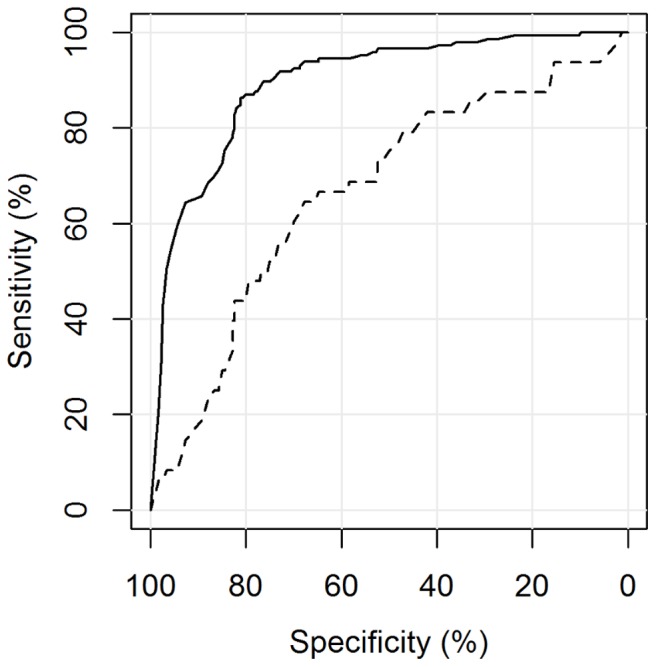
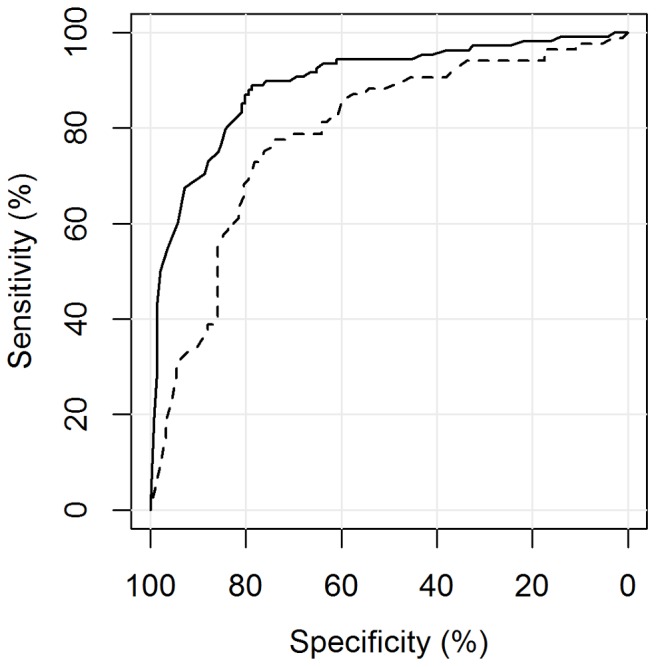
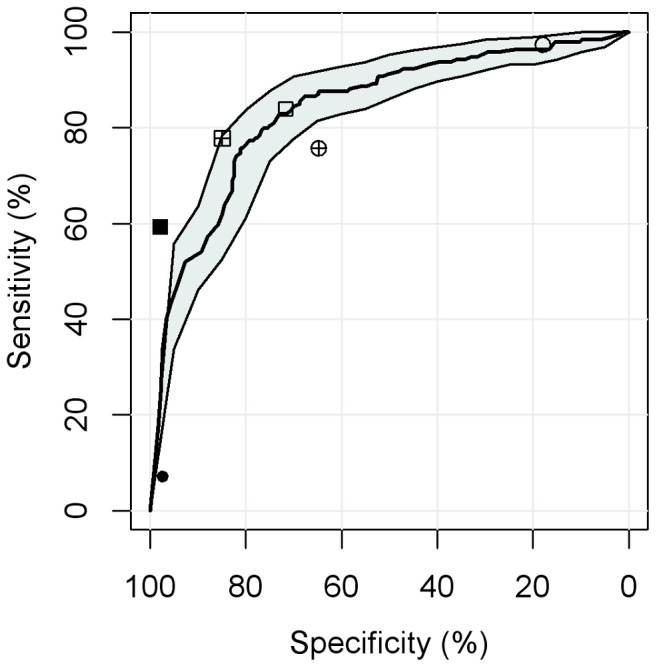
Results: Of 861 study participants, 194 (23%) were culture-positive for M.tb. The area under the ROC curve of CAD4TB for the detection of culture-positive pulmonary tuberculosis was 0.84 (95% CI 0.80-0.88). CAD4TB was significantly more accurate for the discrimination of smear-positive cases against non TB patients than for smear-negative cases (p-value<0.01). It differentiated better between TB cases and non TB patients among HIV-negative compared to HIV-positive individuals (p<0.01). CAD4TB significantly outperformed the clinical officer, but did not reach the accuracy of the expert reader (p = 0.02), for a tuberculosis specific reading threshold.
Conclusion: CAD4TB accurately distinguished between the chest radiographs of culture-positive TB cases and controls. Further studies on cost-effectiveness, operational and ethical aspects should determine its place in diagnostic and screening algorithms.
Conflict of interest statement
Figures
References
-
- Story A, Aldridge RW, Abubakar I, Stagg HR, Lipman M, et al. (2012) Active case finding for pulmonary tuberculosis using mobile digital chest radiography: an observational study. Int J Tuberc Lung Dis 16: 1461–1467 Available: http://www.ncbi.nlm.nih.gov/pubmed/22981252 - PubMed
-
- Van't Hoog AH, Meme HK, Van Deutekom H, Mithika AM, Olunga C, et al. (2011) High sensitivity of chest radiograph reading by clinical officers in a tuberculosis prevalence survey. Int J Tuberc Lung Dis 15: 1308–1314 Available: http://www.ingentaconnect.com/content/iuatld/ijtld/2011/00000015/0000001... - PubMed
-
- Den Boon S, White NW, Van Lill SWP, Borgdorff MW, Verver S, et al. (2006) An evaluation of symptom and chest radiographic screening in tuberculosis prevalence surveys. Int J Tuberc Lung Dis 10: 876–882. - PubMed
-
- Van Cleeff M, Kivihya-Ndugga L, Meme H, Odhiambo J, Klatser P (2005) The role and performance of chest X-ray for the diagnosis of tuberculosis: a cost-effectiveness analysis in Nairobi, Kenya. BMC Infect Dis 5: 111 Available: http://www.pubmedcentral.nih.gov/articlerender.fcgi?artid=1326228&tool=p.... Accessed 2012 Nov 7 - PMC - PubMed
-
- Graham S, Das GK, Hidvegi RJ, Hanson R, Kosiuk J, et al. (2002) Chest radiograph abnormalities associated with tuberculosis: reproducibility and yield of active cases. Int J Tuberc Lung Dis 6: 137–142 Available: http://www.ncbi.nlm.nih.gov/pubmed/11931412. Accessed 2012 Oct 2 - PubMed
Publication types
MeSH terms
LinkOut - more resources
Full Text Sources
Other Literature Sources
