


High-dose intravenous immunoglobulin therapy for systemic capillary leak syndrome (Clarkson disease)
- PMID: 25193271
- PMCID: PMC4282822
- DOI: 10.1016/j.amjmed.2014.08.015
High-dose intravenous immunoglobulin therapy for systemic capillary leak syndrome (Clarkson disease)
Abstract
Background: Systemic capillary leak syndrome is a highly rare disorder of unknown cause. The disease is characterized by episodes of transient vascular collapse, which leads to hypotensive shock and anasarca. Previous treatment of this potentially devastating condition has been largely ineffective. We evaluated intravenous immunoglobulin prophylactic therapy in a cohort of 29 patients with systemic capillary leak syndrome in a longitudinal follow-up study.
Methods: All patients received treatments at the discretion of their primary providers and retrospectively via questionnaire-recorded symptoms beginning with their first documented episode of systemic capillary leak syndrome to May 31, 2014.
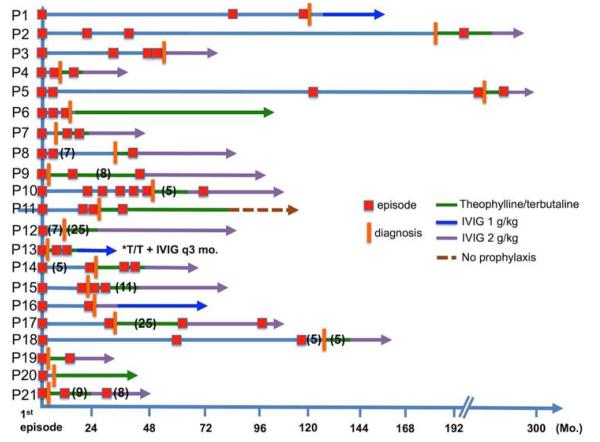
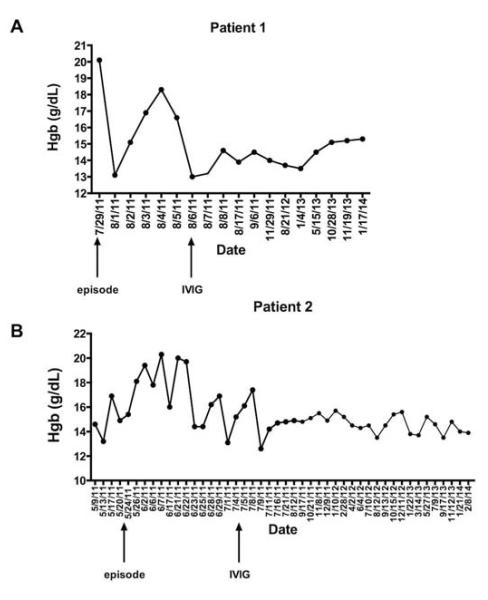
Results: A total of 22 of 29 patients responded to the questionnaire, and 18 of the 22 respondents received monthly prophylaxis with intravenous immunoglobulin during the study period for a median interval of 32 months. The median annual attack frequency was 2.6 per patient before intravenous immunoglobulin therapy and 0 per patient after initiation of intravenous immunoglobulin prophylaxis (P = .0001). A total of 15 of 18 subjects with a history of 1 or more acute systemic capillary leak syndrome episodes experienced no further symptoms while taking intravenous immunoglobulin therapy.
Conclusions: Intravenous immunoglobulin prophylaxis is associated with a dramatic reduction in the occurrence of systemic capillary leak syndrome attacks in most patients, with minimal side effects. A prospective, randomized trial may be necessary to fully assess the benefits of intravenous immunoglobulin for systemic capillary leak syndrome and to determine the optimal dosage and duration of therapy.
Keywords: Intravenous immunoglobulin; Systemic capillary leak syndrome; Vascular leak.
Published by Elsevier Inc.
Figures
References
-
- Clarkson B, Thompson D, Horwith M, Luckey EH. Cyclical edema and shock due to increased capillary permeability. Am J Med. 1960 Aug;29:193–216. - PubMed
-
- Gousseff M, Arnaud L, Lambert M, et al. The Systemic Capillary Leak Syndrome: A Case Series of 28 Patients From a European Registry. Ann Intern Med. 2011 Apr 5;154(7):464–471. - PubMed
-
- Tahirkheli NK, Greipp PR. Treatment of the systemic capillary leak syndrome with terbutaline and theophylline. A case series. Ann Intern Med. 1999 Jun 1;130(11):905–909. - PubMed
Publication types
MeSH terms
Substances
Grants and funding
LinkOut - more resources
Full Text Sources
Other Literature Sources
