Review
. 2014 Nov;106(2):173-81.
doi: 10.1016/j.diabres.2014.08.009. Epub 2014 Aug 19.

β-hydroxybutyrate: much more than a metabolite

Affiliations
Review

β-hydroxybutyrate: much more than a metabolite

John C Newman et al. Diabetes Res Clin Pract. 2014 Nov.

Abstract

The ketone body β-hydroxybutyrate (βOHB) is a convenient carrier of energy from adipocytes to peripheral tissues during fasting or exercise. However, βOHB is more than just a metabolite, having important cellular signaling roles as well. βOHB is an endogenous inhibitor of histone deacetylases (HDACs) and a ligand for at least two cell surface receptors. In addition, the downstream products of βOHB metabolism including acetyl-CoA, succinyl-CoA, and NAD+ (nicotinamide adenine dinucleotide) themselves have signaling activities. These regulatory functions of βOHB serve to link the outside environment to cellular function and gene expression, and have important implications for the pathogenesis and treatment of metabolic diseases including type 2 diabetes.

Keywords: Acetylation; Epigenetics; HDAC; Ketone bodies; Low carbohydrate.


Conflict of interest statement

Conflicts of Interest: None

Figures
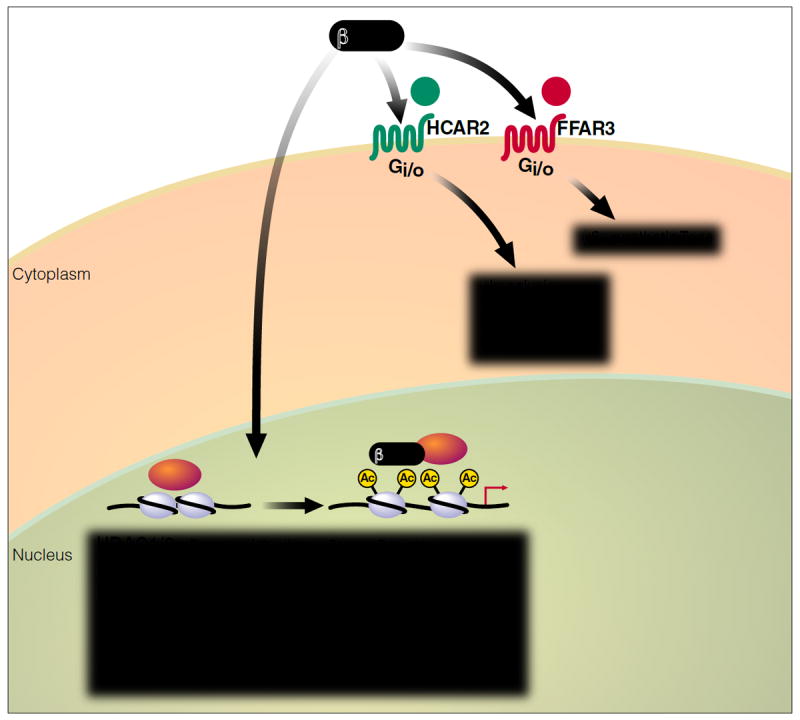
Figure 1
Figure 1. Cellular signaling functions of the ketone body βOHB
βOHB itself is an endogenous inhibitor of histone deacetylase enzymes, thereby altering gene expression to regulate resistance to oxidative stress and possibly many other cellular functions. βOHB is also a ligand for at least two cell-surface G-protein-coupled receptors that modulate lipolysis, sympathetic tone, and metabolic rate.
Figure 2
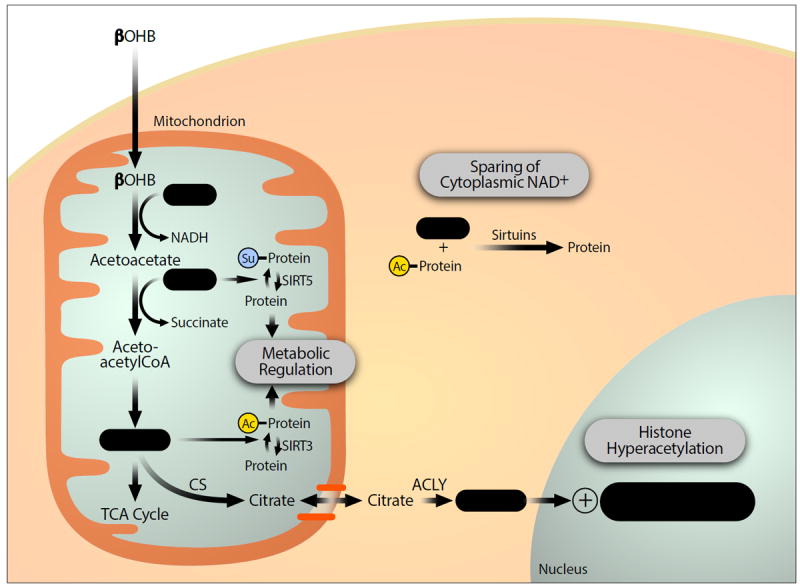
Figure 2. Cellular signaling functions of βOHB downstream metabolites
Metabolism of βOHB increases cellular levels of acetyl-CoA and reduces levels of succinyl-CoA and NAD+. These secondary effects can further increase mitochondrial protein acetylation and reduce mitochondrial protein succinylation, potentially regulating the function of many metabolic enzymes. The relative sparing of cytoplasmic NAD levels with utilization of BOHB rather than glucose can alter the activity of NAD-dependent enzymes such as sirtuins. Finally, acetyl-CoA generated in mitochondria can be transported into the nucleus via the citrate shuttle to serve as substrate for histone acetyltransferases, a secondary mechanism by which BOHB might increase histone acetylation and alter gene expression.

References

    1. Zimmet PZ, Magliano DJ, Herman WH, Shaw JE. Diabetes: a 21st century challenge. The lancet Diabetes & endocrinology. 2014;2:56–64. - PubMed
    1. Shyh-Chang N, Locasale JW, Lyssiotis CA, Zheng Y, Teo RY, Ratanasirintrawoot S, et al. Influence of threonine metabolism on S-adenosylmethionine and histone methylation. Science. 2013;339:222–6. - PMC - PubMed
    1. Shimazu T, Hirschey MD, Newman J, He W, Shirakawa K, Le Moan N, et al. Suppression of oxidative stress by beta-hydroxybutyrate, an endogenous histone deacetylase inhibitor. Science. 2013;339:211–4. - PMC - PubMed
    1. Stein LR, Imai S. The dynamic regulation of NAD metabolism in mitochondria. Trends Endocrinol Metab. 2012;23:420–8. - PMC - PubMed
    1. Imai SI, Guarente L. NAD and sirtuins in aging and disease. Trends in cell biology. 2014 - PMC - PubMed

Publication types

MeSH terms

Substances