


Hypoxia-inducible factors in regulation of immune responses in tumour microenvironment
- PMID: 25196648
- PMCID: PMC4253499
- DOI: 10.1111/imm.12380
Hypoxia-inducible factors in regulation of immune responses in tumour microenvironment
Abstract
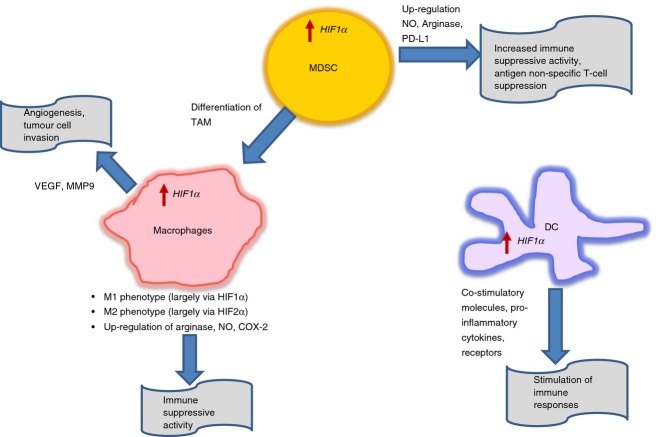
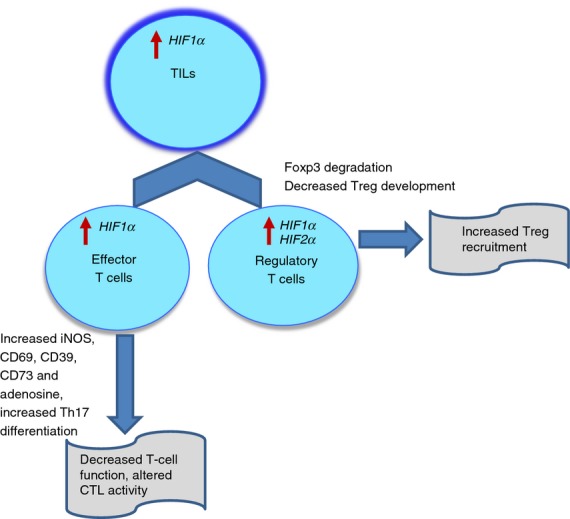
Hypoxia is one of the hallmarks of the tumour microenvironment. It is the result of insufficient blood supply to support proliferating tumour cells. In response to hypoxia, the cellular machinery uses mechanisms whereby the low level of oxygen is sensed and counterbalanced by changing the transcription of numerous genes. Hypoxia-inducible factors (HIF) play a critical role in the regulation of cellular responses to hypoxia. In recent years ample evidence has indicated that HIF play a prominent role in tumour immune responses. Up-regulation of HIF1α promotes immune suppressive activity of myeloid-derived suppressive cells (MDSC) and tumour-associated macrophages (TAM) and rapid differentiation of MDSC to TAM. HIF1α does not affect MDSC differentiation to dendritic cells (DC) but instead causes DC activation. HIF inhibit effector functions of tumour-infiltrating lymphocytes. HIF1α inhibits regulatory T (Treg) cell development by switching the balance towards T helper type 17 cells. However, as a major part of Treg cell differentiation does not take place in the tumour site, a functionally more important role of HIF1α is in the promotion of Treg cell recruitment to the tumour site in response to chemokines. As a result, the presence of Treg cells inside tumours is increased. Hence, HIF play a largely negative role in the regulation of immune responses inside tumours. It appears that therapeutic strategies targeting HIF in the immune system could be beneficial for anti-tumour immune responses.
Keywords: T cells; hypoxia; hypoxia-inducible factor; macrophages; myeloid-derived suppressor cells.
© 2014 John Wiley & Sons Ltd.
Figures
References
-
- Eberhard A, Kahlert S, Goede V, Hemmerlein B, Plate KH, Augustin HG. Heterogeneity of angiogenesis and blood vessel maturation in human tumors: implications for antiangiogenic tumor therapies. Cancer Res. 2000;60:1388–93. - PubMed
-
- Mamlouk S, Wielockx B. Hypoxia-inducible factors as key regulators of tumor inflammation. Int J Cancer. 2013;132:2721–9. - PubMed
-
- McDonald DM, Baluk P. Significance of blood vessel leakiness in cancer. Cancer Res. 2002;62:5381–5. - PubMed
-
- Taylor CT, Colgan SP. Hypoxia and gastrointestinal disease. J Mol Med (Berl) 2007;85:1295–300. - PubMed
Publication types
MeSH terms
Substances
Grants and funding
LinkOut - more resources
Full Text Sources
Other Literature Sources
Research Materials
