


doi: 10.1257/aer.102.4.1206.
Targeting the Poor: Evidence from a Field Experiment in Indonesia
Affiliations
- PMID: 25197099
- PMCID: PMC4156293
- DOI: 10.1257/aer.102.4.1206
Item in Clipboard
Targeting the Poor: Evidence from a Field Experiment in Indonesia
Am Econ Rev.
2012 Jun.
Abstract
This paper reports an experiment in 640 Indonesian villages on three approaches to target the poor: proxy-means tests (PMT), where assets are used to predict consumption; community targeting, where villagers rank everyone from richest to poorest; and a hybrid. Defining poverty based on PPP$2 per-capita consumption, community targeting and the hybrid perform somewhat worse in identifying the poor than PMT, though not by enough to significantly affect poverty outcomes for a typical program. Elite capture does not explain these results. Instead, communities appear to apply a different concept of poverty. Consistent with this finding, community targeting results in higher satisfaction.
Figures
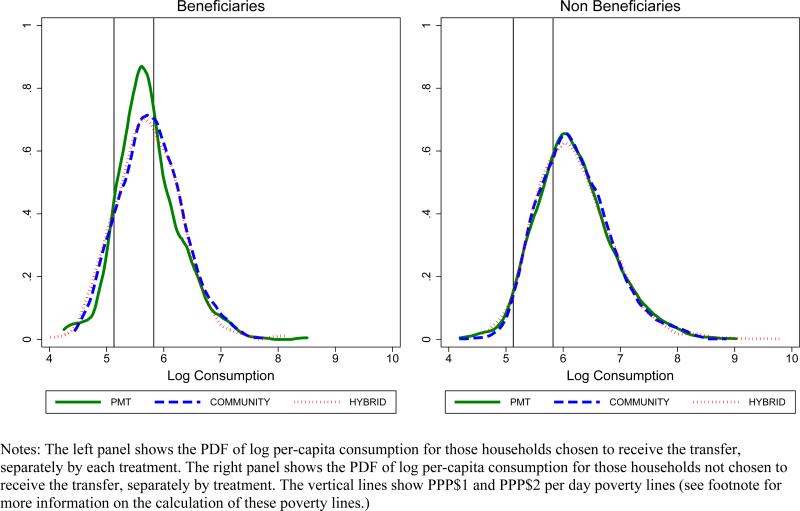
PDF of log per-capita consumption of beneficiaries and non-beneficiaries, by treatment
status
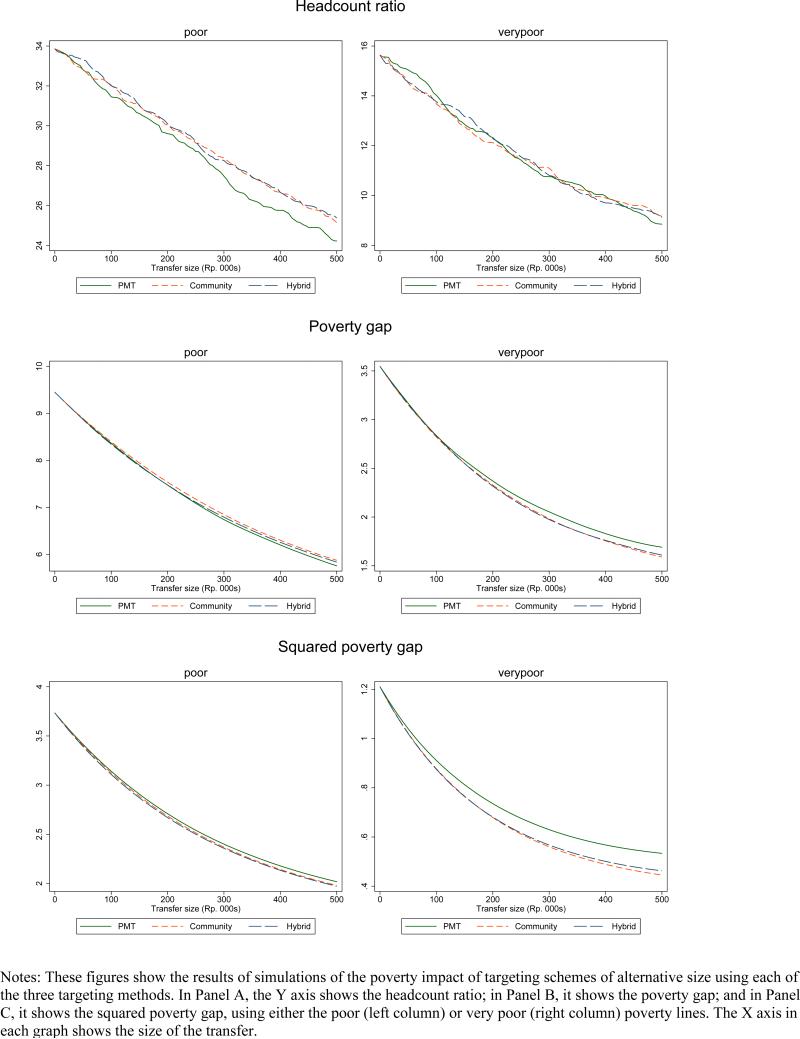
Simulated poverty impacts for different transfer sizes and poverty lines
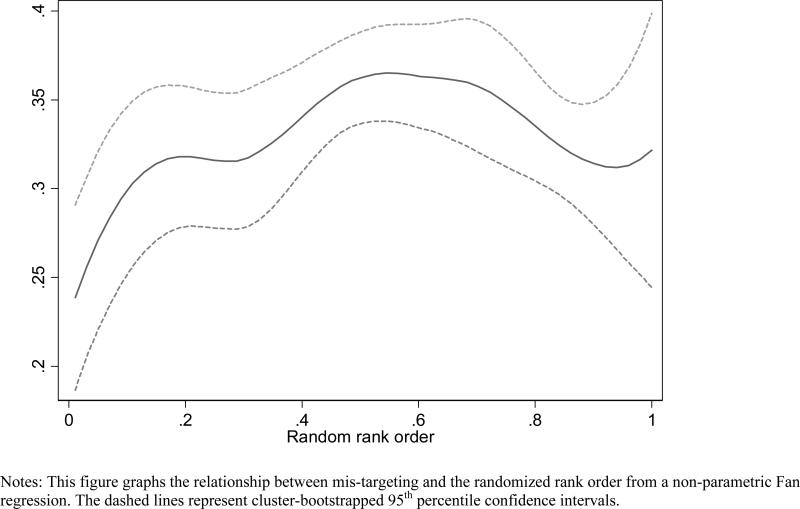
Effect of order in ranking meeting on mis-target rate
References
-
- Alderman Harold. Do Local Officials Know Something We Don't? Decentralization of Targeted Transfers in Albania. Journal of Public Economics. 2002;83(2):375–404.
-
- Bardhan Pranab, Mookherjee Dilip. Decentralizing Antipoverty Program Delivery in Developing Countries. Journal of Public Economics. 2005;89(4):675–704.
-
- Camacho Adriana, Conover Emily. Manipulation of Social Program Eligibility. American Economic Journal: Economics Policy. 2011;3(2):41–65.
-
- Cameron Lisa A. Policy Research Working Paper Series 2800. The World Bank; 2002. Did Social Safety Net Scholarships Reduce Drop-Out Rates During the Indonesian Economic Crisis?
-
- Coady David, Grosh Margaret, Hoddinott John. Targeting Outcomes Redux. World Bank Research Observer. 2004;19(1):61–85.
Grants and funding
LinkOut - more resources
Full Text Sources