


Rotavirus Diarrhea among Children in Taiz, Yemen: Prevalence-Risk Factors and Detection of Genotypes
- PMID: 25197286
- PMCID: PMC4145802
- DOI: 10.1155/2014/928529
Rotavirus Diarrhea among Children in Taiz, Yemen: Prevalence-Risk Factors and Detection of Genotypes
Abstract
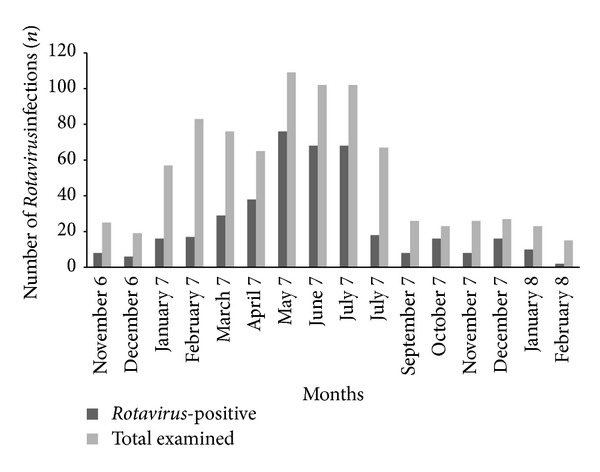
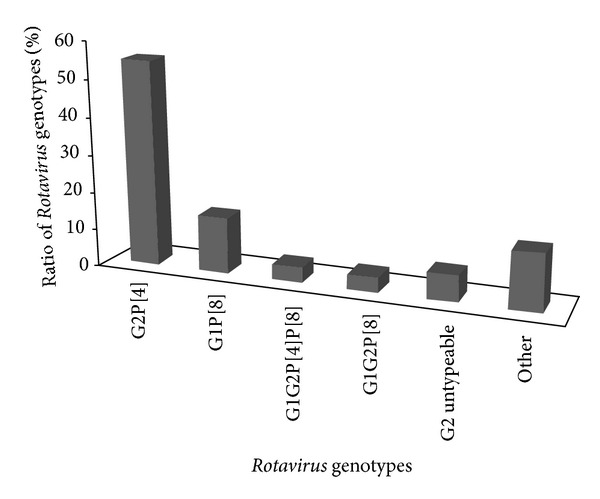
Diarrheal diseases are a great public health problem; they are among the most causes leading to morbidity and mortality of infants and children particularly in developing countries and even in developed countries. Rotavirus is the most common cause of severe gastroenteritis in infants and young children in both developed and developing countries. The purpose of this study was to determine the incidence rate of Rotavirus infection, its genotypes, and risk factors among children with diarrhea in Taiz, Yemen. 795 fecal samples were collected from children (less than 5 years old), suffering from diarrhea and attending the Yemeni-Swedish Hospital (YSH) in Taiz , Yemen, from November 2006 to February 2008. Rotavirus was detected by enzyme linkage immunosorbent assay (ELISA) on stool specimens of children. Genotypes of Rotavirus were characterized by reverse transcriptase-polymerase chain reaction (RT-PCR) and polyacrylamide gel electrophoresis (PAGE). The results showed that 358 (45.2%) were Rotavirus-positive and the most prevalent genotypes were G2P[4] (55%), followed by G1P[8] (15%). In addition, Rotavirus was found through the whole year; however, higher frequency during the summer season (53.4%) and lower frequency during the winter season (37.1%).
Figures
References
-
- Cunliffe NA, Nakagomi O. A critical time for rotavirus vaccines: a review. Expert Review of Vaccines. 2005;4(4):521–532. - PubMed
-
- Rodriguez WJ, Kim HW, Brandt CD, et al. Longitudinal study of rotavirus infection and gastroenteritis in families served by a pediatric medical practice: clinical and epidemiologic observations. Pediatric Infectious Disease Journal. 1987;6(2):170–176. - PubMed
LinkOut - more resources
Full Text Sources
Other Literature Sources
