


Dietary folate and reproductive success among women undergoing assisted reproduction
- PMID: 25198264
- PMCID: PMC4172634
- DOI: 10.1097/AOG.0000000000000477
Dietary folate and reproductive success among women undergoing assisted reproduction
Abstract
Objective: To prospectively evaluate the associations of folate with assisted reproductive technology outcomes within a population in the United States.
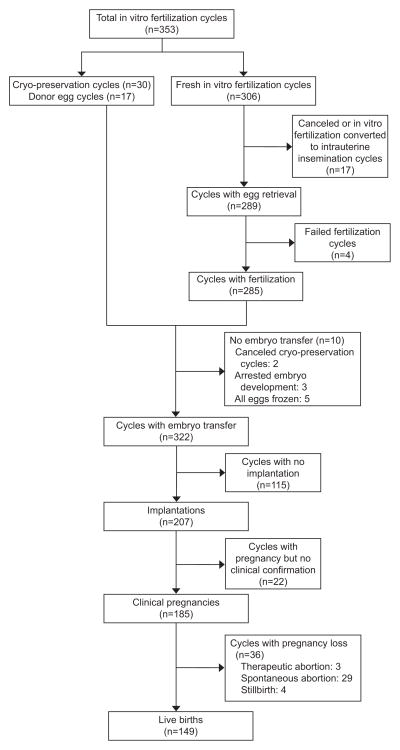
Methods: This analysis included women (n=232) in a prospective cohort study at the Massachusetts General Hospital Fertility Center. Diet was assessed before assisted reproductive technology treatment using a validated food frequency questionnaire. Intermediate and clinical endpoints of assisted reproductive technology were abstracted from medical records. Generalized linear mixed models with random intercepts to account for multiple cycles per woman were used to evaluate the association of folate intake with assisted reproductive technology outcomes adjusting for calorie intake, age, body mass index, race, smoking status, infertility diagnosis, and protocol type.
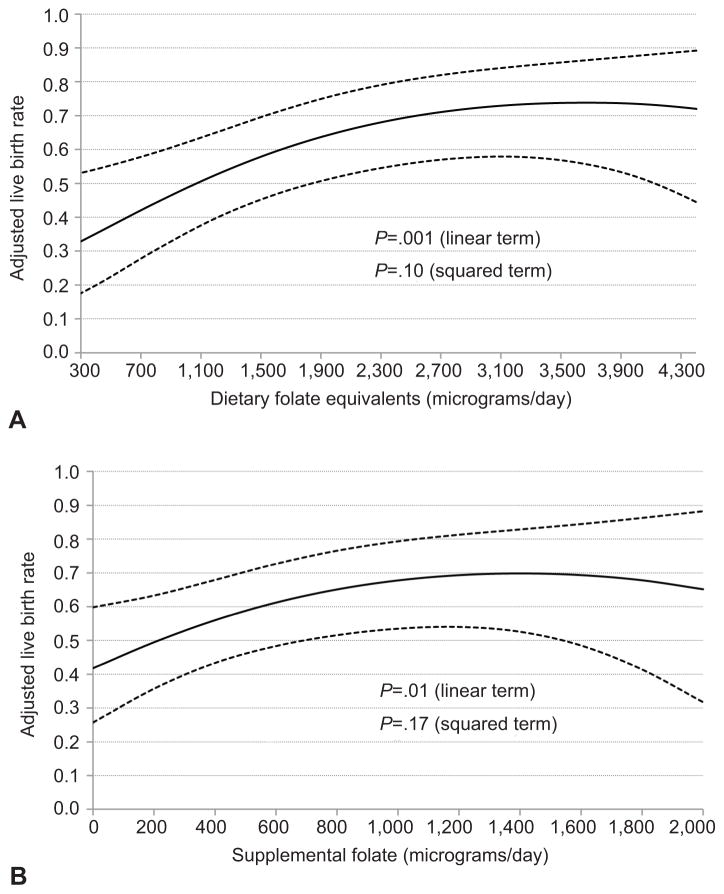
Results: Among the 232 women (median age 35.2 years, median folate intake 1,778 micrograms/day), higher folate intake was associated with higher rates of implantation, clinical pregnancy, and live birth. The adjusted percentage (95% confidence interval [CI]) of initiated assisted reproductive technology cycles resulting in a live birth for women in increasing quartiles of folate intake were 30% (95% CI 21-42%), 47% (95% CI 35-59%), 42% (95% CI 30-35%) and 56% (95% CI 43-67%) (P for trend=0.01). Live birth rates were 20% (95% CI 8-31%) higher among women in the highest quartile of supplemental folate intake (more than 800 micrograms/day) than among women in the lowest quartile (less than 400 micrograms/day). Higher supplemental folate intake was associated with higher fertilization rates and lower cycle failure rates before embryo transfer (P for trend=0.03 and 0.02).
Conclusion: Higher intake of supplemental folate was associated with higher live birth rates after assisted reproductive technology treatment.
Level of evidence: : II.
Figures
References
-
- Steegers-Theunissen RP, Twigt J, Pestinger V, Sinclair KD. The periconceptional period, reproduction and long-term health of offspring: the importance of one-carbon metabolism. Hum Reprod Update. 2013;19:640–55. - PubMed
-
- Ebisch IM, Thomas CM, Peters WH, Braat DD, Steegers-Theunissen RP. The importance of folate, zinc and antioxidants in the pathogenesis and prevention of subfertility. Hum Reprod Update. 2007;13:163–74. - PubMed
Publication types
MeSH terms
Substances
Grants and funding
LinkOut - more resources
Full Text Sources
Other Literature Sources
Medical
Research Materials
