


The prognostic importance of weight loss in coronary artery disease: a systematic review and meta-analysis
- PMID: 25199859
- PMCID: PMC4734114
- DOI: 10.1016/j.mayocp.2014.04.033
The prognostic importance of weight loss in coronary artery disease: a systematic review and meta-analysis
Abstract
Objective: To assess the prognostic impact of weight loss on clinical outcomes in patients with coronary artery disease (CAD).
Methods: We performed a systematic review and meta-analysis of the prognostic effects of weight loss in patients with CAD on a composite outcome of all-cause mortality, cardiovascular mortality, and major adverse cardiac events considering studies published between January 1, 1964, and August 8, 2013. We considered weight loss "intentional" when it occurred in the presence of programmed therapeutic lifestyle changes and "observational" when no such intervention was specified.
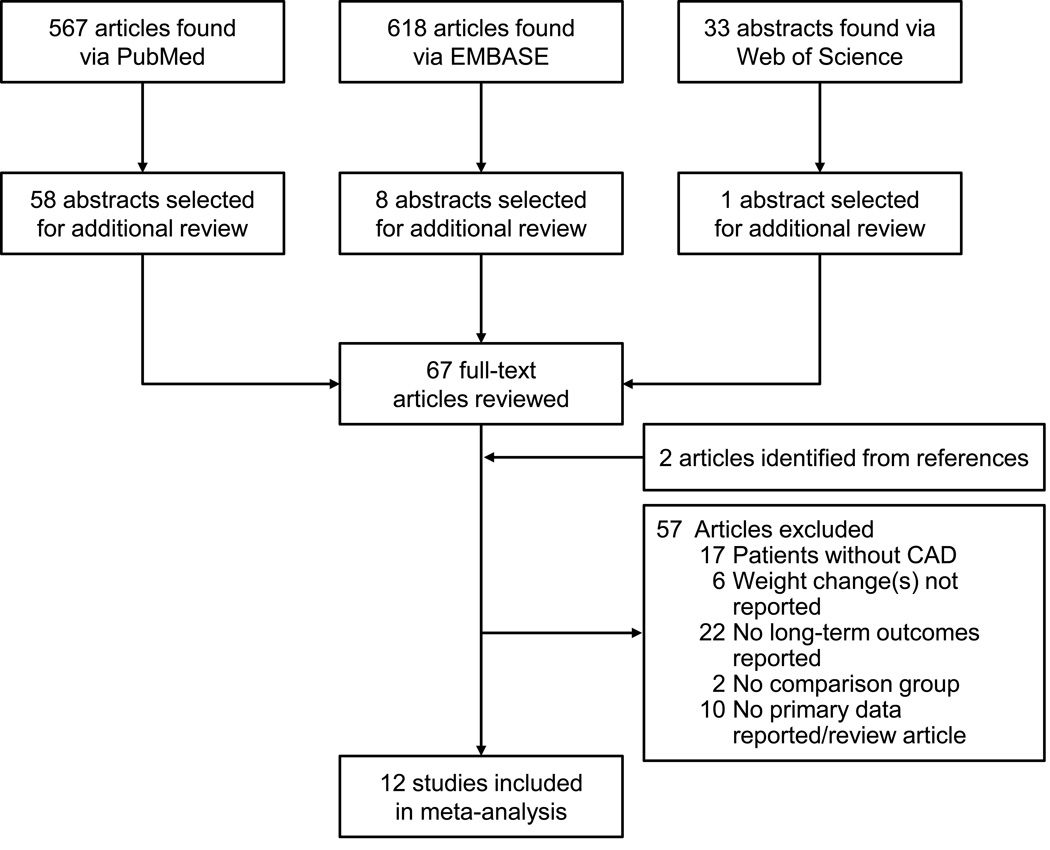
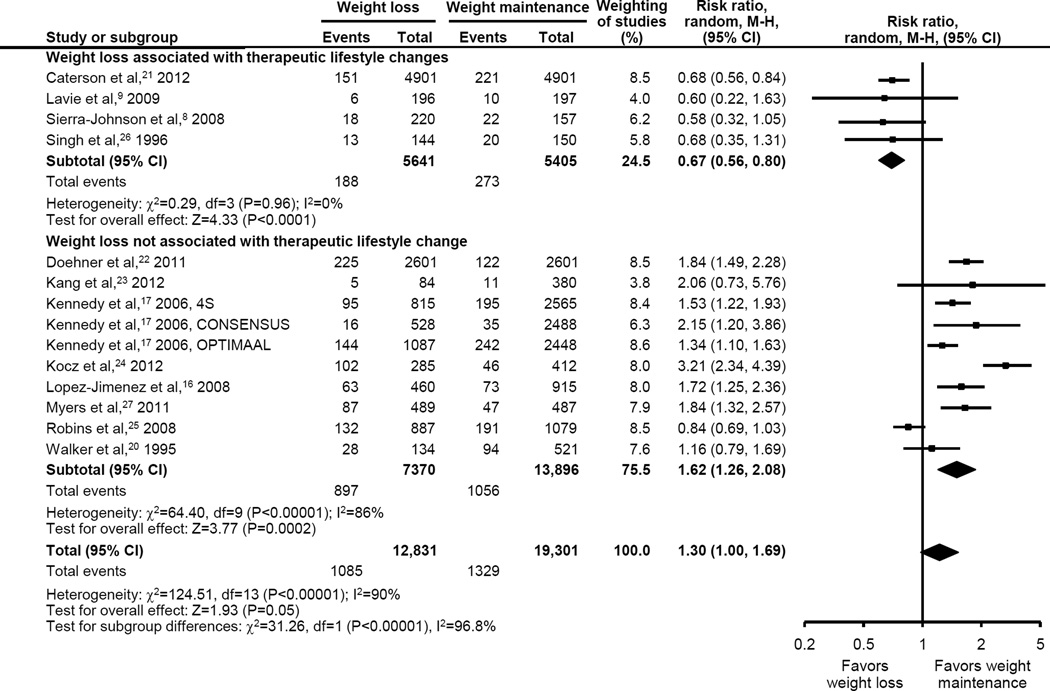
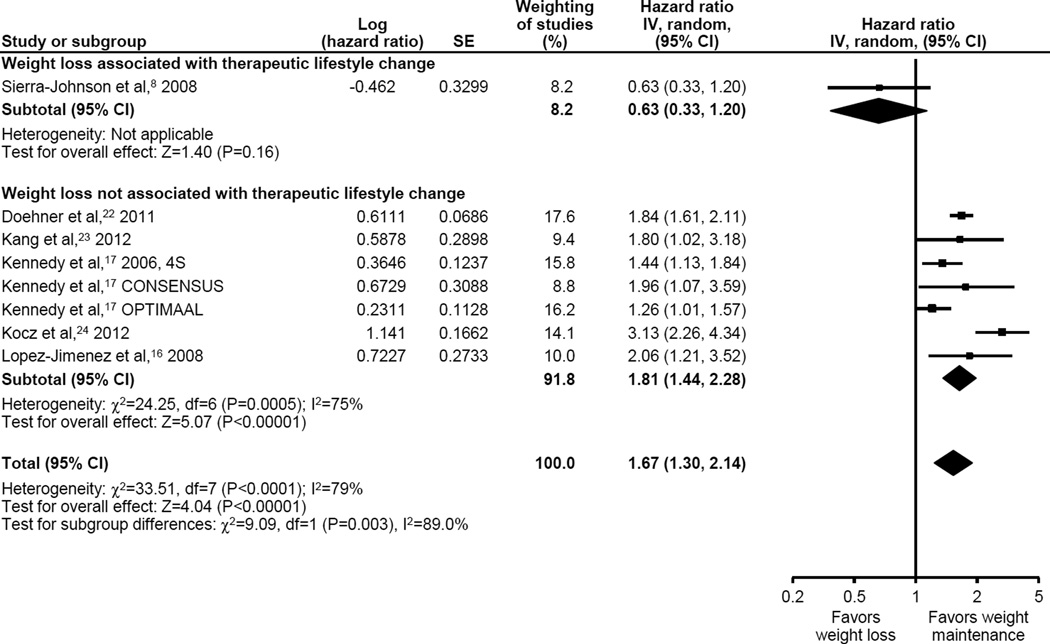
Results: We searched 1218 abstracts, of which 12 studies with 14 cohorts met the inclusion criteria. A total of 35,335 patients (mean age, 64 years; 72% male; body mass index [BMI], 30; 3.2 years of follow-up) were included. Overall, weight loss was associated with a greater risk of the composite outcome (relative risk [RR], 1.30; 95% CI, 1.00-1.69; P=.05). However, heterogeneity was high (I(2)=90%) and was substantially explained by weight loss intentionality. Presumed intentional weight loss (4 cohorts) was associated with improved outcomes (RR, 0.67; 95% CI, 0.56-0.80; P<.001), whereas observational weight loss (10 cohorts) was associated with worsened outcomes (RR, 1.62; 95% CI, 1.26-2.08; P<.001; interaction P<.001).
Conclusion: Whereas observational weight loss is associated with increased adverse cardiovascular events, intentional weight loss is associated with lower clinical events. These results suggest that the underlying mechanism of weight loss (ie, intentional or unintentional) affects its impact on subsequent risk in persons with known CAD.
Copyright © 2014 Mayo Foundation for Medical Education and Research. Published by Elsevier Inc. All rights reserved.
Conflict of interest statement
Disclosures and Conflicts of Interest: None for all authors
Figures
References
-
- Smith SC, Jr, Benjamin EJ, Bonow RO, et al. AHA/ACCF secondary prevention and risk reduction therapy for patients with coronary and other atherosclerotic vascular disease: 2011 update: a guideline from the American Heart Association and American College of Cardiology Foundation endorsed by the World Heart Federation and the Preventive Cardiovascular Nurses Association. J Am Coll Cardiol. 2011 Nov 29;58(23):2432–2446. - PubMed
-
- Horvath K, Jeitler K, Siering U, et al. Long-term effects of weight-reducing interventions in hypertensive patients: systematic review and meta-analysis. Arch Intern Med. 2008 Mar 24;168(6):571–580. - PubMed
-
- Anderson JW, Kendall CWC, Jenkins DJA. Importance of weight management in type 2 diabetes: review with meta-analysis of clinical studies. J Am Coll Nutr. 2003 Oct;22(5):331–339. - PubMed
Publication types
MeSH terms
Grants and funding
LinkOut - more resources
Full Text Sources
Other Literature Sources
Medical
Miscellaneous
