


Two weeks of predatory stress induces anxiety-like behavior with co-morbid depressive-like behavior in adult male mice
- PMID: 25200517
- PMCID: PMC5688846
- DOI: 10.1016/j.bbr.2014.08.060
Two weeks of predatory stress induces anxiety-like behavior with co-morbid depressive-like behavior in adult male mice
Abstract
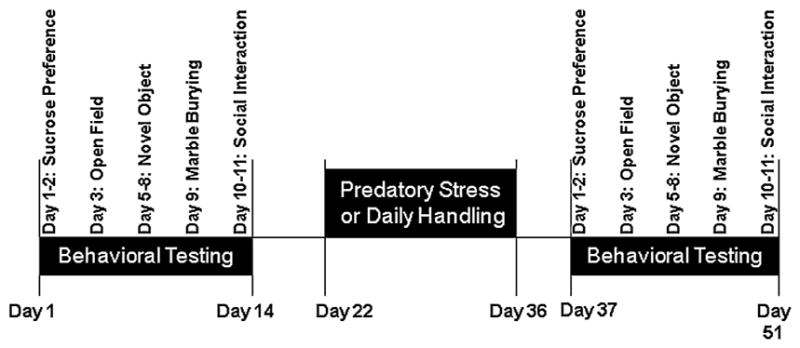
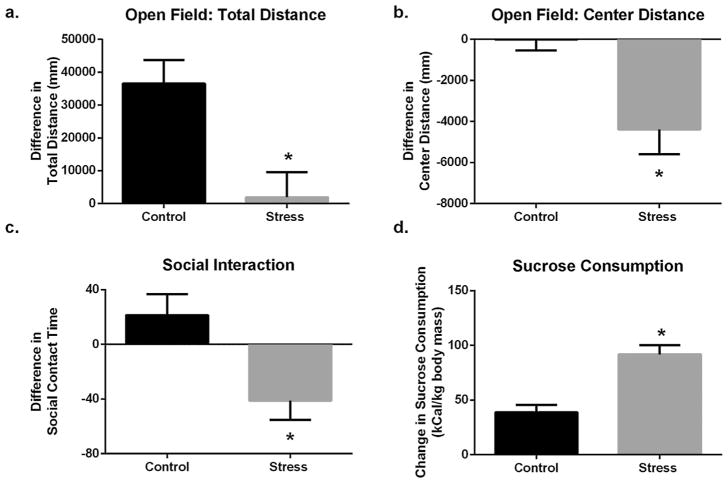
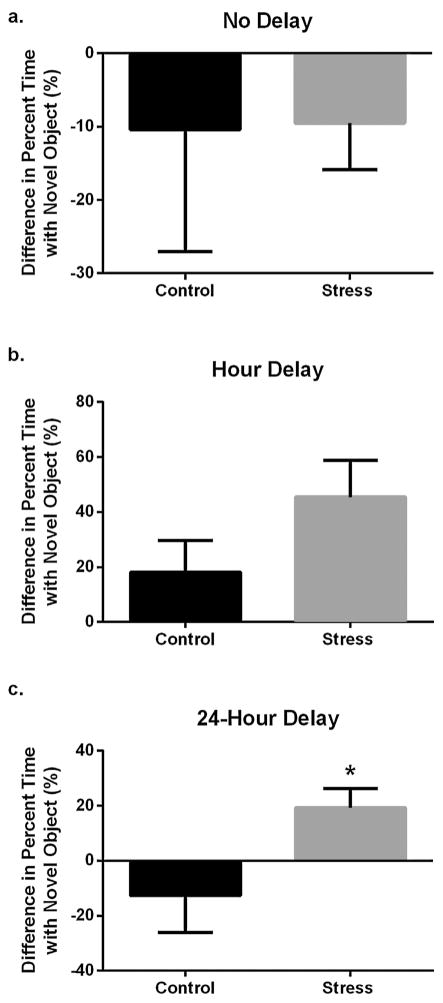
Psychological stress can have devastating and lasting effects on a variety of behaviors, especially those associated with mental illnesses such as anxiety and depression. Animal models of chronic stress are frequently used to elucidate the mechanisms underlying the relationship between stress and mental health disorders and to develop improved treatment options. The current study expands upon a novel chronic stress paradigm for mice: predatory stress. The predatory stress model incorporates the natural predator-prey relationship that exists among rats and mice and allows for greater interaction between the animals, in turn increasing the extent of the stressful experience. In this study, we evaluated the behavioral effects of exposure to 15 days of predatory stress on an array of behavioral indices. Up to 2 weeks after the end of stress, adult male mice showed an increase of anxiety-like behaviors as measured by the open field and social interaction tests. Animals also expressed an increase in depressive-like behavior in the sucrose preference test. Notably, performance on the novel object recognition task, a memory test, improved after predatory stress. Taken as a whole, our results indicate that 15 exposures to this innovative predatory stress paradigm are sufficient to elicit robust anxiety-like behaviors with evidence of co-morbid depressive-like behavior, as well as changes in cognitive behavior in male mice.
Keywords: Anxiety-like behavior; Depressive-like behavior; Mice; Predatory stress.
Copyright © 2014 Elsevier B.V. All rights reserved.
Figures
References
-
- Narrow WE, Rae DS, Robins LN, Regier DA. Revised prevalence estimates of mental disorders in the United States: using a clinical significance criterion to reconcile 2 surveys’ estimates. Arch Gen Psychiatry. 2002;59:115–23. - PubMed
-
- Ravindran AV, Griffiths J, Waddell C, Anisman H. Stressful life events and coping styles in relation to dysthymia and major depressive disorder: variations associated with alleviation of symptoms following pharmacotherapy. Prog Neuropsychopharmacol Biol Psychiatry. 1995;19:637–53. - PubMed
-
- Dura JR, Stukenberg KW, Kiecolt-Glaser JK. Chronic stress and depressive disorders in older adults. J Abnormal Psychol. 1990;99:284–90. - PubMed
-
- Pynoos RS, Steinberg AM, Piacentini JC. A developmental psychopathology model of childhood traumatic stress and intersection with anxiety disorders. Biol Psychiatry. 1999;46:1542–54. - PubMed
-
- Vyas A, Pillai AG, Chattarji S. Recovery after chronic stress fails to reverse amygdaloid neuronal hypertrophy and enhanced anxiety-like behavior. Neuroscience. 2004;128:667–73. - PubMed
Publication types
MeSH terms
Substances
Grants and funding
LinkOut - more resources
Full Text Sources
Other Literature Sources
Medical
