


Can therapy dogs improve pain and satisfaction after total joint arthroplasty? A randomized controlled trial
- PMID: 25201095
- PMCID: PMC4390934
- DOI: 10.1007/s11999-014-3931-0
Can therapy dogs improve pain and satisfaction after total joint arthroplasty? A randomized controlled trial
Abstract
Background: The use of animals to augment traditional medical therapies was reported as early as the 9th century but to our knowledge has not been studied in an orthopaedic patient population. The purpose of this study was to evaluate the role of animal-assisted therapy using therapy dogs in the postoperative recovery of patients after THA and TKA.
Questions/purposes: We asked: (1) Do therapy dogs have an effect on patients' perception of pain after total joint arthroplasty as measured by the VAS? (3) Do therapy dogs have an effect on patients' satisfaction with their hospital stay after total joint arthroplasty as measured by the Hospital Consumer Assessment of Healthcare Providers and Systems (HCAHPS)?
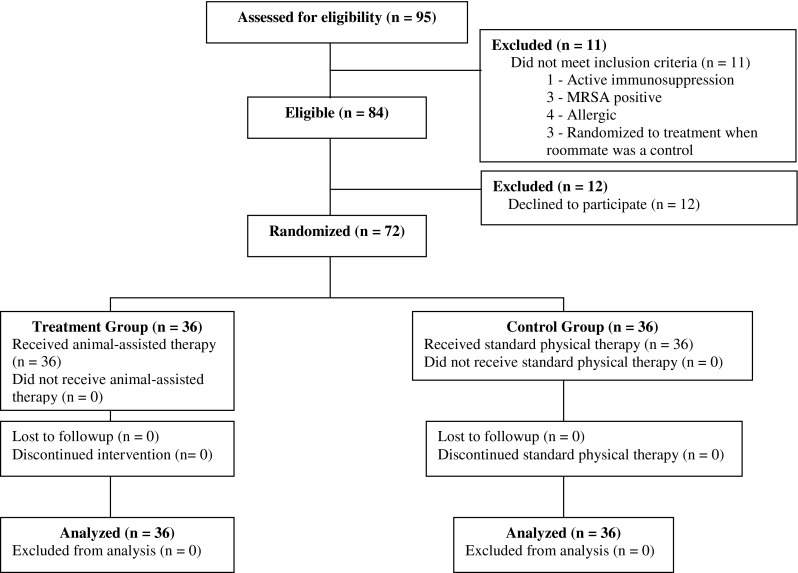
Methods: A randomized controlled trial of 72 patients undergoing primary unilateral THA or TKA was conducted. Patients were randomized to a 15-minute visitation with a therapy dog before physical therapy or standard postoperative physical therapy regimens. Both groups had similar demographic characteristics. Reduction in pain was assessed using the VAS after each physical therapy session, beginning on postoperative Day 1 and continuing for three consecutive sessions. To ascertain patient satisfaction, the proportion of patients selecting top-category ratings in each subsection of the HCAHPS was compared.
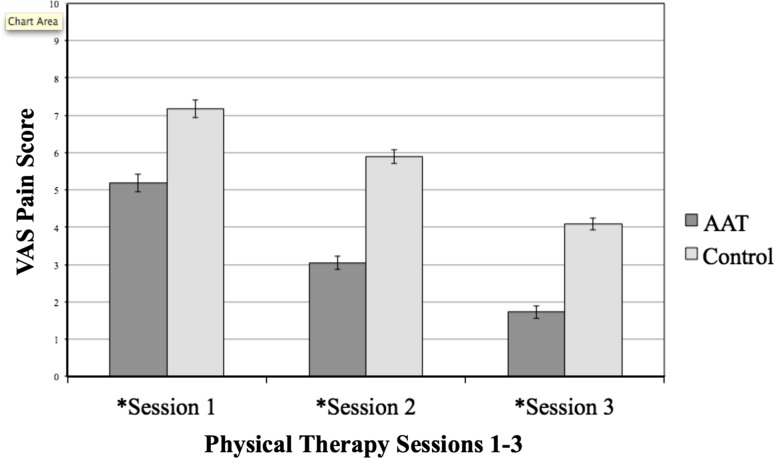
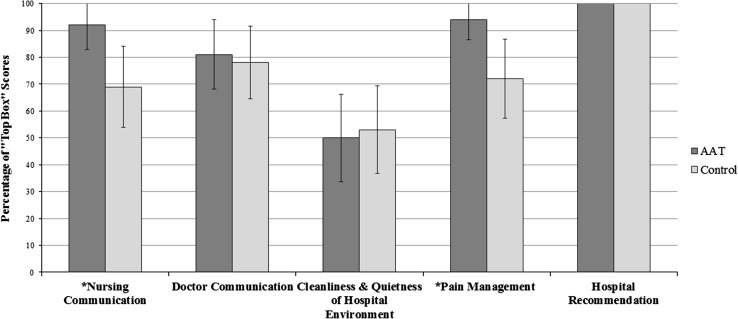
Results: Patients in the treatment group had lower VAS scores after each physical therapy session with a final VAS score difference of 2.4 units (animal-assisted therapy VAS, 1.7; SD, 0.97 [95% CI, 1.4-2.0] versus control VAS, 4.1; SD, 0.97 [95% CI, 3.8-4.4], p<0.001) after the third physical therapy session. Patients in the treatment group had a higher proportion of top-box HCAHPS scores in the following fields: nursing communication (33 of 36, 92% [95% CI, 78%-98%] versus 69%, 25 of 36 [95% CI, 52%-84%], p=0.035; risk ratio, 1.3 [95% CI of risk ratio, 1.0-1.7]; risk difference, 23% [95% CI of risk difference, 5%-40%]), pain management (34 of 36, 94% [95% CI, 81%-99%], versus 26 of 36, 72% [95% CI, 55%-86%], p=0.024; risk ratio, 1.3 [95% CI of risk ratio, 1.1-1.6]; risk difference, 18% [95% CI of risk difference, 5%-39%]). The overall hospital rating also was greater in the treatment group (0-10 scale) (9.6; SD, 0.7 [95% CI, 9.3-9.8] versus 8.6, SD, 0.9 [95% CI, 8.3-8.9], p<0.001).
Conclusions: The use of therapy dogs has a positive effect on patients' pain level and satisfaction with hospital stay after total joint replacement. Surgeons are encouraged to inquire about the status of volunteer-based animal-assisted therapy programs in their hospital as this may provide a means to improve the immediate postoperative recovery for a select group of patients having total joint arthroplasty.
Level of evidence: Level II, randomized controlled study. See Instructions for Authors for a complete description of levels of evidence.
Figures
References
-
- Allen K, Shykoff BE, Izzo JL., Jr Pet ownership, but not ace inhibitor therapy, blunts home blood pressure responses to mental stress. Hypertension. 2001;38:815–820. - PubMed
-
- American Veterinary Medical Association. Guidelines for animal assisted activity, animal-assisted therapy and resident animal programs. Available at: https://www.avma.org/KB/Policies/Pages/Guidelines-for-Animal-Assisted-Ac.... Accessed July 1, 2013.
-
- Anderson WP, Reid CM, Jennings GL. Pet ownership and risk factors for cardiovascular disease. Med J Aust. 1992;157:298–301. - PubMed
Publication types
MeSH terms
LinkOut - more resources
Full Text Sources
Medical
Research Materials
