


Medroxyprogesterone acetate differentially regulates interleukin (IL)-12 and IL-10 in a human ectocervical epithelial cell line in a glucocorticoid receptor (GR)-dependent manner
- PMID: 25202013
- PMCID: PMC4223317
- DOI: 10.1074/jbc.M114.587311
Medroxyprogesterone acetate differentially regulates interleukin (IL)-12 and IL-10 in a human ectocervical epithelial cell line in a glucocorticoid receptor (GR)-dependent manner
Abstract
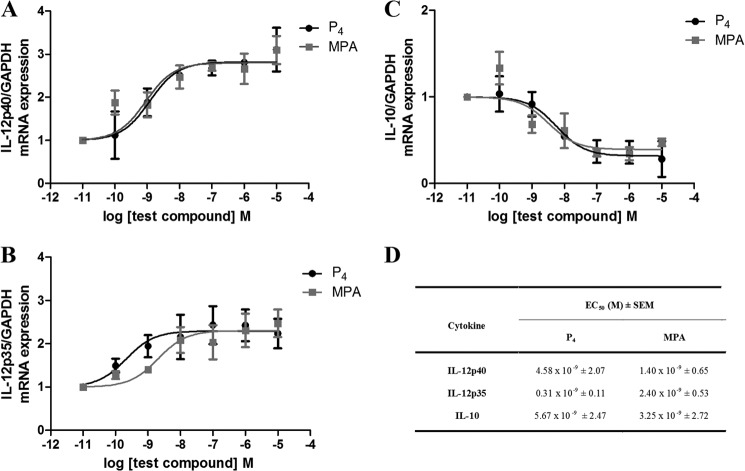
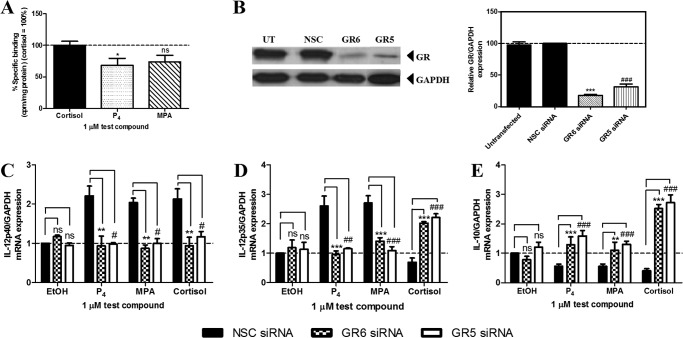
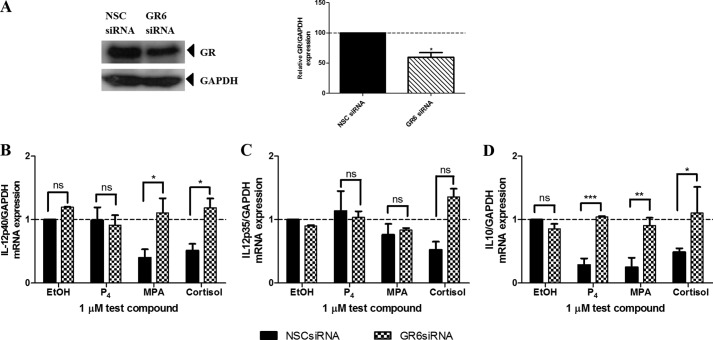
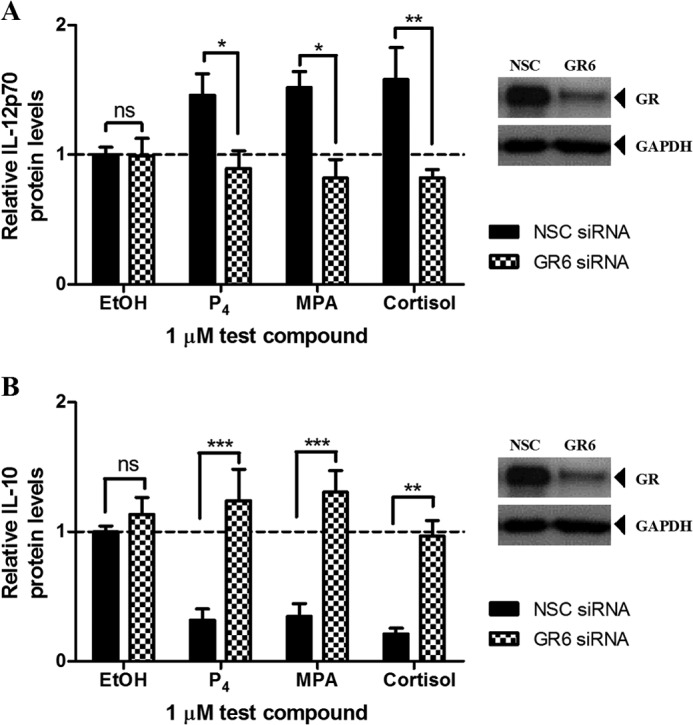
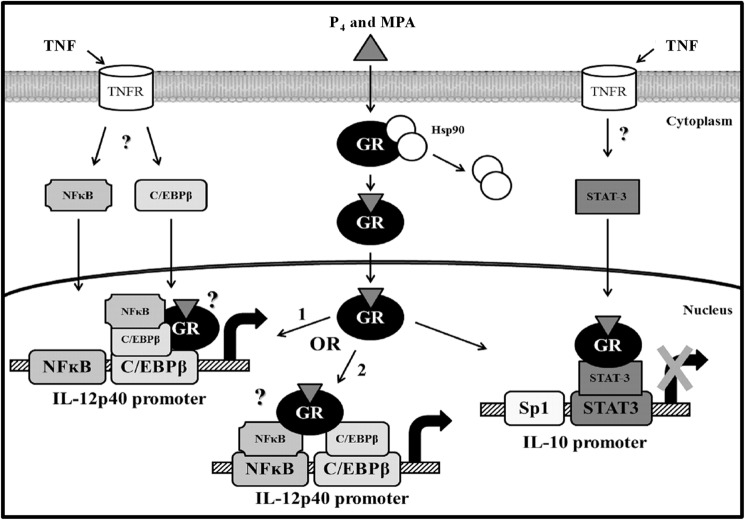
Medroxyprogesterone acetate (MPA), designed to mimic the actions of the endogenous hormone progesterone (P4), is extensively used by women as a contraceptive and in hormone replacement therapy. However, little is known about the steroid receptor-mediated molecular mechanisms of action of MPA in the female genital tract. In this study, we investigated the regulation of the pro-inflammatory cytokine, interleukin (IL)-12, and the anti-inflammatory cytokine IL-10, by MPA versus P4, in an in vitro cell culture model of the female ectocervical environment. This study shows that P4 and MPA significantly increase the expression of the IL-12p40 and IL-12p35 genes, whereas IL-10 gene expression is suppressed in a dose-dependent manner. Moreover, these effects were abrogated when reducing the glucocorticoid receptor (GR) levels with siRNA. Using a combination of chromatin immunoprecipitation (ChIP), siRNA, and re-ChIP assays, we show that recruitment of the P4- and MPA-bound GR to the IL-12p40 promoter requires CCAAT enhancer-binding protein (C/EBP)-β and nuclear factor κB (NFκB), although recruitment to the IL-10 promoter requires signal transducer and activator of transcription (STAT)-3. These results suggest that both P4 and MPA may modulate inflammation in the ectocervix via this genomic mechanism.
Keywords: Cervical Epithelium; Contraception; Cytokines; Gene Regulation; Glucocorticoid; Glucocorticoid Receptor; Inflammation; Medroxyprogesterone Acetate; Progesterone; Progestin.
© 2014 by The American Society for Biochemistry and Molecular Biology, Inc.
Figures


References
-
- Africander D., Verhoog N., Hapgood J. P. (2011) Molecular mechanisms of steroid receptor-mediated actions by synthetic progestins used in HRT and contraception. Steroids 76, 636–652 - PubMed
-
- Hapgood J. P., Koubovec D., Louw A., Africander D. (2004) Not all progestins are the same: implications for usage. Trends Pharmacol. Sci. 25, 554–557 - PubMed
-
- Speroff L., Darney P. D. (2010) in A Clinical Guide for Contraception (Seigafuse S., ed) 5th Ed., pp. 217–238, Lippincott Williams & Wilkins, Philadelphia
-
- Bailie R., Katzenellenbogen J., Hoffman M., Schierhout G., Truter H., Dent D., Gudgeon A., van Zyl J., Rosenberg L., Shapiro S. (1997) A case control study of breast cancer risk and exposure to injectable progestogen contraceptives. Methods and patterns of use among controls. S. Afr. Med. J. 87, 302–304 - PubMed
Publication types
MeSH terms
Substances
LinkOut - more resources
Full Text Sources
Other Literature Sources
Molecular Biology Databases
Miscellaneous
