


Interfering with CXCR4 expression inhibits proliferation, adhesion and migration of breast cancer MDA-MB-231 cells
- PMID: 25202367
- PMCID: PMC4156168
- DOI: 10.3892/ol.2014.2323
Interfering with CXCR4 expression inhibits proliferation, adhesion and migration of breast cancer MDA-MB-231 cells
Abstract
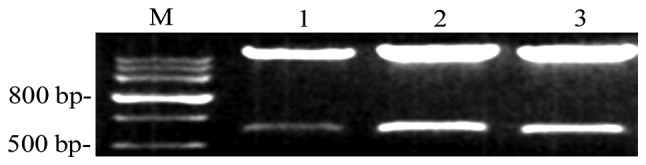
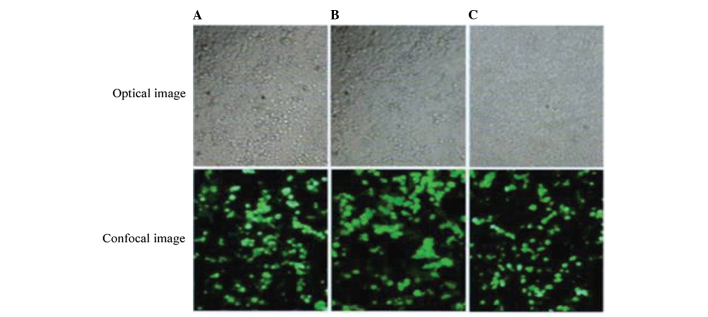
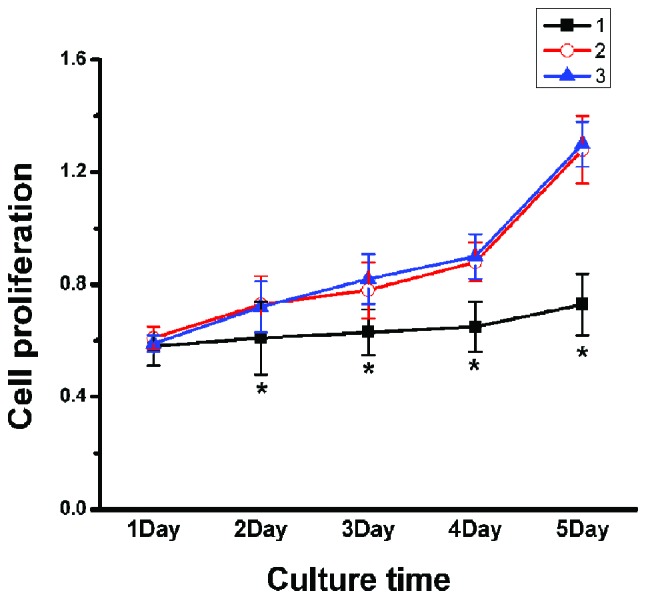
To investigate the effect and mechanism of the CXC chemokine receptor 4 (CXCR4) in the proliferation and migration of breast cancer, a short-hairpin RNA (shRNA) eukaryotic expression vector targeting CXCR4 was constructed, and the impact of such on the proliferation, adhesion and migration of human breast cancer MDA-MB-231 cells was observed. The fragments of CXCR4-shRNA were synthesized and cloned into a pGCsi-U6-Neo-green fluorescent protein vector. The recombinant plasmids were transfected into 293T cells and the most efficacious interfering vector was selected. MDA-MB-231 cells were transfected by liposome assay. The effects of silencing CXCR4 expression by shRNA on the growth, adhesion and migration of MDA-MB-231 cells were determined by Cell Counting Kit-8, cell-matrix adhesion and wound-healing assays. The shRNA eukaryotic expression vectors targeting CXCR4 (CXCR4-shRNA) were successfully constructed and transfected into 293T cells. Quantitative polymerase chain reaction and western blot analysis revealed that the maximum inhibitory rate of CXCR4 expression was 81.3%. CXCR4-shRNA transfection significantly inhibited the proliferation of MDA-MB-231 cells (P<0.05), as well as the adhesion between MDA-MB-231 cells and the extracellular matrix (P<0.05). Furthermore, wound-healing assays demonstrated that the migration distance of MDA-MB-231 cells in the CXCR4-shRNA transfection group was significantly smaller than that in the control plasmid and blank control groups (P<0.01). The CXCR4-shRNA interfering vector specifically inhibited CXCR4 expression, as well as the proliferation, adhesion and migration of MDA-MB-231 cells.
Keywords: CXC chemokine receptor 4; RNA interference; breast cancer.
Figures

References
-
- Sellers TA. Genetic factors in the pathogenesis of breast cancer: their role and relative importance. J Nutr. 1997;27(5 Suppl):929S–932S. - PubMed
-
- Yarden Y. The EGFR family and its ligands in human cancer. signalling mechanisms and therapeutic opportunities. Eur J Cancer. 2001;37(Suppl 4):S3–S8. - PubMed
-
- Kulbe H, Levinson NR, Balkwill F, Wilson JL. The chemokine network in cancer - much more than directing cell movement. Int J Dev Biol. 2004;48:489–496. - PubMed
LinkOut - more resources
Full Text Sources
Other Literature Sources
Miscellaneous