


The potential impact of white-nose syndrome on the conservation status of north american bats
- PMID: 25203391
- PMCID: PMC4159351
- DOI: 10.1371/journal.pone.0107395
The potential impact of white-nose syndrome on the conservation status of north american bats
Abstract
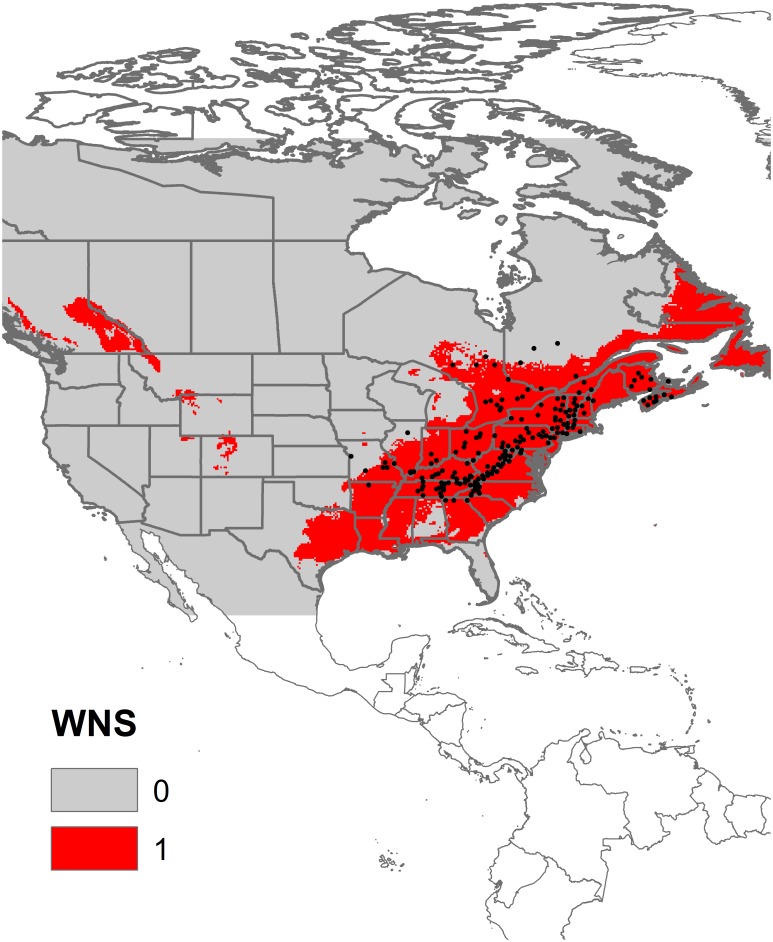
White-Nose syndrome (WNS) is an emergent infectious disease that has already killed around six million bats in North America and has spread over two thousand kilometers from its epicenter. However, only a few studies on the possible impacts of the fungus on bat hosts were conducted, particularly concerning its implications for bat conservation. We predicted the consequences of WNS spread by generating a map with potential areas for its occurrence based on environmental conditions in sites where the disease already occurs, and overlaid it with the geographic distribution of all hibernating bats in North America. We assumed that all intersection localities would negatively affect local bat populations and reassessed their conservation status based on their potential population decline. Our results suggest that WNS will not spread widely throughout North America, being mostly restricted to the east and southeast regions. In contrast, our most pessimistic scenario of population decline indicated that the disease would threaten 32% of the bat species. Our results could help further conservation plans to preserve bat diversity in North America.
Conflict of interest statement
Figures
References
-
- Daszak P (2000) Emerging infectious diseases of wildlife – threats to biodiversity and human health. Science DOI:10.1126/science.287.5452.443. - PubMed
-
- Skerrat LF, Berger L, Speare R, Cashins S, McDonald KR, et al. (2007) Spread of chytridiomycosis has caused the rapid global decline and extinction of frogs. EcoHealth 4: 125–134.
-
- Marra PP, Griffing S, Caffrey C, Kilpatrick AM, McClean R, et al. (2004) West Nile Virus and wildlife. BioScience 54: 393–402.
Publication types
MeSH terms
LinkOut - more resources
Full Text Sources
Other Literature Sources
