


Structural approaches for prevention of sexually transmitted HIV in general populations: definitions and an operational approach
- PMID: 25204872
- PMCID: PMC4159948
- DOI: 10.7448/IAS.17.1.19052
Structural approaches for prevention of sexually transmitted HIV in general populations: definitions and an operational approach
Abstract
Introduction: Although biomedical HIV prevention efforts have seen a number of recent promising developments, behavioural interventions have often been described as failing. However, clear lessons have been identified from past efforts, including the need to address influential social, economic and legal structures; to tailor efforts to local contexts; and to address multiple influencing factors in combination. Despite these insights, there remains a pervasive strategy to try to achieve sexual behaviour change through single, decontextualized, interventions or sets of activities. With current calls for structural approaches to HIV as part of combination HIV prevention, though, there is a unique opportunity to define a structural approach to HIV prevention as one which moves beyond these past limitations and better incorporates our knowledge of the social world and the lessons from past efforts.
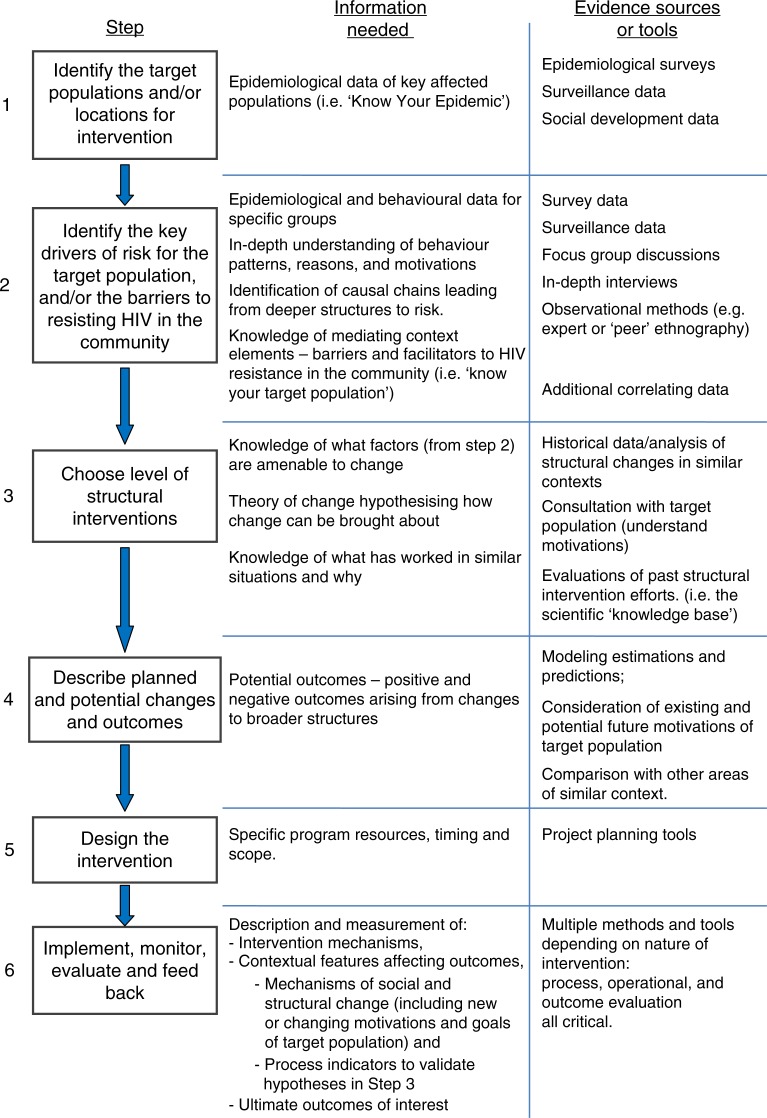
Discussion: A range of interlinked concepts require delineation and definition within the broad concept of a structural approach to HIV. This includes distinguishing between "structural factors," which can be seen as any number of elements (other than knowledge) which influence risk and vulnerability, and "structural drivers," which should be reserved for situations where an empirically established relationship to a target group is known. Operationalizing structural approaches similarly can take different paths, either working to alter structural drivers or alternatively working to build individual and community resilience to infection. A "structural diagnostic approach" is further defined as the process one undertakes to develop structural intervention strategies tailored to target groups.
Conclusions: For three decades, the HIV prevention community has struggled to reduce the spread of HIV through sexual risk behaviours with limited success, but equally with limited engagement with the lessons that have been learned about the social realities shaping patterns of sexual practices. Future HIV prevention efforts must address the multiple factors influencing risk and vulnerability, and they must do so in ways tailored to particular settings. Clarity on the concepts, terminology and approaches that can allow structural HIV prevention efforts to achieve this is therefore essential to improve the (social) science of HIV prevention.
Keywords: HIV prevention; Implementation; social drivers; structural approaches; structural drivers.
Figures
References
-
- Thigpen MC, editor. Daily oral antiretroviral use for the prevention of HIV infection in heterosexually active young adults in Botswana: results from the TDF2 study; 6th IAS Conference on HIV Pathogenesis, Treatment and Prevention; 2011 Jul 17–20; Rome. 2011.
Publication types
MeSH terms
LinkOut - more resources
Full Text Sources
Other Literature Sources
Medical
Miscellaneous
