


Advances in the management of peritoneal mesothelioma
- PMID: 25206274
- PMCID: PMC4155360
- DOI: 10.3748/wjg.v20.i33.11700
Advances in the management of peritoneal mesothelioma
Abstract
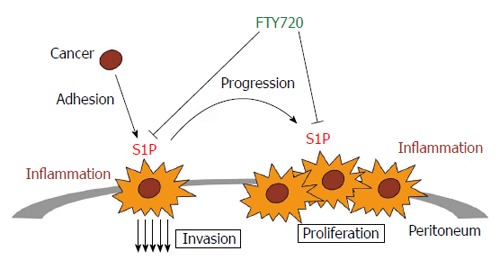
Malignant peritoneal mesothelioma (PM) is an infrequent disease which has historically been associated with a poor prognosis. Given its long latency period and non-specific symptomatology, a diagnosis of PM can be suggested by occupational exposure history, but ultimately relies heavily on imaging and diagnostic biopsy. Early treatment options including palliative operative debulking, intraperitoneal chemotherapy, and systemic chemotherapy have marginally improved the natural course of the disease with median survival being approximately one year. The advent of cytoreduction (CRS) with hyperthermic intraperitoneal chemotherapy (HIPEC) has dramatically improved survival outcomes with wide median survival estimates between 2.5 to 9 years; these studies however remain largely heterogeneous, with differing study populations, tumor biology, and specific treatment regimens. More recent investigations have explored extent of cytoreduction, repeated operative intervention, and choice of chemotherapy but have been unable to offer definitive conclusions. CRS and HIPEC remain morbid procedures with complication rates ranging between 30% to 46% in larger series. Accordingly, an increasing interest in identifying molecular targets and developing targeted therapies is emerging. Among such novel targets is sphingosine kinase 1 (SphK1) which regulates the production of sphingosine-1-phosphate, a biologically active lipid implicated in various cancers including malignant mesothelioma. The known action of specific SphK inhibitors may warrant further exploration in peritoneal disease.
Keywords: Cytoreduction; FTY720; Hyperthermic intraperitoneal chemotherapy; Mesothelioma; Peritoneal mesothelioma; Sphingosine kinase; Sphingosine-1-phosphate.
Figures
References
-
- Kindler HL. Peritoneal Mesothelioma: The Site of Origin Matters. In: Dizon DS, editor. American Society of Clinical Oncology EDUCATIONAL BOOK. Alexandria, VA: ASCO; 2013. pp. 182–187. - PubMed
-
- Boffetta P. Epidemiology of peritoneal mesothelioma: a review. Ann Oncol. 2007;18:985–990. - PubMed
-
- Rodríguez D, Cheung MC, Housri N, Koniaris LG. Malignant abdominal mesothelioma: defining the role of surgery. J Surg Oncol. 2009;99:51–57. - PubMed
-
- Moolgavkar SH, Meza R, Turim J. Pleural and peritoneal mesotheliomas in SEER: age effects and temporal trends, 1973-2005. Cancer Causes Control. 2009;20:935–944. - PubMed
Publication types
MeSH terms
Substances
Grants and funding
LinkOut - more resources
Full Text Sources
Other Literature Sources
Medical
