


Glycolysis in energy metabolism during seizures
- PMID: 25206426
- PMCID: PMC4107649
- DOI: 10.3969/j.issn.1673-5374.2013.14.008
Glycolysis in energy metabolism during seizures
Abstract
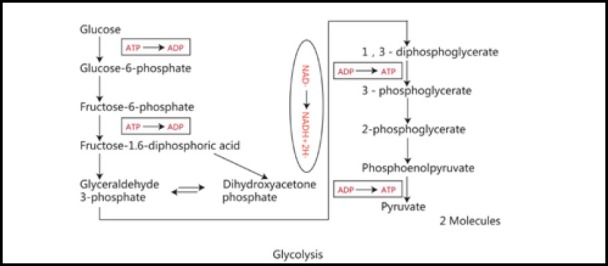
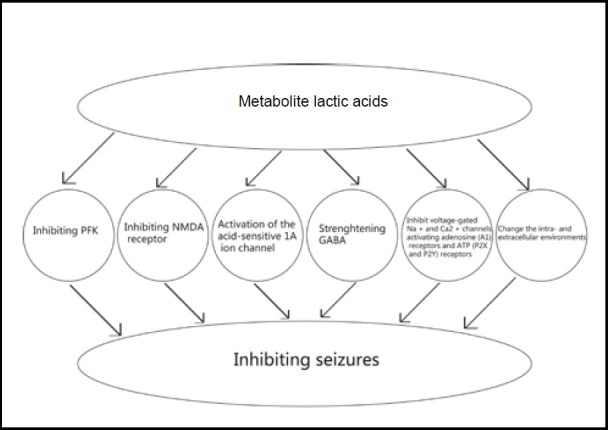
Studies have shown that glycolysis increases during seizures, and that the glycolytic metabolite lactic acid can be used as an energy source. However, how lactic acid provides energy for seizures and how it can participate in the termination of seizures remains unclear. We reviewed possible mechanisms of glycolysis involved in seizure onset. Results showed that lactic acid was involved in seizure onset and provided energy at early stages. As seizures progress, lactic acid reduces the pH of tissue and induces metabolic acidosis, which terminates the seizure. The specific mechanism of lactic acid-induced acidosis involves several aspects, which include lactic acid-induced inhibition of the glycolytic enzyme 6-diphosphate kinase-1, inhibition of the N-methyl-D-aspartate receptor, activation of the acid-sensitive 1A ion channel, strengthening of the receptive mechanism of the inhibitory neurotransmitter γ-minobutyric acid, and changes in the intra- and extracellular environment.
Keywords: 6-diphosphate kinase-1; ATP; ATP receptor; N-methyl-D-aspartate receptor; acid-sensitive 1A ion channel; adenosine receptors; aerobic metabolism; energy metabolism; epilepsy; epileptogenesis; glycolysis; grants-supported paper; intra- and extracellular environment; neural regeneration; neuroregeneration; reviews; termination; voltage-gated Na+ and Ca2+; γ-aminobutyric acid.
Conflict of interest statement
Figures




References
-
- Wasterlain CG, Fujikawa DG, Penix L, et al. Pathophysiological mechanisms of brain damage from status epilepticus. Epilepsia. 1993;34(Suppl 1):S37–53. - PubMed
-
- Williamson A, Patrylo PR, Pan J, et al. Correlations between granule cell physiology and bioenergetics in human temporal lobe epilepsy. Brain. 2005;128(Pt 5):1199–1208. - PubMed
-
- Osorio I, Frei MG, Sornette D, et al. Epileptic seizures: Quakes of the brain? Phys Rev E Stat Nonlin Soft Matter Phys. 2010;82(2 Pt 1):021919. - PubMed
Publication types
LinkOut - more resources
Full Text Sources
Research Materials
Miscellaneous