


Electroacupuncture at points Baliao and Huiyang (BL35) for post-stroke detrusor overactivity
- PMID: 25206463
- PMCID: PMC4145909
- DOI: 10.3969/j.issn.1673-5374.2013.18.004
Electroacupuncture at points Baliao and Huiyang (BL35) for post-stroke detrusor overactivity
Abstract
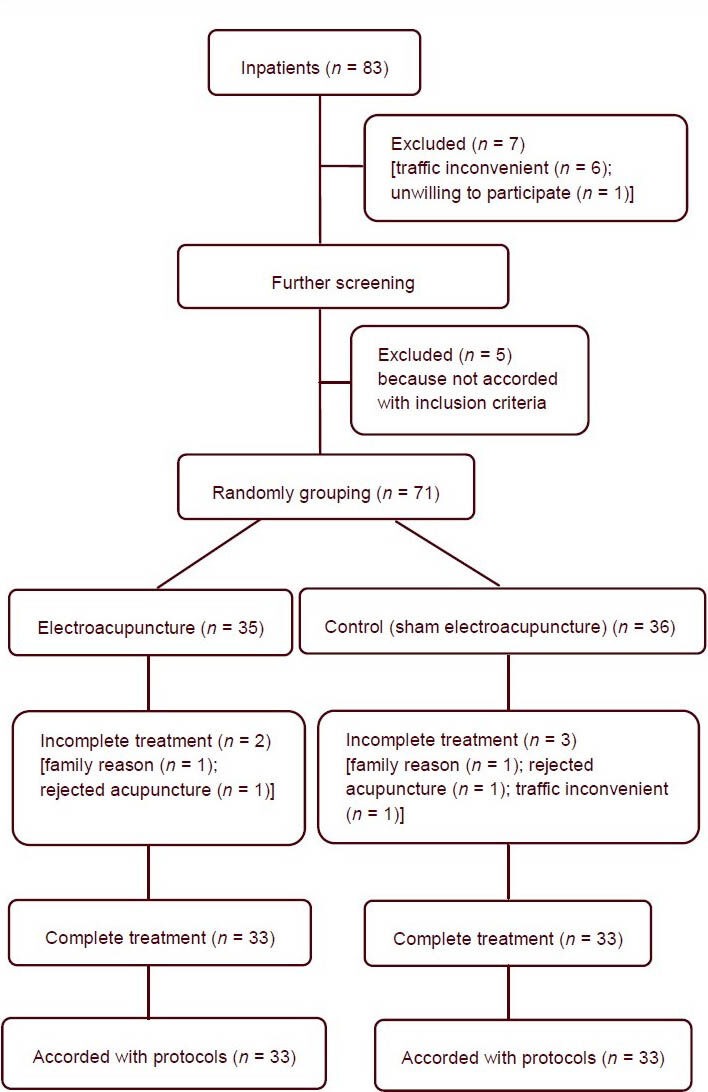
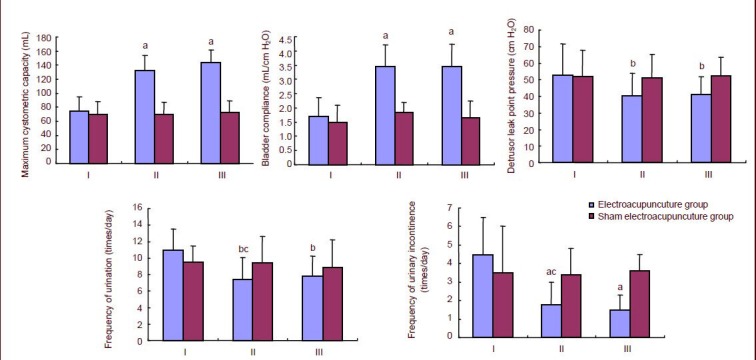
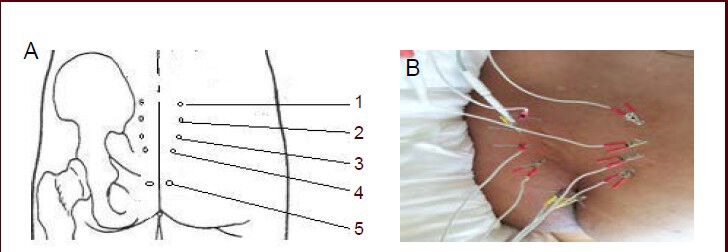
Acupuncture is used extensively in China for the treatment of stroke and other neurological disorders. The National Institutes of Health recommends acupuncture as an adjunctive therapy for stroke recovery. This study included patients with post-stroke detrusor overactivity who were treated in the Department of Neurology, Fourth Hospital of Harbin Medical University, China. Subjects received either electroacupuncture or sham electroacupuncture at points Baliao [including bilateral Shangliao (BL31), bilateral Ciliao (BL32), bilateral Zhongliao (BL33), and bilateral Xialiao (BL34)] and Huiyang (BL35). Our results showed that electroacupuncture significantly improved cystometric capacity and bladder compliance, decreased detrusor leak point pressure, ameliorated lower urinary tract symptoms, and decreased the risk of upper urinary tract damage. These findings indicate that electroacupuncture at points Baliao and Huiyang is an effective treatment for post-stroke detrusor overactivity.
Keywords: acupuncture and moxibustion; detrusor overactivity; grants-supported paper; neural regeneration; neuroregeneration; rehabilitation; stroke; urodynamics.
Conflict of interest statement
Figures
References
-
- Pettersen R. Incontinence after stroke. Tidsskr Nor Laegeforen. 2007;127(10):1383–1386. - PubMed
-
- Jordan LA, Mackey E, Coughlan K, et al. Continence management in acute stroke: a survey of current practices in Australia. J Adv Nurs. 2011;67(1):94–104. - PubMed
-
- Bright E, Cotterill N, Drake M, et al. Developing a validated urinary diary: phase 1. Neurourol Urodyn. 2012;31(5):625–633. - PubMed
-
- Vella M, Duckett J, Basu M. The predictive value of pre-treatment cystometry in the outcome of women with mixed incontinence treated with duloxetine. Eur J Obstet Gynecol Reprod Biol. 2010;151(2):221–223. - PubMed
LinkOut - more resources
Full Text Sources