


Early filiform needle acupuncture for poststroke depression: a meta-analysis of 17 randomized controlled clinical trials
- PMID: 25206889
- PMCID: PMC4146280
- DOI: 10.4103/1673-5374.131590
Early filiform needle acupuncture for poststroke depression: a meta-analysis of 17 randomized controlled clinical trials
Abstract
Objective: To evaluate the effectiveness and safety of filiform needle acupuncture for poststroke depression, and to compare acupuncture with the therapeutic efficacy of antidepressant drugs.
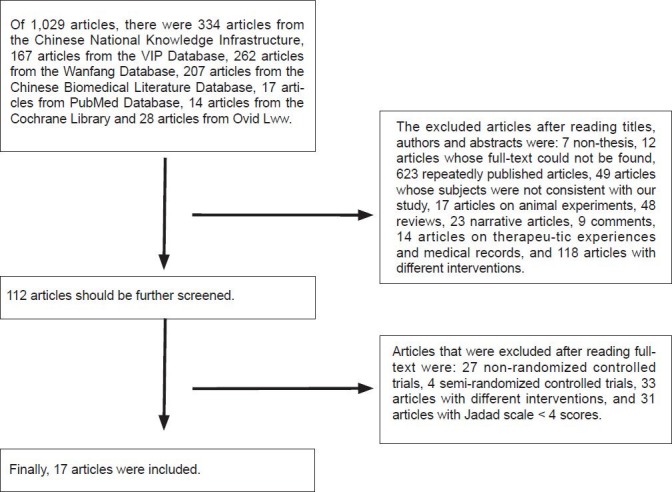
Data retrieval: We retrieved data from the Chinese National Knowledge Infrastructure (1979-2012), Wanfang (1980-2012), VIP (1989-2012), Chinese Biomedical Literature (1975-2012), PubMed (1966-2012), Ovid Lww (-2012), and Cochrane Library (-2012) Database using the internet.
Selection criteria: Randomized controlled trials on filiform needle acupuncture versus antidepressant drugs for treatment of poststroke depression were included. Moreover, the included articles scored at least 4 points on the Jadad scale.
Exclusion criteria: other acupuncture therapies as treatment group, not stroke-induced depression patients, score < 4 points, non-randomized controlled trials, or animal trials.
Main outcome measures: These were the Hamilton Depression Scale scores, clinical effective rate, Self-Rating Depression Scale scores, Side Effect Rating Scale scores, and incidence of adverse reaction and events.
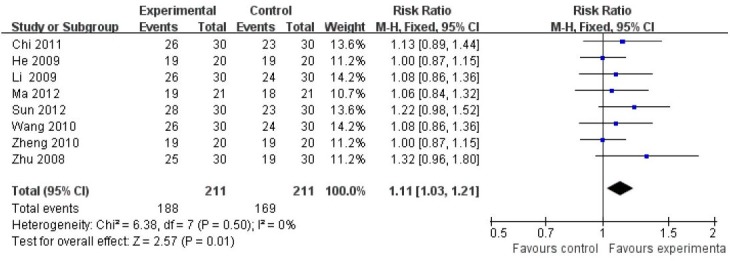
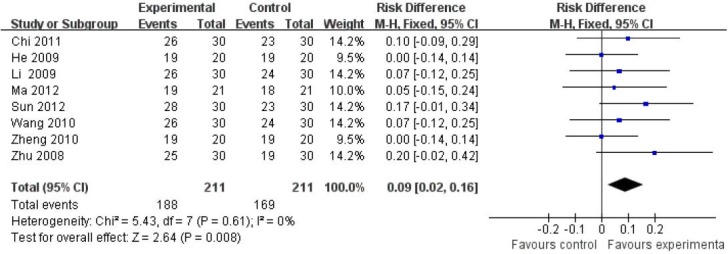
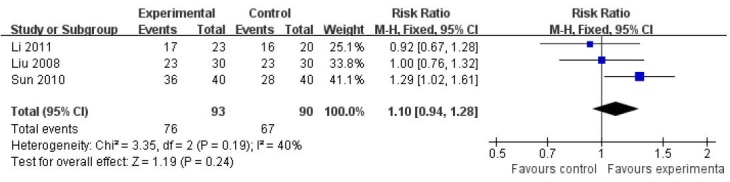
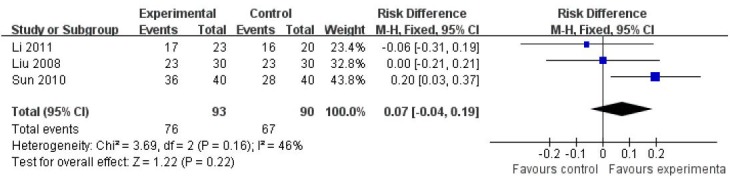
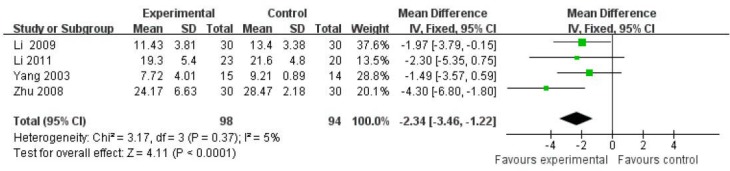
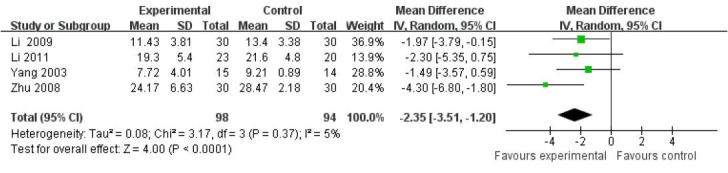
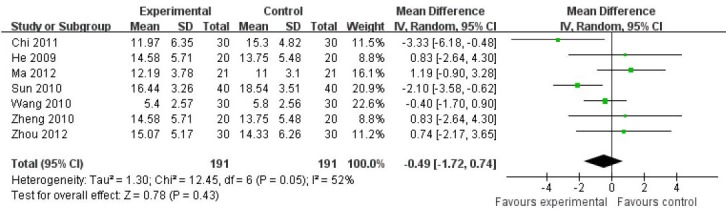
Results: A total of 17 randomized controlled clinical trials were included. Meta-analysis results displayed that after 4 weeks of treatment, clinical effective rate was better in patients treated with filiform needle acupuncture than those treated with simple antidepressant drugs [relative risk = 1.11, 95% confidence interval (CI): 1.03-1.21, P = 0.01]. At 6 weeks, clinical effective rate was similar between filiform needle acupuncture and antidepressant drug groups. At 2 weeks after filiform needle acupuncture, Hamilton Depression Scale (17 items) scores were lower than in the antidepressant drug group (mean difference = -2.34, 95%CI: -3.46 to -1.22, P < 0.000,1). At 4 weeks, Hamilton Depression Scale (24 items) scores were similar between filiform needle acupuncture and antidepressant drug groups. Self-Rating Depression Scale scores were lower in filiform needle acupuncture group than in the antidepressant drug group. Side Effect Rating Scale was used in only two articles, and no meta-analysis was conducted. Safety evaluation of the 17 articles showed that gastrointestinal tract reactions such as nausea and vomiting were very common in the antidepressant drug group. Incidence of adverse reaction and events was very low in the filiform needle acupuncture group.
Conclusion: Early filiform needle acupuncture for poststroke depression can perfectly control depression. Filiform needle acupuncture is safe and reliable. Therapeutic effects of filiform needle acupuncture were better than those of antidepressant drugs.
Keywords: Stage-III Key Disciplines Construction Project; antidepressant drugs; clinical effective rate; filiform needle acupuncture; meta-analysis; nerve regeneration; neural regeneration; poststroke depression; randomized controlled trials; safety; the Guangdong Provincial “211 Engineering”.
Conflict of interest statement
Figures
References
-
- Han Y, Min F, Liu XY. Role of microRNA in stroke and stroke drepession. ScientificWorldJournal. 2013;12(2):1–6.
-
- Pohjasvaara T, Vataja R, Leppavuori A, et al. Depression is an independent predictor of poor long-term functional outcome post-stroke. Eur J Neurol. 2001;8(4):315–319. - PubMed
-
- Nie RZ, Fu WB. Acupuncture versus western medicine for post stroke depression: a systematic review. Shijie Zhongyiyao. 2012;7(2):147–151.
-
- Chen FZ, Yan Q, Zhao YZ, et al. Integrative medicine research progress in the treatment of post-stroke depression. Zhongguo Laonianxue Zazhi. 2011;11(31):2145–2147.
-
- Zhang ZJ, Chen HY, Yip KC, et al. The effectiveness and safety of acupuncture therapy in depressive disorders: systematic review and meta-analysis. J Affect Disord. 2010;124(1-2):9–21. - PubMed
LinkOut - more resources
Full Text Sources
Other Literature Sources