Acute effects of moderate alcohol on psychomotor, set shifting, and working memory function in older and younger social drinkers
- PMID: 25208205
- PMCID: PMC4161706
- DOI: 10.15288/jsad.2014.75.870
Acute effects of moderate alcohol on psychomotor, set shifting, and working memory function in older and younger social drinkers
Abstract
ABSTRACT.
Objective: Despite substantial attention being paid to the health benefits of moderate alcohol intake as a lifestyle, the acute effects of alcohol on psychomotor and working memory function in older adults are poorly understood.
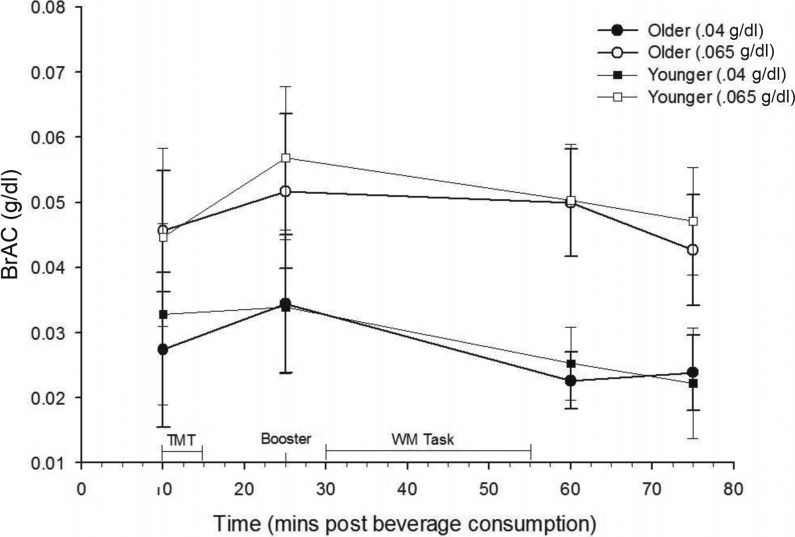
Method: The effects of low to moderate doses of alcohol on neurobehavioral function were investigated in 39 older (55-70 years; 15 men) and 51 younger (25-35 years; 31 men) social drinkers. Subjects received one of three randomly assigned doses (placebo, .04 g/dl, or .065 g/dl target breath alcohol concentration). After beverage consumption, they completed the Trail Making Test Parts A and B and a working memory task requiring participants to determine whether probe stimuli were novel or had been presented in a preceding set of cue stimuli. Efficiency of working memory task performance was derived from accuracy and reaction time measures.
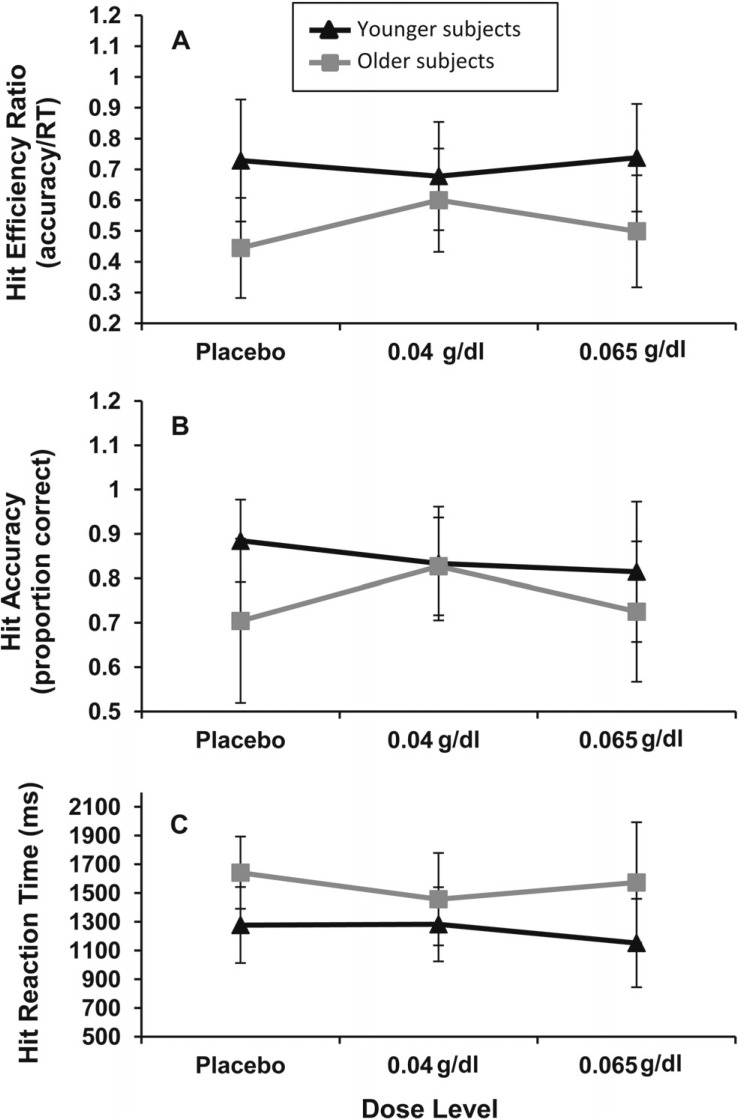
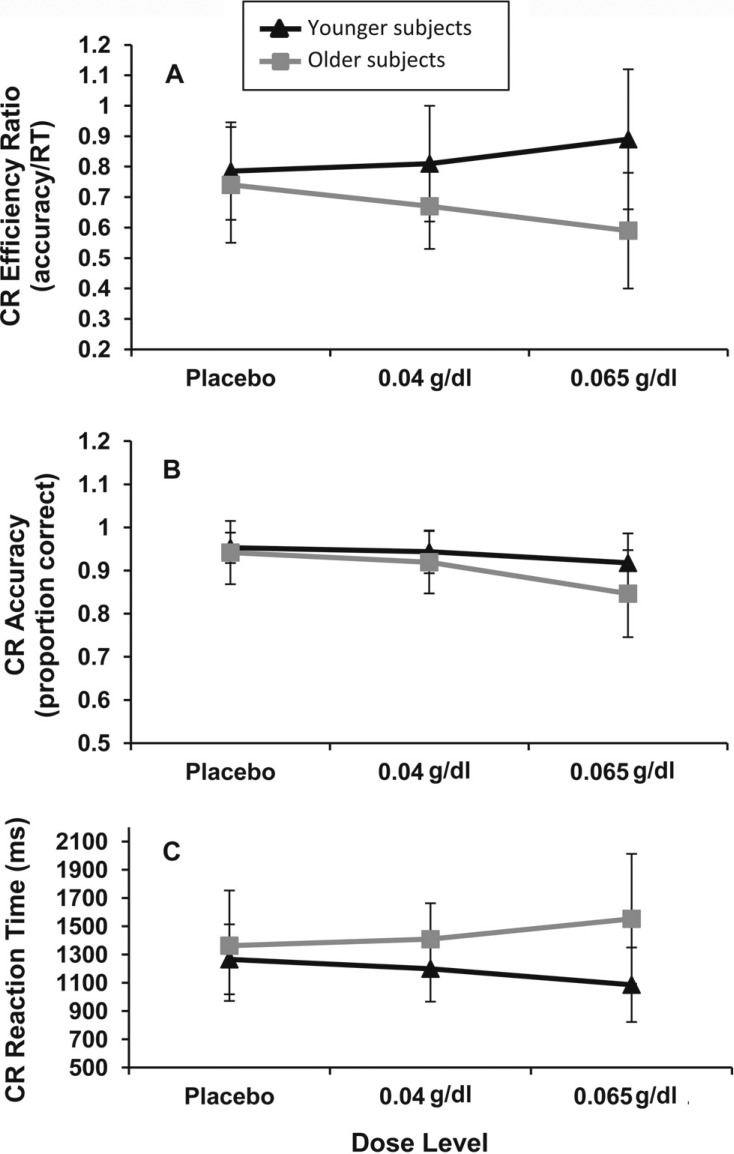
Results: Alcohol was associated with poorer Trail Making Test Part B performance for older subjects. Working memory task results suggested an Age × Dose interaction for performance efficiency, with older but not younger adults demonstrating alcohol-related change. Directionality of change and whether effects on accuracy or reaction time drove the change depended on the novelty of probe stimuli.
Conclusions: This study replicates previous research indicating increased susceptibility of older adults to moderate alcohol-induced psychomotor and set-shifting impairment and suggests such susceptibility extends to working memory performance. Further research using additional tasks and assessing other neuropsychological domains is needed. (J. Stud. Alcohol Drugs, 75, 870-879, 2014).
Figures
References
-
- American Psychiatric Association. Diagnostic and statistical manual of mental disorders, text revision. 4th ed. Washington, DC: Author; 2000.
-
- Beck AT, Steer RA, Brown GK. Beck Depression Inventory, Second Edition. San Antonio, TX: The Psychological Corporation; 1996.
-
- Breitmeier D, Seeland-Schulze I, Hecker H, Schneider U. The influence of blood alcohol concentrations of around 0.03% on neuropsychological functions—A double-blind, placebo-controlled investigation. Addiction Biology. 2007;12:183–189. - PubMed
-
- Cahalan D, Cissin L, Crossley H. American drinking practices: A national study of drinking behaviors and attitudes (Monograph No. 6) New Brunswick, NJ: Rutgers Center of Alcohol Studies; 1969.
Publication types
MeSH terms
Grants and funding
LinkOut - more resources
Full Text Sources
Medical