


Evidence from facility level inputs to improve quality of care for maternal and newborn health: interventions and findings
- PMID: 25208539
- PMCID: PMC4160922
- DOI: 10.1186/1742-4755-11-S2-S4
Evidence from facility level inputs to improve quality of care for maternal and newborn health: interventions and findings
Abstract
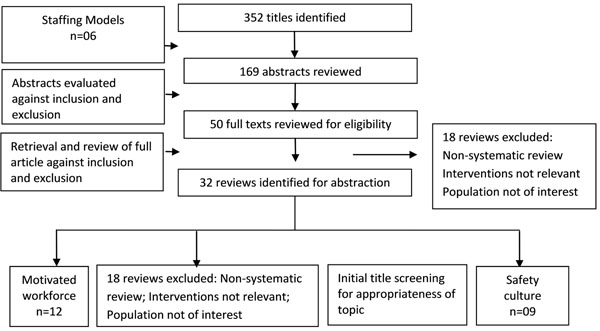
Most of the maternal and newborn deaths occur at birth or within 24 hours of birth. Therefore, essential lifesaving interventions need to be delivered at basic or comprehensive emergency obstetric care facilities. Facilities provide complex interventions including advice on referrals, post discharge care, long-term management of chronic conditions along with staff training, managerial and administrative support to other facilities. This paper reviews the effectiveness of facility level inputs for improving maternal and newborn health outcomes. We considered all available systematic reviews published before May 2013 on the pre-defined facility level interventions and included 32 systematic reviews. Findings suggest that additional social support during pregnancy and labour significantly decreased the risk of antenatal hospital admission, intrapartum analgesia, dissatisfaction, labour duration, cesarean delivery and instrumental vaginal birth. However, it did not have any impact on pregnancy outcomes. Continued midwifery care from early pregnancy to postpartum period was associated with reduced medical procedures during labour and shorter length of stay. Facility based stress training and management interventions to maintain well performing and motivated workforce, significantly reduced job stress and improved job satisfaction while the interventions tailored to address identified barriers to change improved the desired practice. We found limited and inconclusive evidence for the impacts of physical environment, exit interviews and organizational culture modifications. At the facility level, specialized midwifery teams and social support during pregnancy and labour have demonstrated conclusive benefits in improving maternal newborn health outcomes. However, the generalizability of these findings is limited to high income countries. Future programs in resource limited settings should utilize these findings to implement relevant interventions tailored to their needs.
References
-
- Borghi J, Ensor T, Somanathan A, Lissner C, Mills A. Mobilising financial resources for maternal health. Lancet. 2006;368(9545):1457–1465. - PubMed
-
- Campbell OM, Graham WJ. Strategies for reducing maternal mortality: getting on with what works. Lancet. 2006;368(9543):1284–1299. - PubMed
-
- Koblinsky M, Matthews Z, Hussein J, Mavalankar D, Mridha MK, Anwar I, Achadi E, Adjei S, Padmanabhan P, Marchal B. et al. Going to scale with professional skilled care. Lancet. 2006;368(9544):1377–1386. - PubMed
-
- Ronsmans C, Graham WJ. Maternal mortality: who, when, where, and why. Lancet. 2006;368(9542):1189–1200. - PubMed
-
- WHO UNFPA; UNICEF AMDD. Monitoring emergency obstetric care, a handbook. Geneva: WHO; 2009. Accessed from: http://www.who.int/reproductivehealth/publications/monitoring/9789241547... Accessed date: March 9, 2013.
Publication types
MeSH terms
LinkOut - more resources
Full Text Sources
Other Literature Sources
