


Herpes simplex virus 2 infection: molecular association with HIV and novel microbicides to prevent disease
- PMID: 25209142
- PMCID: PMC7102243
- DOI: 10.1007/s00430-014-0358-x
Herpes simplex virus 2 infection: molecular association with HIV and novel microbicides to prevent disease
Abstract
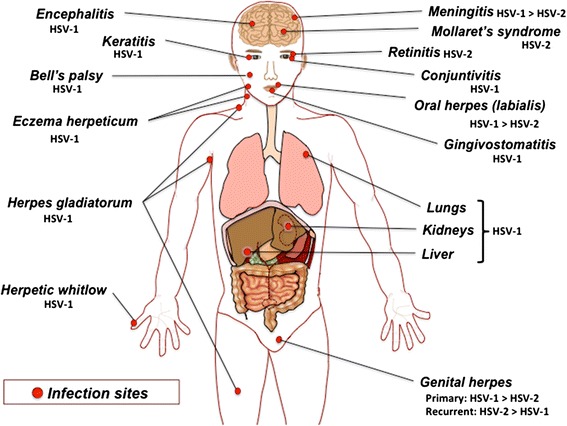
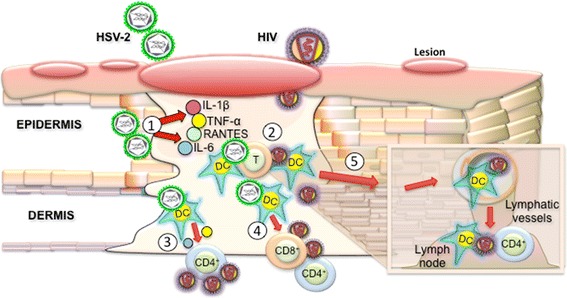
Infection with herpes simplex viruses is one of the most ancient diseases described to affect humans. Infection with these viruses produces vexing effects to the host, which frequently recur. Infection with herpes simplex viruses is lifelong, and currently there is no vaccine or drug to prevent or cure infection. Prevalence of herpes simplex virus 2 (HSV-2) infection varies significantly depending on the geographical region and nears 20% worldwide. Importantly, HSV-2 is the first cause of genital ulcers in the planet. HSV-2 affects approximately 500 million people around the globe and significantly increases the likelihood of acquiring the human immunodeficiency virus (HIV), as well as its shedding. Thus, controlling HSV-2 infection and spread is of public health concern. Here, we review the diseases produced by herpes simplex viruses, the factors that modulate HSV-2 infection, the relationship between HSV-2 and HIV and novel therapeutic and prophylactic microbicides/antivirals under development to prevent infection and pathological outcomes produced by this virus. We also review mutations associated with HSV-2 resistance to common antivirals.
Figures
References
-
- Roizman B, Whitley RJ. The nine ages of herpes simplex virus. Herpes. 2001;8(1):23–27. - PubMed
-
- Ebers P (1937) Greatest Egyptian medical document, 1552 BC. Translated by Ebbell B. Levin & Munksgaard, Copenhagen
-
- Astruc J (1736) De morbis venereis libri sex. G Cavelier, Paris
-
- Unna P. On herpes progenitalis, especially in women. J Cutan Vener Dis. 1883;1:321–334.
Publication types
MeSH terms
Substances
LinkOut - more resources
Full Text Sources
Other Literature Sources
Medical
