. 2014 Nov;21(11):1534-40.
doi: 10.1128/CVI.00510-14. Epub 2014 Sep 10.

Characterization and epitope mapping of the polyclonal antibody repertoire elicited by ricin holotoxin-based vaccination

Affiliations

Characterization and epitope mapping of the polyclonal antibody repertoire elicited by ricin holotoxin-based vaccination

Ofer Cohen et al. Clin Vaccine Immunol. 2014 Nov.

Abstract

Ricin, one of the most potent and lethal toxins known, is classified by the Centers for Disease Control and Prevention (CDC) as a select agent. Currently, there is no available antidote against ricin exposure, and the most promising therapy is based on neutralizing antibodies elicited by active vaccination or that are given passively. The aim of this study was to characterize the repertoire of anti-ricin antibodies generated in rabbits immunized with ricin toxoid. These anti-ricin antibodies exhibit an exceptionally high avidity (thiocyanate-based avidity index, 9 M) toward ricin and an apparent affinity of 1 nM. Utilizing a novel tissue culture-based assay that enables the determination of ricin activity within a short time period, we found that the anti-ricin antibodies also possess a very high neutralizing titer. In line with these findings, these antibodies conferred mice with full protection against pulmonary ricinosis when administered as a passive vaccination. Epitope mapping analysis using phage display random peptide libraries revealed that the polyclonal serum contains four immunodominant epitopes, three of which are located on the A subunit and one on the B subunit of ricin. Only two of the four epitopes were found to have a significant role in ricin neutralization. To the best of our knowledge, this is the first work that characterizes these immunological aspects of the polyclonal response to ricin holotoxin-based vaccination. These findings provide useful information and a possible strategy for the development and design of an improved ricin holotoxin-based vaccine.


Figures

FIG 1
FIG 1
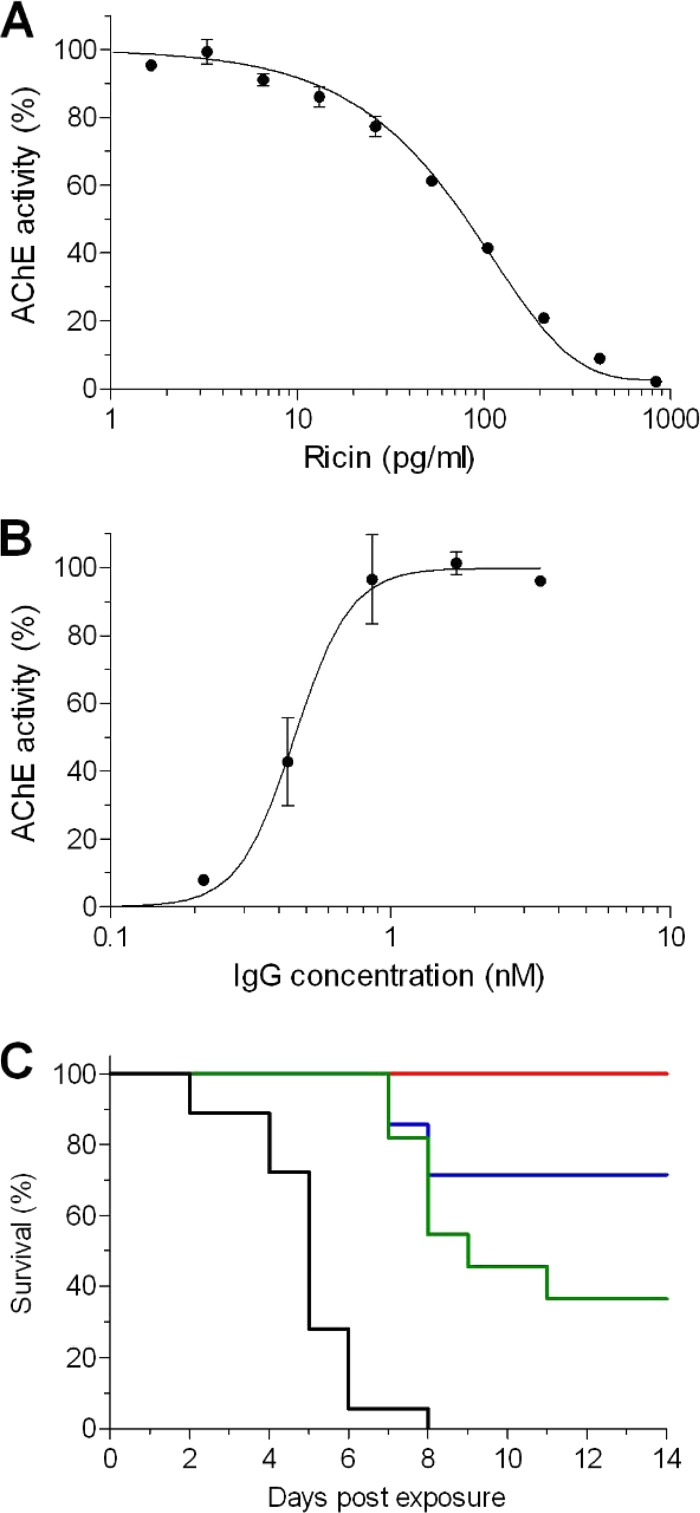
In vitro and in vivo neutralization of ricin. (A) Cultured HEK293-AChE cells were incubated for 18 h with increasing concentrations of ricin. The residual AChE activity in the culture medium was determined and expressed as the percent activity determined for untreated cells. (B) Ricin (2 ng/ml) was mixed with increasing concentrations of the IgG fraction, the mixture was added to the cultured HEK293-AChE cells, and the residual AChE activity in the culture medium was determined 18 h later. (C) Mice were intranasally instilled with 3 μg (green line), 6.5 μg (blue line), or 13 μg (red line) of IgG. Twenty-four hours later, the mice were intranasally intoxicated with ricin (2× the LD50), and animal survival was monitored for 14 days. Black line, intoxication control animals that were not pretreated with IgG. The data points are the means ± standard errors of the means (SEM) from triplicates.
FIG 2
FIG 2
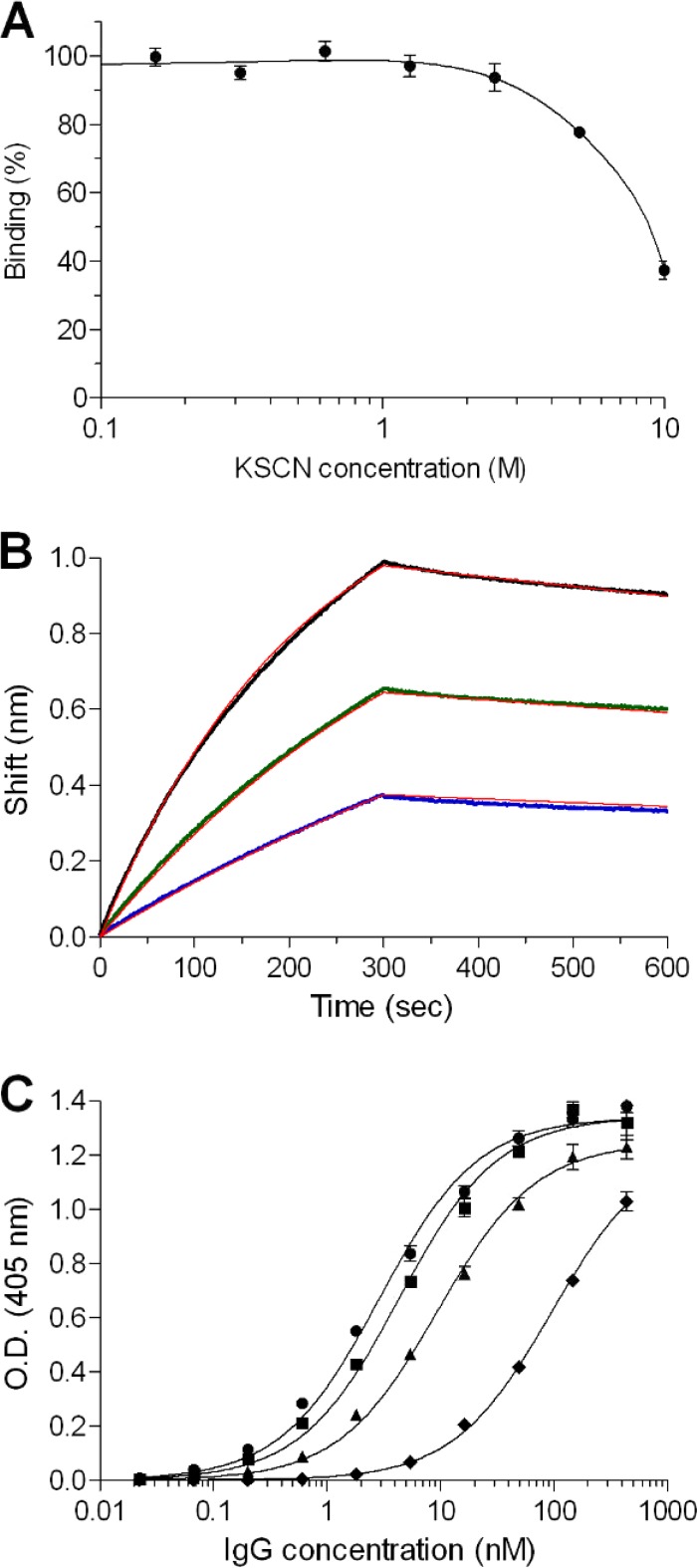
Immunological characterization of the polyclonal antibodies to ricin. (A) The residual binding of preformed antibody-ricin complexes was measured following exposure to increasing concentrations of the KSCN chaotrope agent. (B) The affinity of ricin-specific antibodies was measured using biolayer interferometry. Biotinylated ricin was immobilized on a streptavidin biosensor and reacted for 300 s with increasing concentrations of antibodies (6.25 nM, blue line; 12.5 nM, green line; 25 nM, black line). The sensors were then immersed in buffer for another 300 s (dissociation phase). Red lines, curve fitting of 1:1 binding model. (C) Reactivity profile of the antibodies determined by ELISA using either ricin holotoxin (circles), RTA (squares), RTB (triangles) or U. europaeus (diamonds) as the antigens. The data points are the mean ± standard error of the mean (SEM) from triplicates. O.D., optical density.
FIG 3
FIG 3
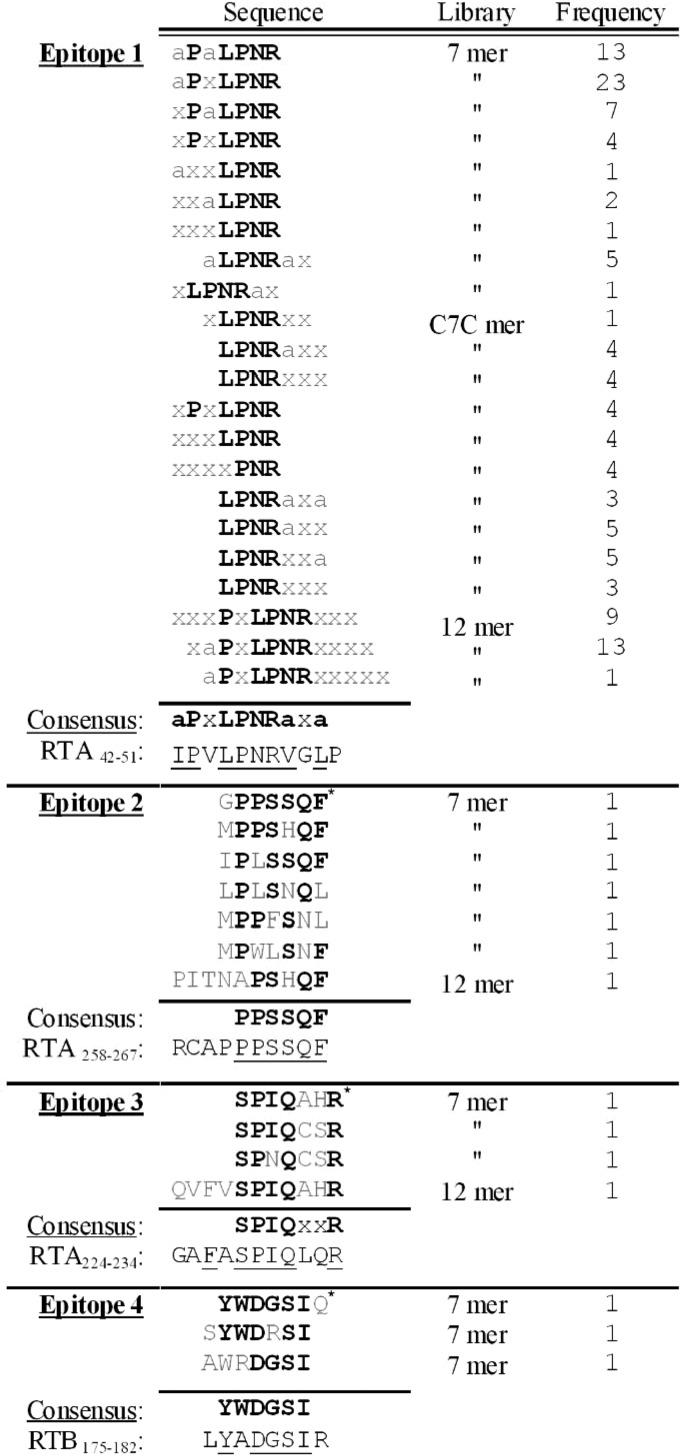
Sequence alignment of the phage-derived peptides selected by panning with anti-ricin antibodies. Three rounds of panning were performed using random peptide phage display libraries (7- or 12-mer linear peptides and 7-mer constrained peptides). The peptide sequences of the phages that specifically bound the antibodies were deduced and divided into four groups based upon multiple alignment. The frequency (no.) of peptides in each group is indicated. The consensus amino acids are highlighted in bold. The hydrophobic amino acids (V, L, I, or M) within the peptides are indicated by “a,” where “x” represents sites with no amino acid homology. The underlined amino acids represent those with full homology to ricin. The peptides that were taken as representatives of their epitope group are marked with an asterisk.
FIG 4
FIG 4
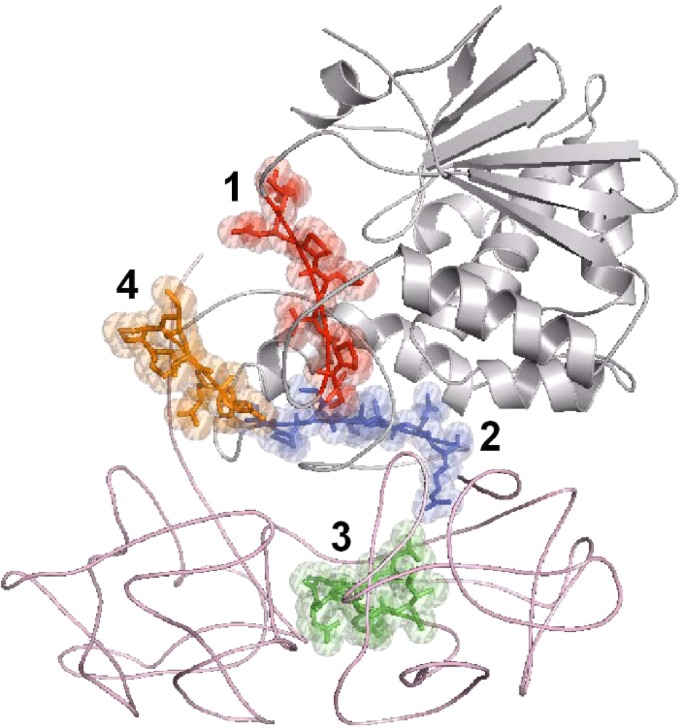
Modeling of the immunodominant epitopes on ricin. Crystal structure of ricin (PDB 2AAI; RTA in gray and RTB in pink) emphasizing the locations of epitope 1 (red), epitope 2 (blue), epitope 3 (green), and epitope 4 (orange).
FIG 5
FIG 5
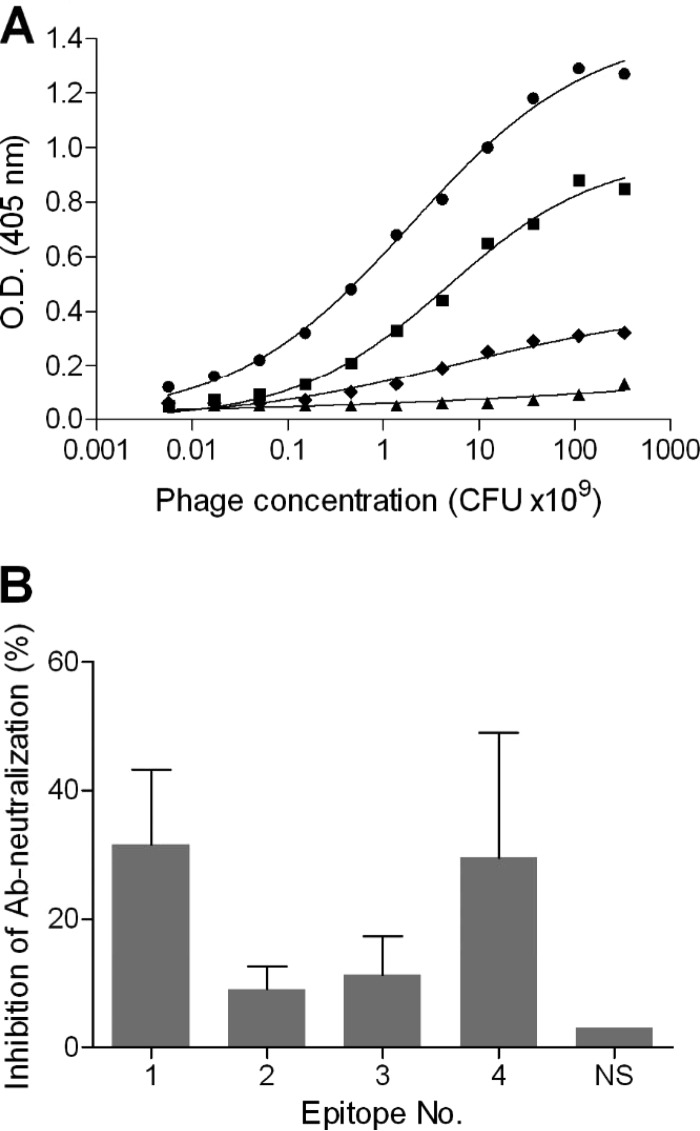
Interaction of selected phage clones with anti-ricin antibodies. (A) ELISA plate was coated with anti-ricin antibodies, followed by the addition of a serially diluted representative phage clone from each group of epitopes (circles, epitope 1; triangles, epitope 2; diamonds, epitope 3; squares, epitope 4). Bound phages were then detected using anti-M13 antibodies, and results shown are from a representative experiment. (B) A fixed amount of ricin and antibodies were preincubated with a representative phage clone from each group of epitopes. The mixture was then added to the HEK293-AChE cells, and the secreted AChE activity was determined 18 h later. The results are expressed as the percent total inhibition of antibody (Ab)-neutralizing activity in the absence of phages. NS, nonspecific phage. The presented data are the mean ± SEM from triplicates.
FIG 6
FIG 6
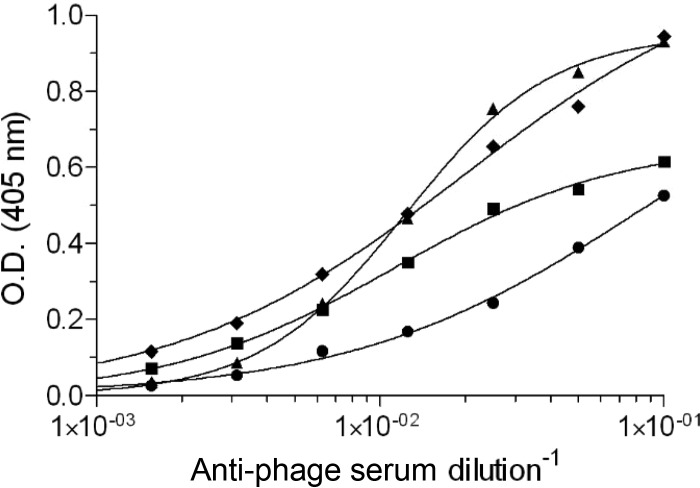
Cross-reactivity of anti-phage antibodies and ricin. Mice (n = 5) were immunized with a representative phage clone from each group of epitopes (circles, epitope 1; triangles, epitope 2; diamonds, epitope 3; squares, epitope 4). The reactivities of the antibodies that were raised against these phages were determined by ELISA using ricin as the coated antigen. The results are from a representative mouse from each vaccinated group or a naive mouse.

References

    1. Olsnes S, Kozlov JV. 2001. Ricin. Toxicon. 39:1723–1728. 10.1016/S0041-0101(01)00158-1. - DOI - PubMed
    1. Bai Y, Watt B, Wahome PG, Mantis NJ, Robertus JD. 2010. Identification of new classes of ricin toxin inhibitors by virtual screening. Toxicon 56:526–534. 10.1016/j.toxicon.2010.05.009. - DOI - PMC - PubMed
    1. Miller DJ, Ravikumar K, Shen H, Suh JK, Kerwin SM, Robertus JD. 2002. Structure-based design and characterization of novel platforms for ricin and Shiga toxin inhibition. J. Med. Chem. 45:90–98. 10.1021/jm010186s. - DOI - PubMed
    1. Hesselberth JR, Miller D, Robertus J, Ellington AD. 2000. In vitro selection of RNA molecules that inhibit the activity of ricin A-chain. J. Biol. Chem. 275:4937–4942. 10.1074/jbc.275.7.4937. - DOI - PubMed
    1. Nagatsuka T, Uzawa H, Ohsawa I, Seto Y, Nishida Y. 2010. Use of lactose against the deadly biological toxin ricin. ACS Appl. Mater. Interfaces 2:1081–1085. 10.1021/am900846r. - DOI - PubMed