


Approaches to improve the quality of maternal and newborn health care: an overview of the evidence
- PMID: 25209614
- PMCID: PMC4160919
- DOI: 10.1186/1742-4755-11-S2-S1
Approaches to improve the quality of maternal and newborn health care: an overview of the evidence
Abstract
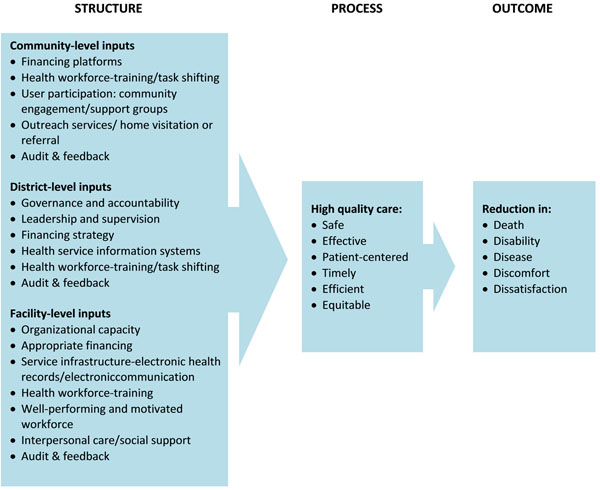
Despite progress in recent years, an estimated 273,500 women died as a result of maternal causes in 2010. The burden of these deaths is disproportionately bourne by women who reside in low income countries or belong to the poorest sectors of the population of middle or high income ones, and it is particularly acute in regions where access to and utilization of facility-based services for childbirth and newborn care is lowest. Evidence has shown that poor quality of facility-based care for these women and newborns is one of the major contributing factors for their elevated rates of morbidity and mortality. In addition, women who perceive the quality of facilty-based care to be poor,may choose to avoid facility-based deliveries, where life-saving interventions could be availble. In this context, understanding the underlying factors that impact the quality of facility-based services and assessing the effectiveness of interventions to improve the quality of care represent critical inputs for the improvement of maternal and newborn health. This series of five papers assesses and summarizes information from relevant systematic reviews on the impact of various approaches to improve the quality of care for women and newborns. The first paper outlines the conceptual framework that guided this study and the methodology used for selecting the reviews and for the analysis. The results are described in the following three papers, which highlight the evidence of interventions to improve the quality of maternal and newborn care at the community, district, and facility level. In the fifth and final paper of the series, the overall findings of the review are discussed, research gaps are identified, and recommendations proposed to impove the quality of maternal and newborn health care in resource-poor settings.
Figures
References
-
- WHO; UNICEF; UNFPA; The World Bank. Trends in maternal mortality: 1990 to 2010. 2012. http://www.unfpa.org/webdav/site/global/shared/documents/publications/20...
-
- UNFPA. Trends in maternal mortality: 1990 to 2010. 2012. http://www.unfpa.org/webdav/site/global/shared/documents/publications/20...
-
- WHO. Beyond the Numbers: Reviewing Maternal Deaths and Complications to Make Pregnancy Safer. Geneva: Department of Reproductive Health and Research, World Health Organisation; 2004.
Publication types
MeSH terms
LinkOut - more resources
Full Text Sources
Other Literature Sources
Medical
