


Uterine epithelial cell estrogen receptor alpha-dependent and -independent genomic profiles that underlie estrogen responses in mice
- PMID: 25210133
- PMCID: PMC4434925
- DOI: 10.1095/biolreprod.114.120170
Uterine epithelial cell estrogen receptor alpha-dependent and -independent genomic profiles that underlie estrogen responses in mice
Abstract
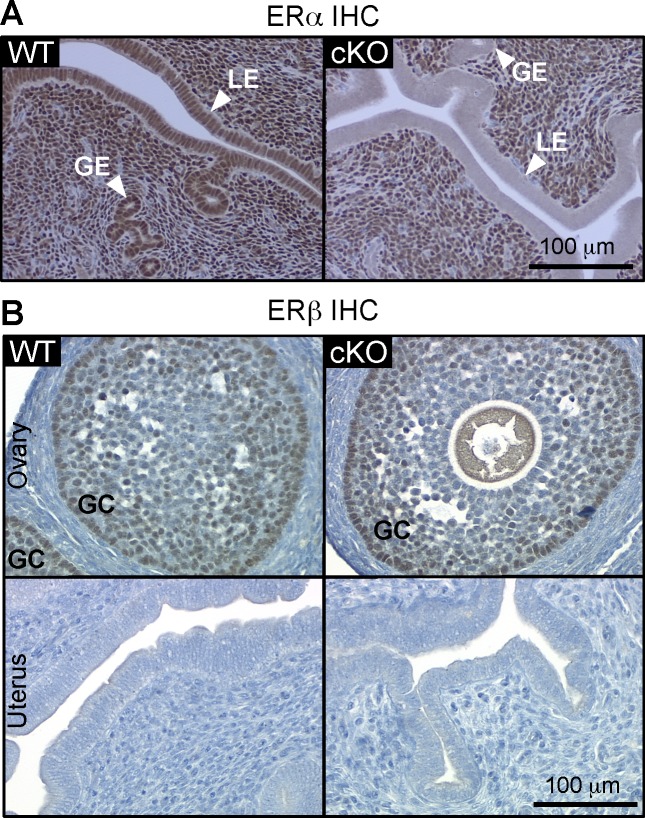
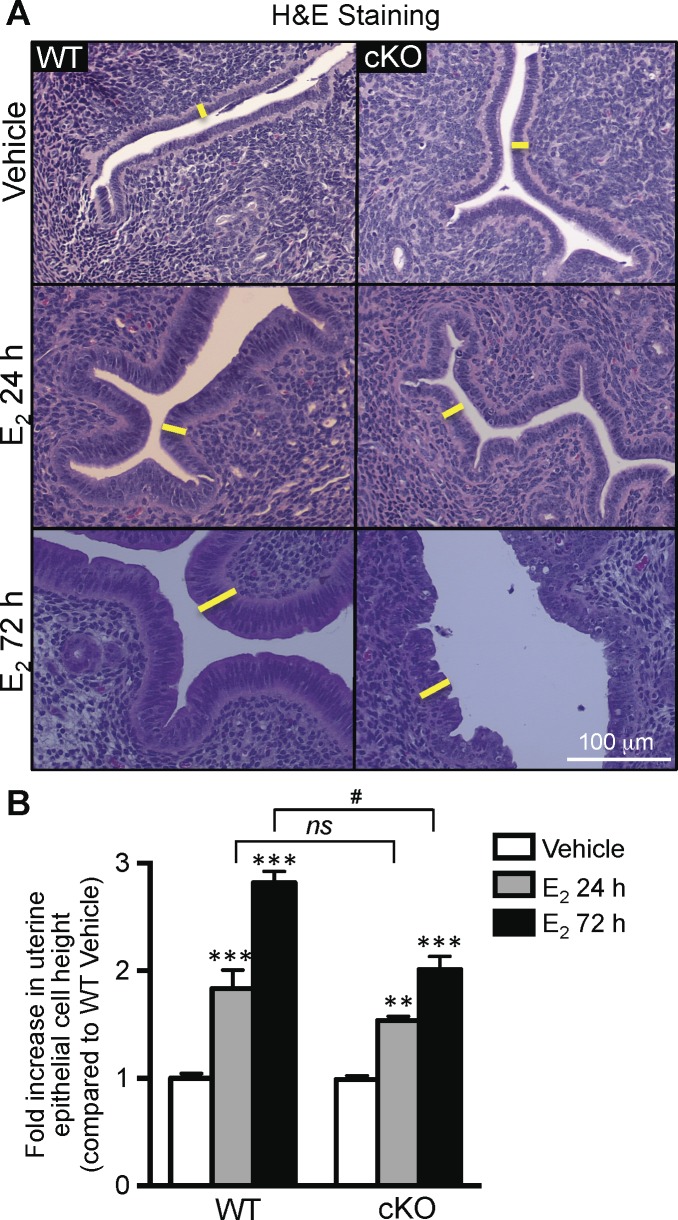
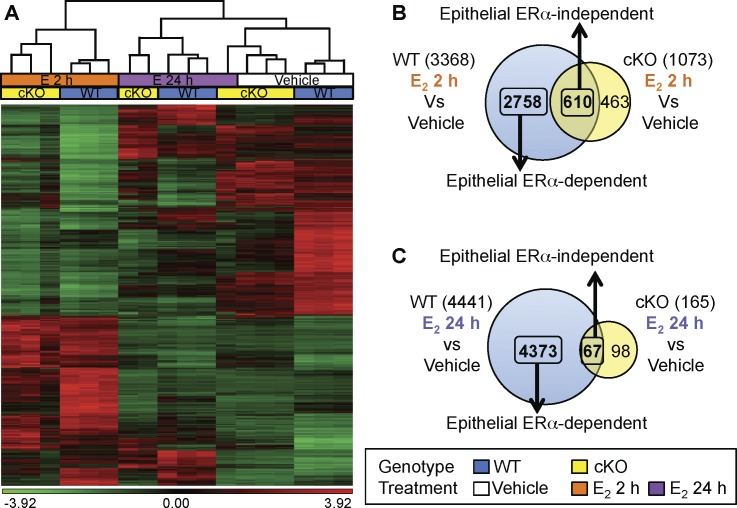
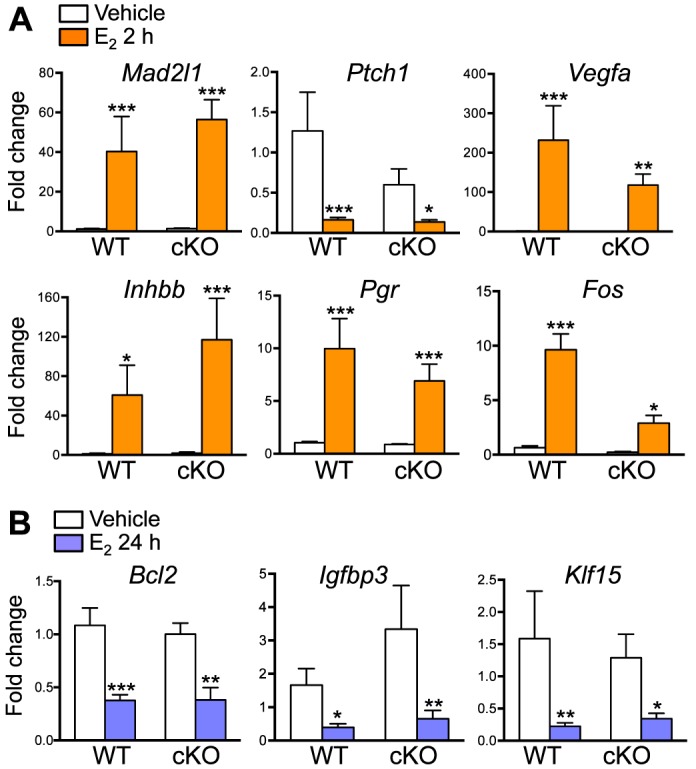
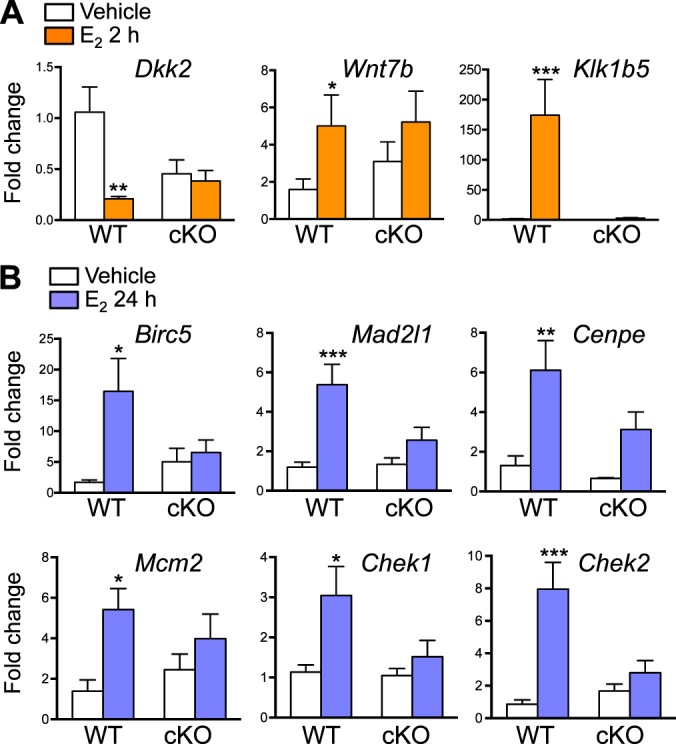
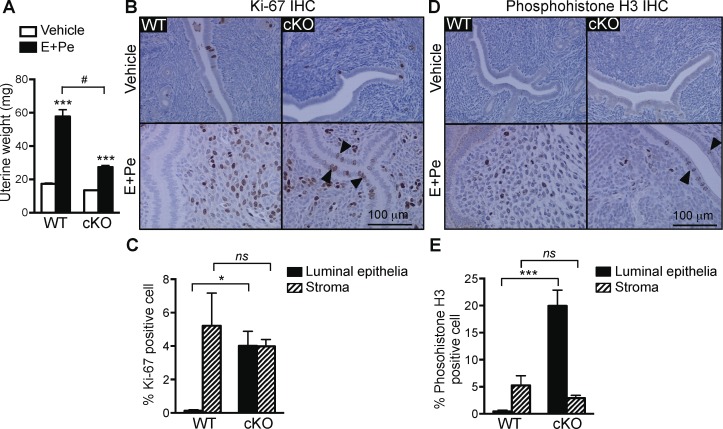
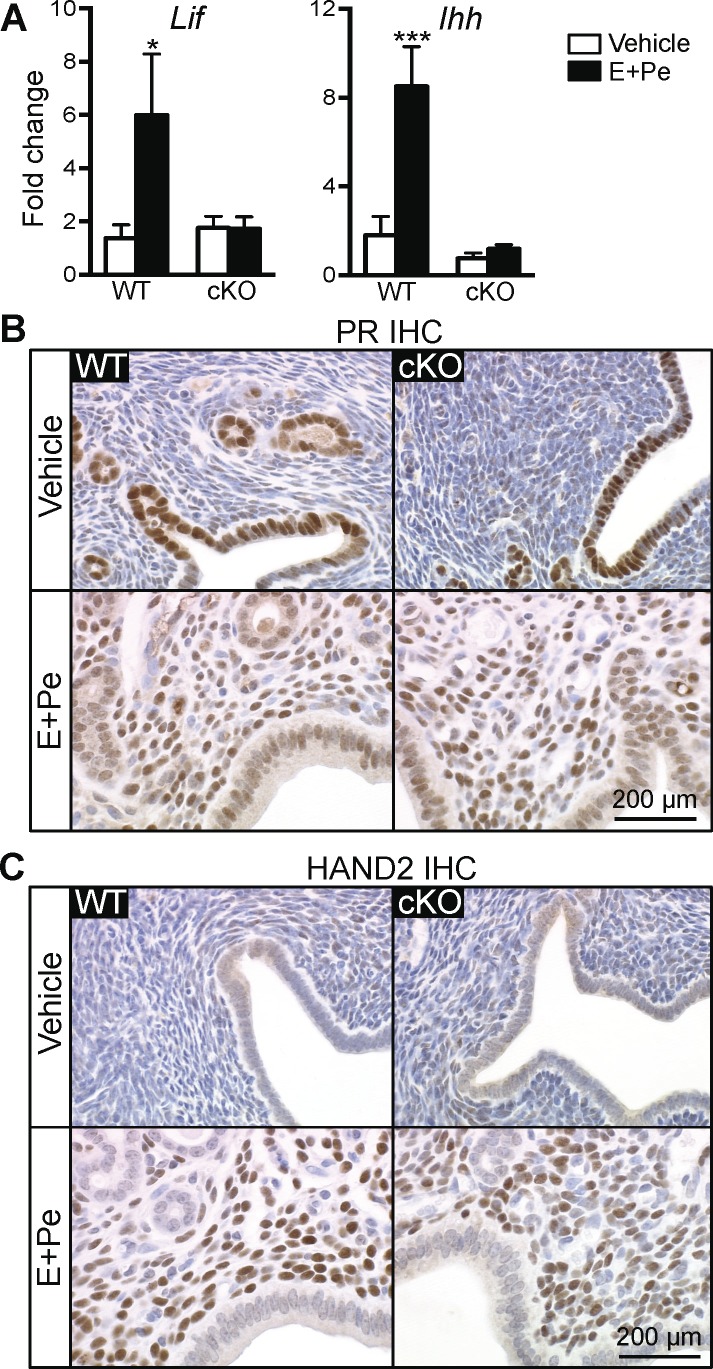
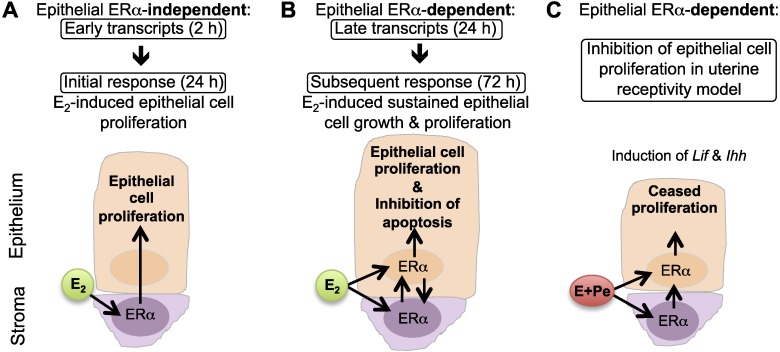
Estrogens exert their activity through estrogen receptor alpha (ERalpha) to stimulate hypertrophy and hyperplasia in the uterus. A uterine epithelial ERalpha conditional knockout mouse model (Wnt7a(Cre+);Esr1(f/f) or cKO) demonstrated that ERalpha in the epithelial cells was dispensable for an initial uterine proliferative response to 17beta-estradiol (E2) but required for subsequent uterine biological responses. This study aimed to characterize the differential gene expression patterns induced by E2 in the presence or absence of epithelial ERalpha. RNA microarray analysis revealed that approximately 20% of the genes differentially expressed at 2 h were epithelial ERalpha independent, as they were preserved in the cKO uteri. This indicates that early uterine transcripts mediated by stromal ERalpha are sufficient to promote initial proliferative responses. However, more than 90% of the differentially expressed transcripts at 24 h were not regulated in the cKO, indicating that the majority of later transcriptional regulation required epithelial ERalpha, especially those involved in mitosis. This shows that loss of regulation of these later transcripts results in blunted subsequent uterine growth after 3 days of E2 treatment. Additionally, progesterone's ability to inhibit E2-induced epithelial cell proliferation was impaired, consistent with a uterine receptivity defect that contributes to cKO infertility. These transcriptional profiles correlate with our previously observed biological responses, in which the initial proliferative response is independent of epithelial ERalpha and thus dependent on stromal ERalpha, yet epithelial ERalpha is essential for subsequent tissue responsiveness.
Keywords: epithelium; estradiol/estradiol receptor; proliferation; stroma; uterus.
© 2014 by the Society for the Study of Reproduction, Inc.
Figures
References
-
- Tabibzadeh S. The signals and molecular pathways involved in human menstruation, a unique process of tissue destruction and remodelling. Mol Hum Reprod. 1996;2:77–92. - PubMed
-
- Couse JF, Korach KS. Estrogen receptor null mice: what have we learned and where will they lead us? Endocr Rev. 1999;20:358–417. - PubMed
-
- Couse JF, Lindzey J, Grandien K, Gustafsson JA, Korach KS. Tissue distribution and quantitative analysis of estrogen receptor-alpha (ERalpha) and estrogen receptor-beta (ERbeta) messenger ribonucleic acid in the wild-type and ERalpha-knockout mouse. Endocrinology. 1997;138:4613–4621. - PubMed
-
- Wang H, Eriksson H, Sahlin L. Estrogen receptors alpha and beta in the female reproductive tract of the rat during the estrous cycle. Biol Reprod. 2000;63:1331–1340. - PubMed
Publication types
MeSH terms
Substances
Grants and funding
LinkOut - more resources
Full Text Sources
Other Literature Sources
Molecular Biology Databases
Miscellaneous
