


Follow-up care for breast cancer survivors: improving patient outcomes
- PMID: 25210481
- PMCID: PMC4156000
- DOI: 10.2147/PROM.S49586
Follow-up care for breast cancer survivors: improving patient outcomes
Abstract
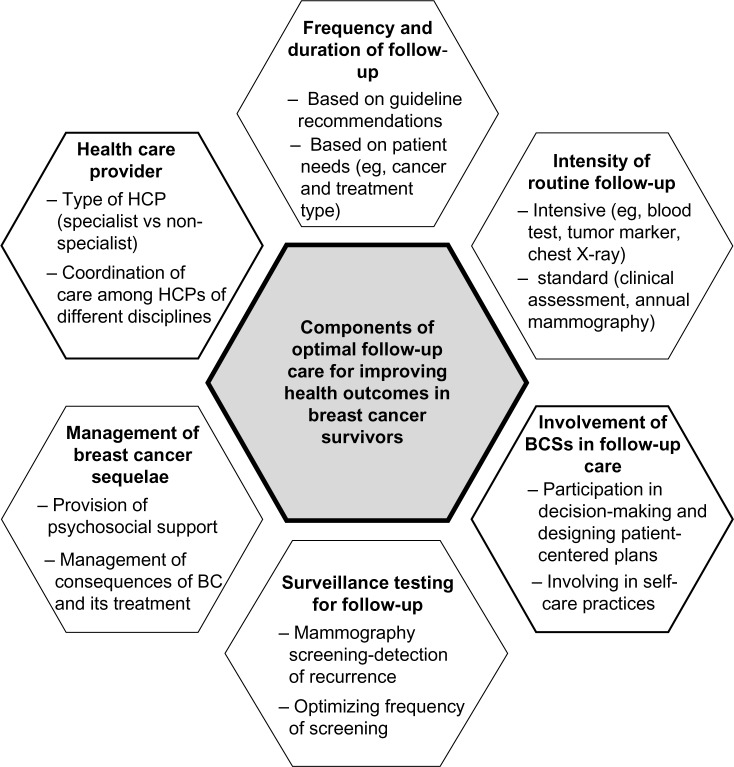
Background: Appropriate follow-up care is important for improving health outcomes in breast cancer survivors (BCSs) and requires determination of the optimum intensity of clinical examination and surveillance, assessment of models of follow-up care such as primary care-based follow-up, an understanding of the goals of follow-up care, and unique psychosocial aspects of care for these patients. The objective of this systematic review was to identify studies focusing on follow-up care in BCSs from the patient's and physician's perspective or from patterns of care and to integrate primary empirical evidence on the different aspects of follow-up care from these studies.
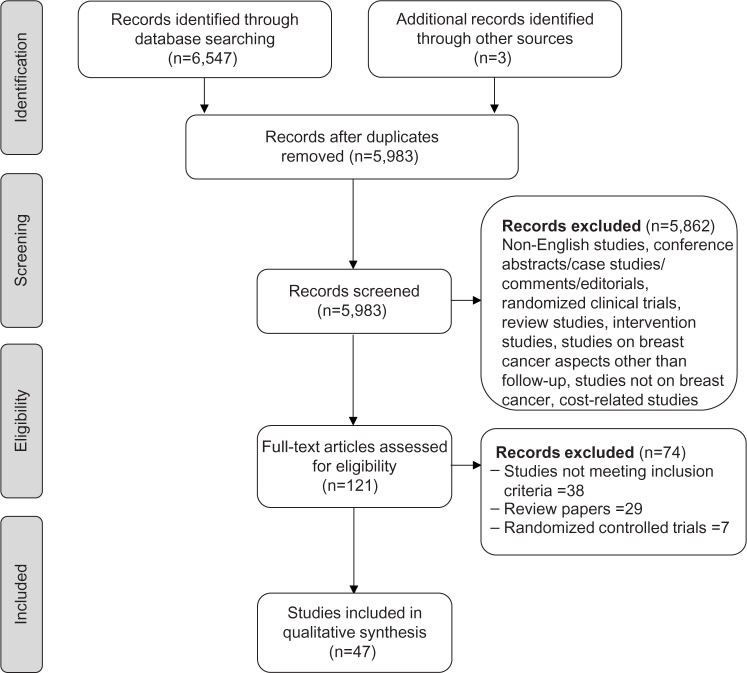
Methods: A comprehensive literature review and evaluation was conducted for all relevant publications in English from January 1, 1990 to December 31, 2013 using electronic databases. Studies were included in the final review if they focused on BCS's preferences and perceptions, physician's perceptions, patterns of care, and effectiveness of follow-up care.
Results: A total of 47 studies assessing the different aspects of follow-up care were included in the review, with a majority of studies (n=13) evaluating the pattern of follow-up care in BCSs, followed by studies focusing on BCS's perceptions (n=9) and preferences (n=9). Most of the studies reported variations in recommended frequency, duration, and intensity of follow-up care as well as frequency of mammogram screening. In addition, variations were noted in patient preferences for type of health care provider (specialist versus non-specialist). Further, BCSs perceived a lack of psychosocial support and information for management of side effects.
Conclusion: The studies reviewed, conducted in a range of settings, reflect variations in different aspects of follow-up care. Further, this review also provides useful insight into the unique concerns and needs of BCSs for follow-up care. Thus, clinicians and decision-makers need to understand BCS's preferences in providing appropriate follow-up care tailored specifically for each patient.
Keywords: breast cancer; breast cancer survivors; follow-up care; outcomes; survivorship care.
Figures
References
-
- Wcrf.org [homepage on the Internet] Breast Cancer. London, UK: World Cancer Research Fund International; [Accessed March 10, 2014]. Available from: http://www.wcrf.org/cancer_statistics/data_specific_cancers/breast_cance....
-
- Brennan ME, Houssami N. Overview of long term care of breast cancer survivors. Maturitas. 2011;69(2):106–112. - PubMed
-
- Canceraustralia.gov.au [homepage on the Internet] Breast cancer statistics. Surry Hills, Australia: National Breast and Ovarian Cancer Centre (NBOCC); 2011. [Assessed May 25, 2014]. [updated April 30, 2014] Available from: http://canceraustralia.gov.au/affected-cancer/cancer-types/breast-cancer....
-
- SEER.cancer.gov [homepage on the Internet] SEER Stat Fact Sheets: Breast Cancer. Bethesda, MD: National Cancer Institute, Surveillance Epidemiology and End Results (SEER); 2011. [Assessed May 25, 2014]. Available from: http://www.seer.cancer.gov/statfacts/html/breast.html.
-
- Gerber LH, Stout NL, Schmitz KH, Stricker CT. Integrating a prospective surveillance model for rehabilitation into breast cancer survivorship care. Cancer. 2012;118(Suppl 8):2201–2206. - PubMed
Publication types
LinkOut - more resources
Full Text Sources
Other Literature Sources
