All rural places are not created equal: revisiting the rural mortality penalty in the United States
- PMID: 25211763
- PMCID: PMC4202986
- DOI: 10.2105/AJPH.2014.301989
All rural places are not created equal: revisiting the rural mortality penalty in the United States
Abstract
Objectives: I investigated mortality disparities between urban and rural areas by measuring disparities in urban US areas compared with 6 rural classifications, ranging from suburban to remote locales.
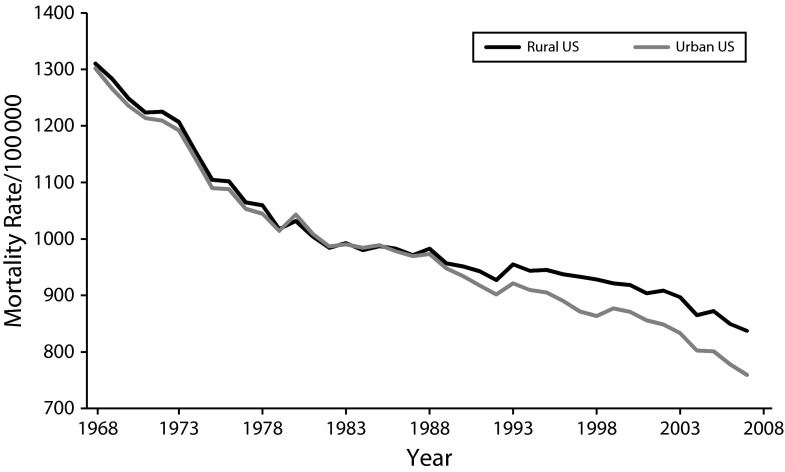
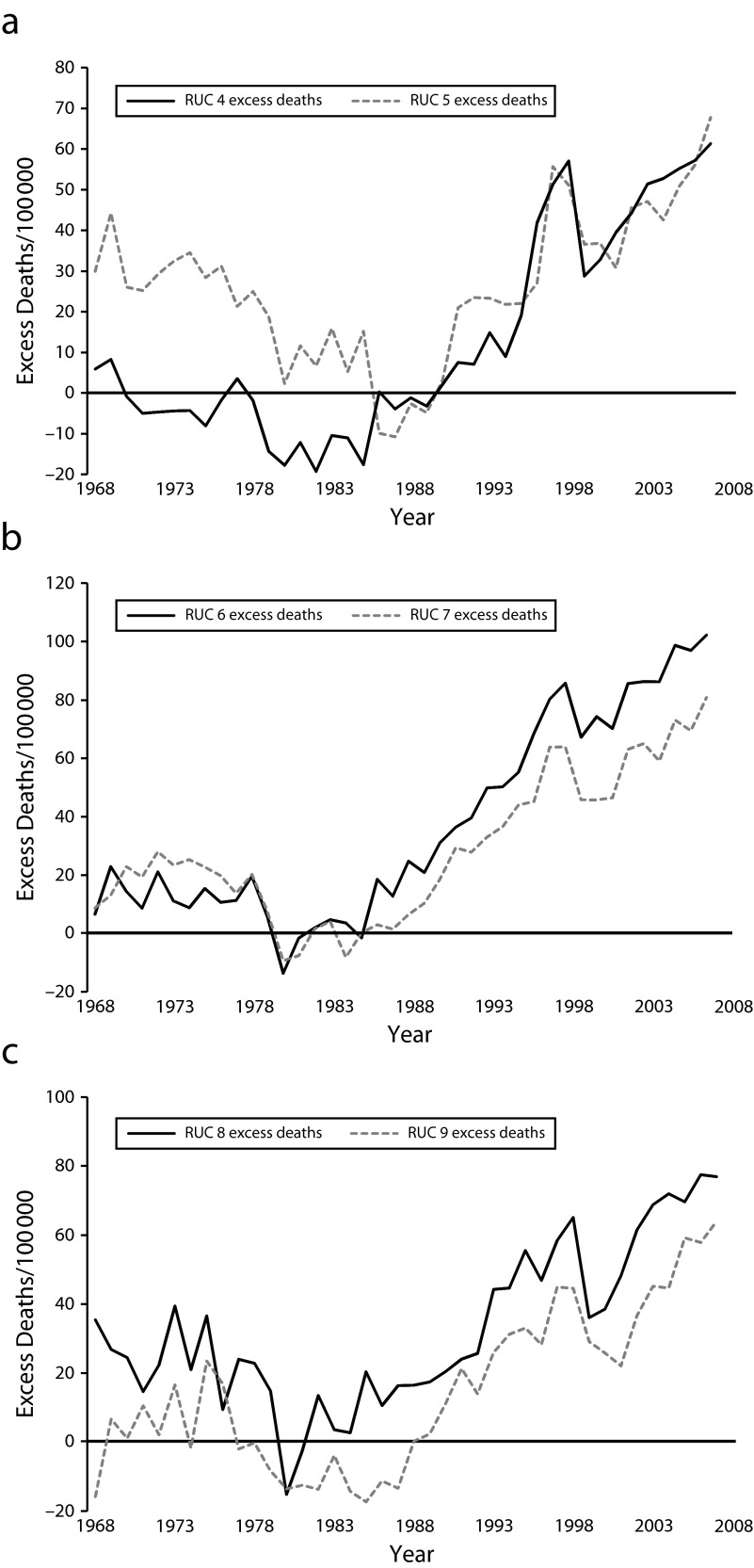
Methods: Data from the Compressed Mortality File, National Center for Health Statistics, from 1968 to 2007, was used to calculate age-adjusted mortality rates for all rural and urban regions by year. Criteria measuring disparity between regions included excess deaths, annual rate of change in mortality, and proportion of excess deaths by population size. I used multivariable analysis to test for differences in determinants across regions.
Results: The rural mortality penalty existed in all rural classifications, but the degree of disparity varied considerably. Rural-urban continuum code 6 was highly disadvantaged, and rural-urban continuum code 9 displayed a favorable mortality profile. Population, socioeconomic, and health care determinants of mortality varied across regions.
Conclusions: A 2-decade long trend in mortality disparities existed in all rural classifications, but the penalty was not distributed evenly. This constitutes an important public health problem. Research should target the slow rates of improvement in mortality in the rural United States as an area of concern.
Figures
References
-
- Haines MR. The urban mortality transition in the United States, 1800–1940. Ann Demogr Hist (Paris) 2001;101:33–64.
MeSH terms
LinkOut - more resources
Full Text Sources
Other Literature Sources
Medical