


The evaluation of the impact of a stand-biased desk on energy expenditure and physical activity for elementary school students
- PMID: 25211776
- PMCID: PMC4199024
- DOI: 10.3390/ijerph110909361
The evaluation of the impact of a stand-biased desk on energy expenditure and physical activity for elementary school students
Abstract
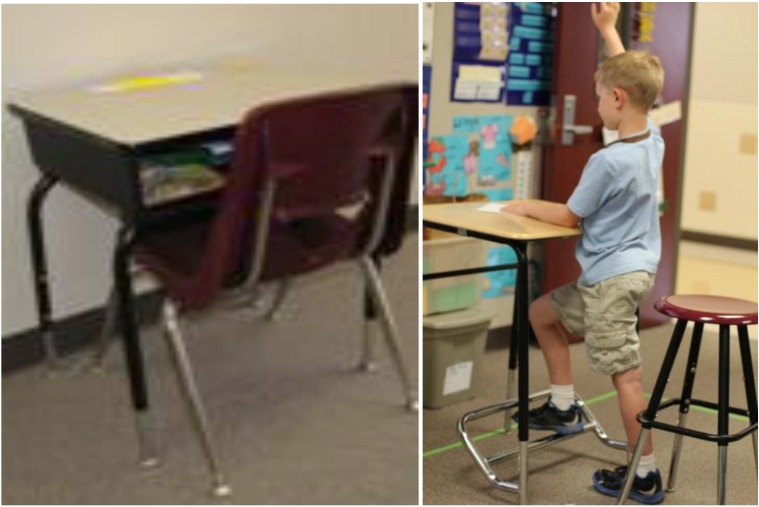
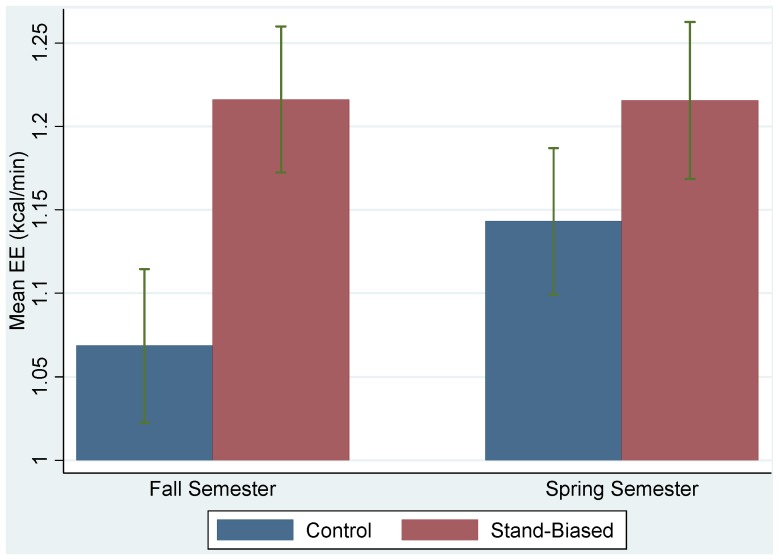
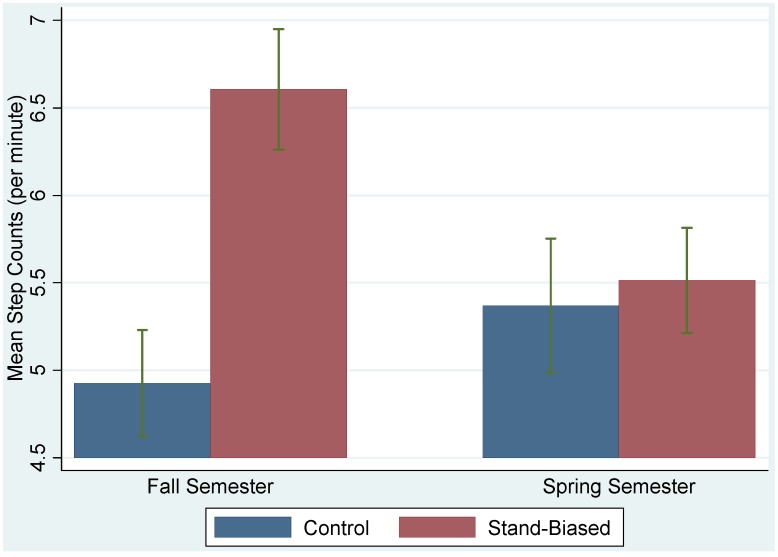
Due to the increasing prevalence of childhood obesity, the association between classroom furniture and energy expenditure as well as physical activity was examined using a standing-desk intervention in three central-Texas elementary schools. Of the 480 students in the 24 classrooms randomly assigned to either a seated or stand-biased desk equipped classroom, 374 agreed to participate in a week-long data collection during the fall and spring semesters. Each participant's data was collected using Sensewear® armbands and was comprised of measures of energy expenditure (EE) and step count. A hierarchical linear mixed effects model showed that children in seated desk classrooms had significantly lower (EE) and fewer steps during the standardized lecture time than children in stand-biased classrooms after adjusting for grade, race, and gender. The use of a standing desk showed a significant higher mean energy expenditure by 0.16 kcal/min (p < 0.0001) in the fall semester, and a higher EE by 0.08 kcal/min (p = 0.0092) in the spring semester.
Figures
References
-
- Dixon M.O. Ph.D. Thesis. Texas A&M University; College Station, TX, USA: Aug 18, 2011. Elementary School Personnel’s Perceptions of and Recommendations for Managing Child Obesity: A Naturalistic Study.
-
- Prevalence of Obesity among Children and Adolescents: United States, Trends 1963–1965 through 2007–2008. [(accessed on 14 February 2014)]. Available online: http://www.cdc.gov/nchs/data/hestat/obesity_child_07_08/obesity_child_07....
Publication types
MeSH terms
Grants and funding
LinkOut - more resources
Full Text Sources
Other Literature Sources
